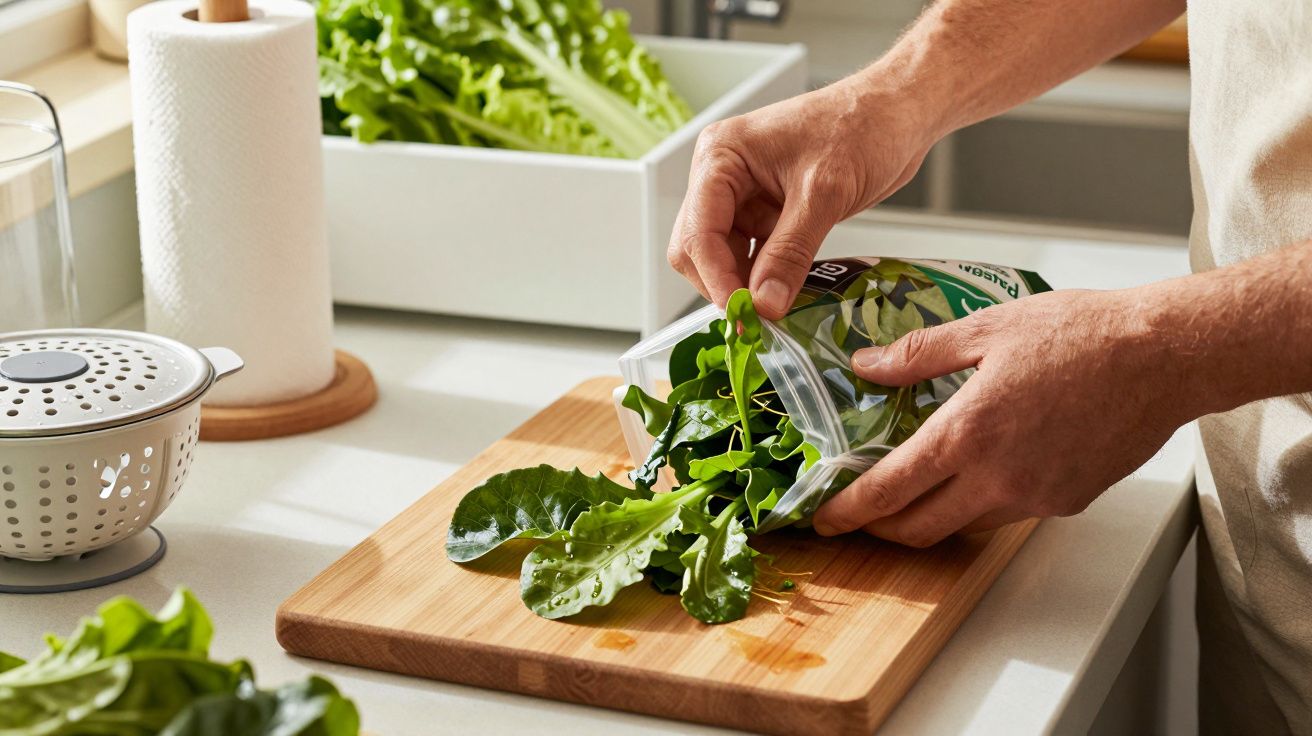
Lettuce shows up in everyday meals with almost no ceremony: it’s the crunch in a sandwich, the base of a salad, the green layer in a burger box at lunch. There’s no secondary entity to distract you here - just leaves and the assumption they’re harmless. That’s exactly why it matters: lettuce is one of the few fresh foods we tend to eat raw, often straight from the bag, and small choices change both safety and waste.
I started paying attention after throwing away yet another “fresh” bag that turned slick and brown two days after I bought it. The price wasn’t the point; the pattern was. Lettuce looks simple, but its weak spot is invisible until it’s too late.
The catch isn’t nutrition - it’s how lettuce fails
Lettuce doesn’t usually go off like milk, with a clear smell and a clean deadline. It collapses: edges darken, leaves go limp, and the bag fills with moisture that turns crisp into slime.
That failure mode matters because it tricks shoppers into two costly habits: buying too much because it looks “light”, and trusting “washed and ready” as if it were sealed for safety rather than convenience.
Lettuce is a raw product with a short temper: once it’s wet, bruised, or warm for too long, it deteriorates fast - and it’s not always obvious at first glance.
Why bagged lettuce goes slimy so quickly
Pre-cut lettuce is doing you a favour (speed), but it’s also starting the clock early. Cutting damages cells, releasing sugars and moisture that bacteria love, and the bag traps humidity.
A few everyday factors push it over the edge:
- Condensation in the bag from temperature swings (shop → car → fridge door).
- Crushing under heavier groceries, which bruises leaves before you even get home.
- Warm storage in the fridge (salad drawers are often warmer than you think).
- “Use by” optimism: bags can be technically within date but already on the slide.
Whole heads usually last longer because they’re still protected by intact outer leaves. The trade-off is prep time, but the waste rate is often lower.
What “washed” really means (and what it doesn’t)
“Washed” or “ready to eat” is about removing dirt and reducing microbes - it’s not a guarantee of sterility. Lettuce grows close to soil, is handled a lot, and can be exposed to contamination at multiple points before it reaches your kitchen.
Re-washing bagged leaves at home can even backfire if it spreads kitchen bacteria onto leaves you would otherwise have eaten straight away. The more useful habit is simpler: treat lettuce like a perishable raw food, not a dry cupboard item with a green label.
If you want to reduce risk without turning dinner into a lab exercise:
- Keep lettuce cold and dry.
- Avoid leaves that are wet in the bag or smell even faintly sour.
- Don’t leave salad sitting out on the table for long stretches, especially in warm rooms.
The type you buy changes the outcome
Not all lettuce behaves the same, and the “best” choice depends on what you’re using it for and how quickly you’ll finish it.
| Type | What it’s good at | The common failure |
|---|---|---|
| Iceberg | Crunch, staying crisp in sandwiches | Browning at cut edges, blandness |
| Romaine/Cos | Caesar salads, grilling, sturdier leaves | Browning at the core if bruised |
| Butterhead (e.g., Little Gem, Bibb) | Soft texture, quick salads | Wilting fast if stored wet |
If you’re feeding one or two people and you know you won’t get through a full bag, smaller heads (or mini romaine) often beat bulk “value” bags in real-life cost.
How to make lettuce last longer at home
The goal is to slow moisture build-up and keep the leaves cold without freezing them. You don’t need fancy containers - you need fewer swings in temperature and less trapped water.
A practical routine that actually sticks:
- Buy last, pack on top. Lettuce hates being squashed under tins.
- Go for the coldest part of the fridge (often the back of the lowest shelf, not the door).
- Add a paper towel to bagged leaves to absorb condensation, then reseal loosely.
- Don’t cut until you need it if you’re buying whole heads.
- Make one “use it now” meal. If leaves are starting to soften, put them into a sandwich or wrap today rather than promising yourself a salad tomorrow.
The fastest way to save lettuce isn’t a storage hack - it’s deciding what you’ll eat within 48 hours, then buying for that reality.
A quick decision guide at the shelf
Most people don’t need more willpower; they need a better trigger in the shop. Here are three checks that prevent most disappointments:
- Look for dryness. Avoid bags with visible droplets or pooled water.
- Smell if you can. Any sourness through the plastic is a no.
- Check the cut edges. Lots of browning suggests rough handling and faster decline.
If you’re cooking tonight, consider swapping some of the “freshness pressure” onto sturdier greens (like spinach or kale) and using lettuce where it shines: cold, crisp, immediate.
FAQ:
- Can I freeze lettuce? Not for salads. Freezing breaks the cell structure, so it turns limp and watery when thawed (fine only if you’re blending into soup, which most people aren’t).
- Should I wash “ready to eat” lettuce again? Usually no. It’s already washed, and extra washing can add moisture and introduce kitchen bacteria if your sink or salad spinner isn’t clean.
- What’s the safest way to store a half head of lettuce? Wrap it loosely in kitchen paper, place it in a breathable bag or container, and keep it cold (not in the fridge door). Avoid sealing it soaking wet.
- Is darker lettuce always more nutritious? Often, yes - but the bigger consumer win is eating the lettuce you buy before it collapses. Less waste beats the “perfect” choice that goes slimy.


Comments
No comments yet. Be the first to comment!
Leave a Comment