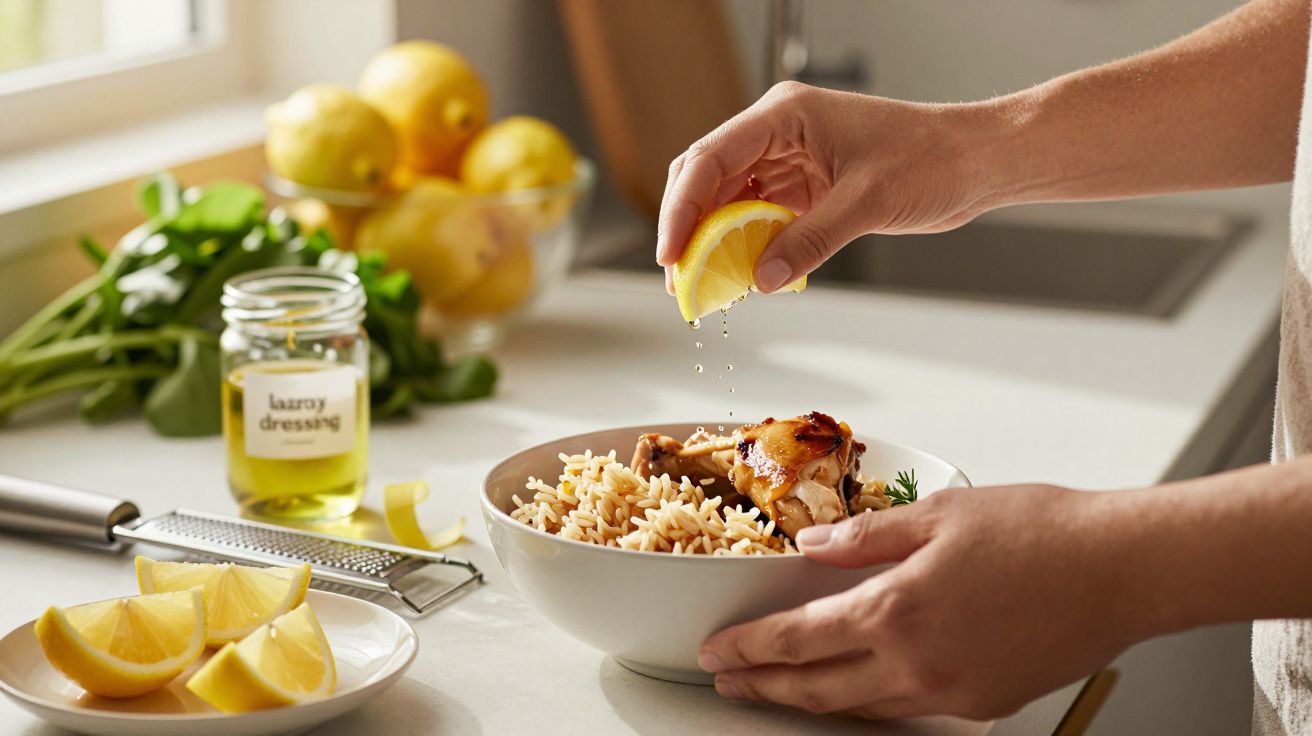
You notice it in the small moments: the glass of water you actually finish, the salad that tastes like more than leaves, the fish that doesn’t need a heavy sauce. Lemons turn up there, quietly doing the job of a “finishing touch” in everyday cooking and in the cupboard, and that matters because tiny flavour and habit upgrades are the ones that last. Over time, that one bright wedge can shift what you crave, what you waste, and how satisfied you feel with simple food.
A lemon isn’t a trend ingredient or a once-a-year garnish. It’s a repeatable tool: acid for balance, aroma for lift, and a nudge towards freshness when meals start to feel beige.
Why lemons keep earning their place in the fruit bowl
Most of us don’t need more recipes. We need a way to make the food we already cook taste better, more often, without extra cost or effort.
Lemons do that because they solve three common problems at once: blandness, heaviness, and “nothing goes with this”. A squeeze can sharpen a soup that tastes flat, cut through oily fish, or wake up a tray of roasted veg that’s gone soft at the edges.
Think of lemon as seasoning, not as a flavour. It’s closer to salt than it is to “citrus”.
They’re also forgiving. You can use a few drops or a full half, and it’s still recognisably the same dish-just clearer, brighter, more finished.
The small science: what lemon actually changes in food
Lemon juice is mostly water and citric acid, with a punchy aroma from its oils. That combination is why it feels like it “cleans up” flavours.
Acid doesn’t just make food sour. It boosts perception of saltiness, helps cut bitterness, and makes rich foods feel lighter. That’s why a lemony salad dressing can make basic veg taste like something you’d order rather than something you’re forcing down.
There’s also the scent factor. The zest contains aromatic oils that read as freshness even before you taste anything, which is why a tiny grate over pasta can feel like you’ve made a proper effort.
A useful rule: juice at the end, zest at the start
If you cook lemon juice hard for too long, it can turn slightly dull or harsh. Zest, on the other hand, holds up beautifully in batters, marinades, and slow-cooked dishes.
- Use zest early (in yoghurt marinades, cake batter, herb rubs).
- Use juice late (to finish soups, roasted veg, pan sauces, beans).
It’s a small timing detail, but it’s the difference between “lemony” and “bright”.
Easy lemon habits that pay off all week
The most helpful lemon uses aren’t complicated dishes. They’re little defaults you reach for without thinking.
1) Make a “lazy dressing” you’ll actually use
In a jar or mug, stir:
- 2 tbsp extra-virgin olive oil
- 1 tbsp lemon juice
- 1 tsp Dijon mustard
- Pinch of salt and black pepper
That’s it. Shake, pour, and your salad stops feeling like a chore. It also works over steamed greens, tinned lentils, or leftover roast chicken.
2) Finish anything beige with a squeeze
Lemons excel where food gets starchy or creamy. Try a squeeze over:
- lentil soup, pea soup, or minestrone
- buttery mashed potatoes
- risotto and creamy pasta
- hummus or mashed chickpeas
The goal isn’t “make it taste of lemon”. The goal is to bring back definition.
3) Use lemon to rescue leftovers
Day-two food often tastes flatter because aroma fades and fat congeals. Lemon brings it back without adding more salt.
A quick routine that works surprisingly well: reheat leftovers, taste, then add salt first and lemon second. Most people do it the other way round and overshoot the sourness.
4) Keep wedges ready, not just whole lemons
If you only have whole lemons rolling around, you’ll use them less. If you have wedges, you’ll use them like seasoning.
Cut one lemon into 6–8 wedges and keep them in a sealed container in the fridge. Aim to use within 2–3 days for best flavour and texture.
Where lemons make the biggest difference (for the least effort)
Some foods practically ask for a lemon. If you want the highest “effort-to-reward” ratio, start here.
| Where it helps | What to do | Why it works |
|---|---|---|
| Roasted vegetables | Zest + squeeze after roasting | Lifts sweetness, cuts oil |
| Fish and seafood | Lemon butter or squeeze at the table | Brightens without masking |
| Beans and lentils | Stir in juice right before serving | Stops them tasting muddy |
This is also where lemons quietly save money. If you can make cheaper ingredients taste good, you rely less on premium extras.
Shopping and storage: how to stop lemons going mouldy in the bowl
Most lemon waste comes down to storage. They look sturdy, but they dehydrate and soften faster than you think.
- Fridge beats fruit bowl for longevity. A bag or container in the salad drawer can keep lemons good for 2–4 weeks.
- Room temperature is fine if you’ll use them within a few days and your kitchen isn’t warm.
- Hard and heavy wins. When buying, choose lemons that feel heavy for their size (more juice) and have smooth, firm skin.
If you end up with too many, juice them. Lemon juice freezes well in an ice cube tray, and one cube is often exactly the amount you need to finish a pan sauce or soup.
A few cautions worth knowing (so the habit stays pleasant)
Lemons are helpful, but they’re still acid.
If you sip lemon water all day, especially through your teeth, it can contribute to enamel wear over time. A simple fix is to drink it with meals, use a straw, and rinse with plain water afterwards rather than brushing immediately.
Also watch your skin. Citrus oils plus sunlight can irritate for some people, so if you’re handling lots of zest and juice (cocktails, baking, cleaning), wash hands and avoid rubbing your eyes.
And if you’re on medication that interacts with citrus (some do, famously grapefruit), check guidance for your specific prescription. Lemons are usually not the same issue, but it’s not a place to guess.
The long game: why this tiny detail sticks
A lemon isn’t a transformation on day one. It’s a cue.
It nudges you towards fresher flavour, lighter cooking, and food that feels finished without piling on sugar, salt, or more cheese. Over weeks, that changes what you reach for: more vegetables because they taste better, more beans because they don’t feel dull, more home meals because they feel worth eating.
That’s the quiet power of lemons. They’re small, ordinary, and easy to ignore-right up until you realise your cooking is better when they’re around.
FAQ:
- Do I need bottled lemon juice? Fresh is better for flavour and aroma, especially for finishing. Bottled is fine for baking or when lemon is not the main note.
- How do I get more juice from a lemon? Warm it slightly (10 seconds in the microwave), then roll it firmly on the counter before cutting.
- What’s the difference between zest and juice? Zest gives fragrance from the oils in the peel; juice gives acidity. Use zest early in cooking and juice at the end.
- Can I freeze lemons? You can freeze the juice (best option) and you can freeze whole lemons, but the texture goes soft when thawed-better for cooking than for neat wedges.


Comments
No comments yet. Be the first to comment!
Leave a Comment