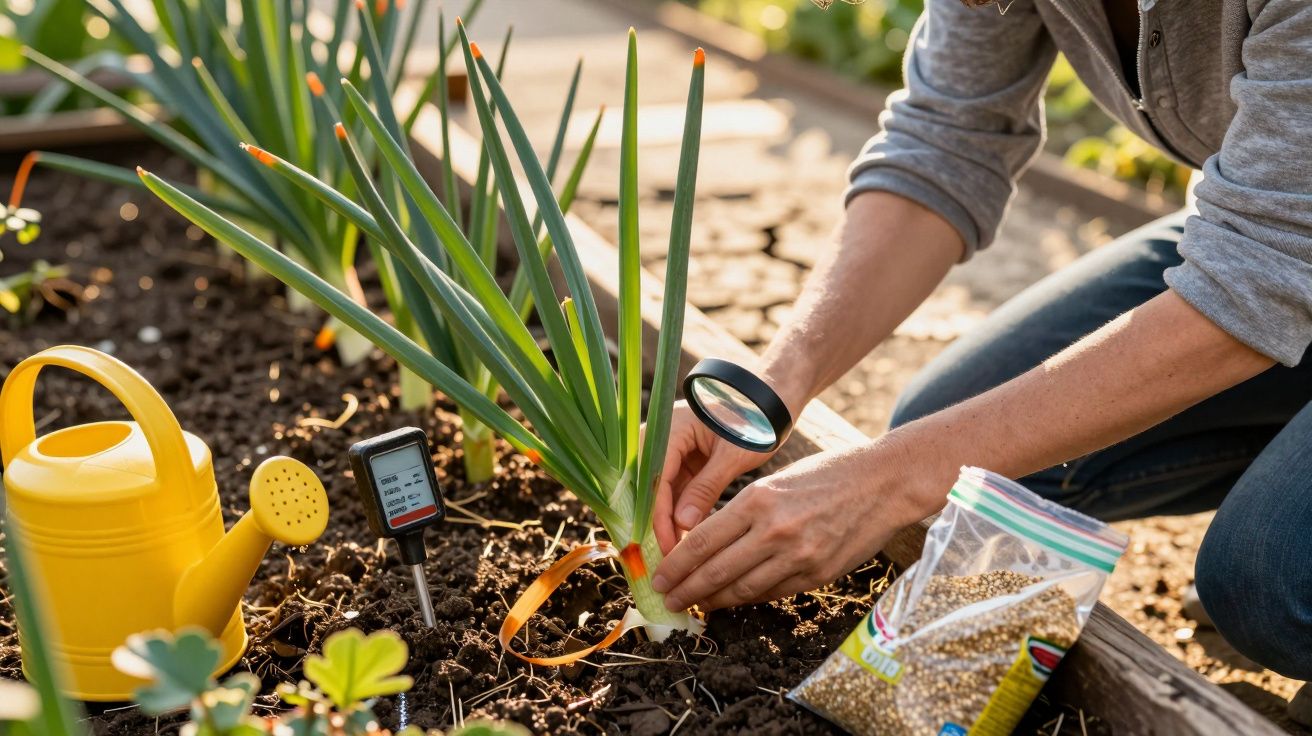
Leeks show up in everything from winter soups to Sunday roasts, and they’re one of the easiest allium crops to keep going in a UK garden or allotment. Alongside ``, they matter because they’re meant to be the “reliable gap-filler”: you nurse them through summer, then pull them for months when little else is standing. The catch is that leeks work brilliantly-right up until a few key conditions shift, and then they can stall, split, rot or turn scruffy almost overnight.
If you’ve ever had a bed of strong, blue-green plants that suddenly stop bulking up, you’ll know the feeling. Nothing dramatic happens. They just… stop looking like leeks you’d actually want to cook.
Why leeks feel foolproof (and why that’s misleading)
Leeks earn their reputation because they tolerate cold, shrug off light frosts, and can sit in the ground as “living storage” through much of winter. They also transplant well compared with fussier crops, which is why traditional leek-growing is built around moving pencil-thin seedlings into final holes.
But “tolerant” isn’t the same as “indestructible”. Leeks are steady performers when three things stay stable:
- consistent moisture (not drought, not waterlogging)
- steady feeding (not feast-or-famine nitrogen)
- moderate temperatures while they’re bulking up
Change one of those-especially quickly-and the plant often switches from growth mode into survival mode. You still have a leek, technically. It’s just thin, tough, split, or prone to disease.
Leeks don’t usually fail loudly. They fail quietly, by refusing to put on weight.
The condition changes that cause most leek problems
Most leek disappointments trace back to a small set of “shifts” rather than a single mistake. The plant is coping, then the garden changes around it.
1) Wet ground that stays wet
Leeks like moisture, but they hate stagnant, airless soil. A run of heavy rain, compacted beds, or a low spot in the plot can turn the root zone anaerobic. The result isn’t always instant collapse-more often you see slow growth, yellowing, and a leek that never fattens.
Typical signs:
- leaves paling from the outside in
- a slightly loose plant that doesn’t feel anchored
- a base that looks watery, soft, or begins to smell “off” when pulled
What helps fast:
- stop watering completely until the top few centimetres dry
- gently hoe the surface to break any crust and let air in
- if the bed is chronically wet, move next year’s leeks to a raised ridge or a different plot section
2) Heat spikes and drought after a good start
A warm week in late spring or summer can flip leeks from “steady” to “stressed”, especially in sandy soil or beds with lots of competition. Drought doesn’t just slow growth; it can also set up the plant for splitting later when heavy rain returns.
What it looks like:
- leaf tips browning and crisping
- grey-blue leaves turning dull and slightly limp
- growth pausing, then resuming unevenly (often with thicker, rougher layers)
A simple approach that works:
- water deeply, less often (think: soak the root zone, then leave it)
- mulch around plants with compost or well-rotted organic matter to level out moisture swings
- weed like you mean it-leeks hate competition when they’re trying to bulk up
3) A sudden surge of nitrogen
Leeks respond to feeding, but they respond badly to big jolts. A heavy dose of fresh manure, a strong liquid feed, or a rich patch in the bed can create lush top growth that’s more vulnerable to rust and less resilient in weather swings.
If your leeks are “all leaf, no stem”, or they look impressively tall but still skinny at the base, suspect the balance is off.
Try this instead:
- feed lightly and consistently (small, regular applications beat one big hit)
- if you’re using a general fertiliser, keep an eye on nitrogen-heavy blends
- prioritise soil structure and moisture stability-leeks often bulk up better with compost than with aggressive feeding
The problems that show up after the shift
Once conditions change, leeks tend to express it in a few predictable ways. The trick is to treat the cause, not the cosmetic symptom.
Leek rust that appears “out of nowhere”
Rust often follows a stress period: drought, overcrowding, then damp weather. You’ll see orange pustules along leaves, and while it rarely kills the plant outright, it reduces vigour and makes the crop look tatty.
What to do:
- remove the worst affected leaves (don’t compost them if rust is heavy)
- improve airflow: weed, thin nearby crops, avoid letting leaves mat together
- keep watering consistent-stop the drought-then-drench cycle that invites infection
Splitting and flaring at the base
Splitting is usually moisture instability: dry spell, then rain, or irregular watering. It can also happen when plants are left too long and start to push new growth layers in fluctuating conditions.
You can’t “heal” a split leek, but you can prevent the next ones:
- mulch to stabilise moisture
- water on a rhythm (same days each week during dry spells)
- harvest earlier if a variety is clearly reaching its comfortable size
Thin stems that never thicken
This is the classic slow disappointment: plenty of leaves, no bulk. The usual suspects are shade, crowding, low potassium, inconsistent water, or simply a variety that needs more time.
Quick checks that matter more than people think:
- spacing: if leeks are too tight, they compete and stay narrow
- light: a bed that’s fine in May can be shaded by taller crops in July
- time: many maincrop leeks bulk in late summer into autumn, not early on
A quick leek “triage” checklist
If your leeks were fine and then stalled, run this like a quick diagnostic rather than a full post-mortem.
- Has the soil stayed wet for days at a time? If yes, prioritise drainage and stop watering.
- Did you have a hot week followed by a downpour? If yes, expect splitting and stabilise moisture with mulch.
- Have weeds crept in or neighbouring crops shaded the bed? If yes, clear competition immediately.
- Did you feed heavily recently? If yes, pause feeding and focus on even watering and airflow.
- Are there orange rust spots starting low on the leaves? If yes, remove infected leaves and reduce humidity around plants.
The small changes that keep leeks steady when the weather isn’t
Most leek “success” is boring, repeatable management. The aim is not perfection-it’s avoiding dramatic swings.
A practical, low-effort routine:
- Mulch once, properly. A 3–5 cm layer of compost around (not on top of) the stems evens out moisture and supports soil life.
- Water like a reservoir, not a shower. One deep soak beats daily sprinkles that encourage shallow roots.
- Keep spacing honest. Crowding feels efficient until late season, when nothing bulks.
- Weed early, then stay on it. Leeks do not compete well during the thickening phase.
- Don’t chase size with feed. If the soil is decent and moisture is stable, leeks usually catch up.
The best leek bed is the one that changes least: steady moisture, steady space, steady progress.
Symptom-to-cause guide (for when you just want the answer)
| What you see | Likely condition change | What to do next |
|---|---|---|
| Yellowing, slow growth, loose plants | Waterlogging/compaction | Stop watering, aerate surface, improve drainage |
| Split stems, flared bases | Drought then sudden wet | Mulch, water consistently, harvest earlier |
| Rust spots after a stress period | Crowding + humidity + stress | Remove worst leaves, improve airflow, stabilise moisture |
When to accept it-and when to start again
Leeks are forgiving enough that you can often ride out a bad patch and still get usable stems for soups and stocks. If they’re thin but healthy, time and steady watering may still deliver a decent autumn crop.
But if your bed is persistently waterlogged, or rust is recurring every year in the same spot, it’s usually not a “leek problem”. It’s a site problem. Move the crop, fix the drainage, and treat steadiness as the real secret ingredient.
Because leeks really do work well. They just don’t like surprises.





Comments
No comments yet. Be the first to comment!
Leave a Comment