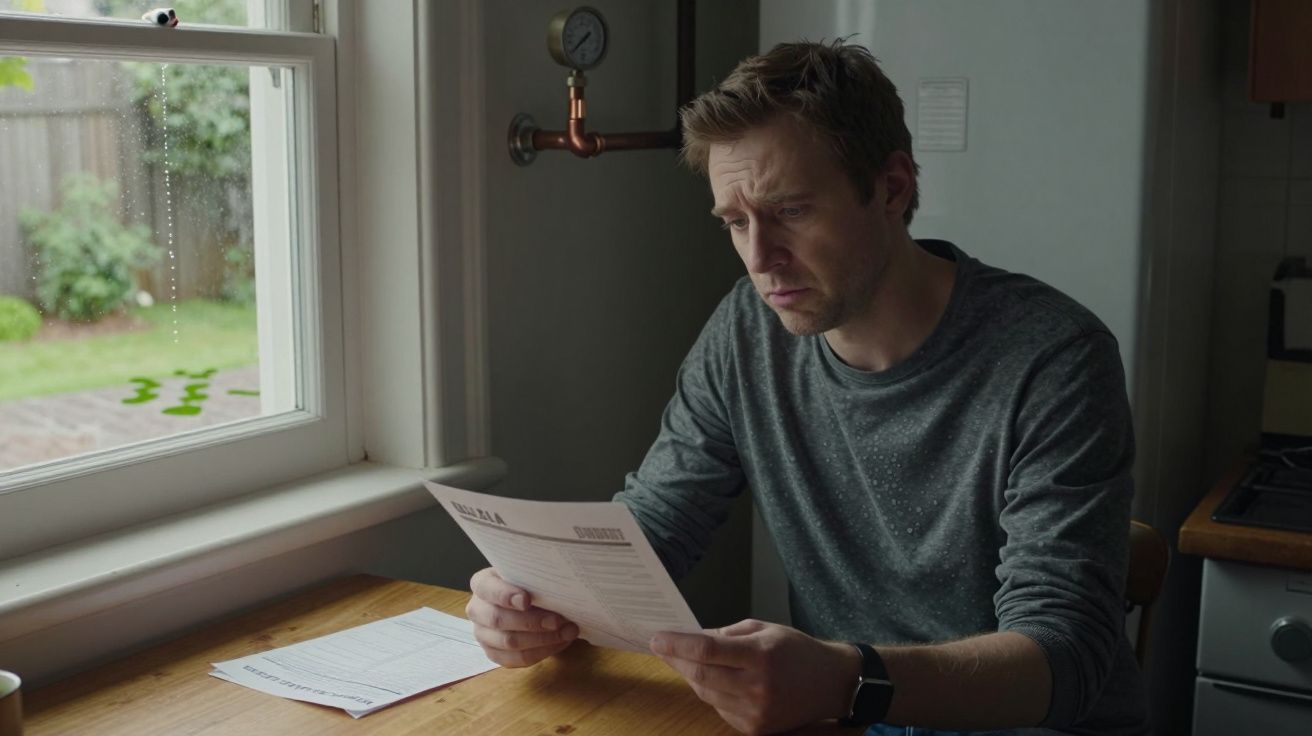
On a wet Friday in October, Sam carried the post in with the groceries and dropped the brown envelope on the kitchen table. Later, with the kettle hissing, he opened his annual energy summary. Same house, same routine, but the numbers had lurched: almost £400 more than last year. The boiler was only six years old. No one had taken longer showers. Something, somewhere, had been burning money very quietly.
Two weeks and one grumpy phone call later, a heating engineer stood by the back door, staring at a short copper pipe poking through the brickwork. There was a bead of water wobbling on the end, dropping every few seconds into a greenish mark on the paving. “There’s your problem,” she said. “Your boiler’s been bleeding into the garden. Tiny leak, big bill.”
The boiler had never “flooded” the kitchen. There were no dramatic puddles, no roaring noises in the night. The heating had seemed… fine, if a little sluggish on cold mornings. The only clues were a pressure gauge that kept drifting down and a filling loop that Sam had been quietly topping up “every now and then” for months.
Ask around trade counters and you’ll hear versions of the same story. Heating engineers talk about the £400 drip with the weariness of people who see it every winter: a small leak on a combi boiler that homeowners ignore because it looks harmless, right up until the bill or the breakdown lands.
This weekend, they’d quite like you to go and look for it.
The leak hiding in the “harmless drip”
A modern combi boiler is a sealed system. It heats both your radiators and your taps without a hot-water cylinder, keeping the central-heating side pressurised at around 1–1.5 bar. When that pressure creeps too high, a safety valve opens and sends excess water out through a pressure relief discharge pipe – usually a bare copper pipe that exits outside, elbow bent towards the ground.
On a healthy system, that pipe stays dry almost all the time. It might spit briefly if the boiler has a wobble, then settle. What engineers are seeing more and more is a slow, steady drip from that pipe even when the boiler is at rest. A seal inside the safety valve has started to fail, or corrosion has left the valve reluctant to close. The system responds the only way it knows how: by quietly dumping hot water out of the building.
To keep the boiler running, somebody – often you – then opens the filling loop, that little silver flexi-hose under the boiler, to top the pressure back up from the mains. Fresh water, full of oxygen, flows in. The boiler has to heat that from cold again. The cycle repeats, sometimes dozens of times a week.
There are other small leaks that behave just as slyly. A towel rail oozing from a valve. A pinhole in a pipe under a floorboard. A condensate pipe dripping at a joint so slowly it only leaves a faint white trail. Each one looks like nothing. Together, they’re a quiet tax on your boiler, your bills and, eventually, your plasterboard.
How a slow leak adds pounds to your bill
A drip feels too small to matter. The maths says otherwise.
A single drip once a second can waste around 15–20 litres of water a day. If that’s cold mains water from a tap, it’s annoying. If it’s hot water your boiler has already paid to raise to temperature, it’s worse. On a combi, a leak on the heating side forces the boiler to reheat and repressurise, often firing up multiple times just to replace what’s escaped.
Inside the boiler, constant topping-up has two nasty side effects:
- More corrosion, more sludge. Fresh water brings oxygen. Oxygen eats metal. Over time that accelerates rust in radiators and pipework, creating sludge that clogs heat exchangers and pumps. The boiler has to burn more gas to push the same warmth through a narrower route.
- Short-cycling and wasted gas. A small but persistent demand – from a leak or a dripping hot tap – can trick the boiler into frequent on–off cycles. Each ignition burns fuel without delivering much useful heat to the rooms you’re actually sitting in.
Engineers who pull data from smart meters see the pattern: a saw-tooth trace of little gas bursts all night, even when the house is asleep. Add in a year of gentle hot-water loss, extra top-ups, and a system slowly furring up, and that “harmless” leak can easily add hundreds of pounds over a couple of winters – in extra energy, wasted water if you’re metered, and earlier call-outs.
Let’s be honest: hardly anyone tracks every tiny change in their pressure gauge or filling loop use. That’s why the leak gets to run up a tab before anyone notices. The good news is you can spot the common signs in a few minutes, without a tool in your hand.
The five‑minute weekend check heating engineers wish you’d do
You’re not going to service your own gas appliance – that’s for a Gas Safe engineer. But you can do a simple “eyes and ears” check that catches problems early. Pick a dry spell this weekend, turn the heating off for half an hour, then try this:
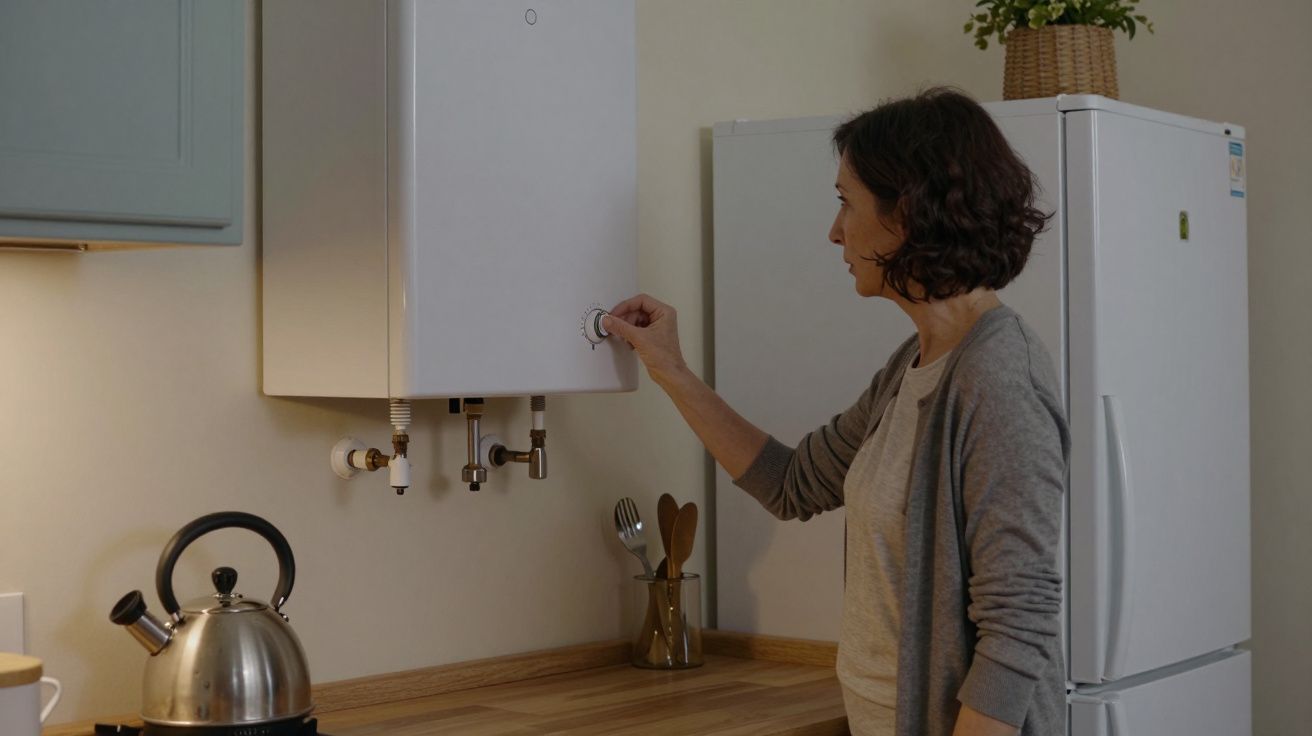
Look at the pressure gauge.
- On most combis it’s on the front panel or just under the boiler.
- With the system cool and off, you want roughly 1–1.5 bar.
- If it’s near zero, or you know you’ve topped it up more than once in the last few months, make a note.
- On most combis it’s on the front panel or just under the boiler.
Find the copper “safety” pipe outside.
- Look for an unpainted copper pipe, usually 15mm wide, exiting from the area behind the boiler, then bending down towards the ground.
- Is the end bone-dry, or does it look greenish, stained, or damp? Any drip while the boiler is off is a red flag.
- Look for an unpainted copper pipe, usually 15mm wide, exiting from the area behind the boiler, then bending down towards the ground.
Listen in a quiet room.
- With heating and hot taps off, you shouldn’t hear water hissing or trickling within the boiler.
- An occasional faint click is normal; a constant hiss or running sound is not.
- With heating and hot taps off, you shouldn’t hear water hissing or trickling within the boiler.
Check under and around the boiler.
- Run your hand carefully along visible pipes (watch for sharp edges and hot surfaces).
- Look for crusty white or green deposits, rust marks, or warped skirting boards that suggest an old leak.
- Run your hand carefully along visible pipes (watch for sharp edges and hot surfaces).
Follow the white plastic condensate pipe.
- This drains acidic condensate from modern boilers, often into a waste pipe or an external drain.
- Joints should be tight, with no weeping, and any external section should be intact and not dripping constantly when the boiler is off.
- This drains acidic condensate from modern boilers, often into a waste pipe or an external drain.
Glance at radiators and valves.
- Look for rust streaks down the front, damp carpet patches, or valves with tide marks of dried water.
- A towel rail that always feels slightly damp at the bottom joint is worth attention.
- Look for rust streaks down the front, damp carpet patches, or valves with tide marks of dried water.
You’re not diagnosing the fault, just gathering clues. If anything looks or feels wet when it shouldn’t, or if your pressure keeps dropping without an obvious reason, it’s time to take the next step.
What to do if you spot a leak (and what not to touch)
The instinct to tighten, poke, or tape your way to victory is strong. Resist it around a boiler.
Here’s a calm order of play:
Turn off the filling loop.
If you know where it is, make sure both little isolation valves on the flexi-hose under the boiler are fully closed (usually with their slots at right angles to the pipe). Leaving the loop open can mask a leak and quietly over-pressurise the system.Catch, don’t cap.
If water is dripping from a visible joint indoors, put a tray, towel, or bowl under it to protect floors. Do not plug or cap a copper discharge pipe – that’s a safety outlet, and blocking it is dangerous.Photograph everything.
Take clear pictures of any drips, stains, and the pressure gauge reading. Note how often you’ve been topping up. This helps the engineer and can speed the repair.Call a Gas Safe registered engineer.
Search the Gas Safe Register or use a trusted recommendation. Mention if the drip is from the outside copper pipe, the condensate, or a radiator. If water is pouring rather than dripping, turn the boiler off at the controls and, if safe, at the fused spur.Ask for the root cause, not just a reset.
A failing pressure relief valve can be replaced. A system choked with sludge might need cleaning and inhibitor adding. The aim is to stop the leak and the behaviour that created it, not just boost the pressure and hope.
What you should not do: remove the boiler case, adjust internal components, or try to change safety valves yourself. Anything involving the gas train or sealed combustion chamber is legally and practically a job for someone qualified.
“By the time people call us, they’ve been living with a drip for so long it’s part of the house,” one engineer told me. “Then they see the state of the pipework inside, or the bill in their hand, and they wish they’d checked a year earlier.”
Signs, causes and why they matter
A few of the most common clues, decoded:
| What you notice | Likely culprit | Why it matters |
|---|---|---|
| Pressure keeps dropping, outside copper pipe is stained or dripping | Weeping pressure relief valve or over-pressurised system | Constant water loss, boiler short-cycling, higher bills and risk of internal damage |
| Boiling kettle sounds or gurgling in radiators, some cold spots | Sludge build-up from repeated top-ups and long-term micro-leaks | Lower efficiency, more gas used to heat rooms, strain on pump and heat exchanger |
| Damp patch under boiler or below upstairs radiator | Small leak on joint or pipe, sometimes hidden in flooring | Damage to floors/ceilings, slow loss of pressure and heat, potential mould |
None of these mean the boiler needs replacing tomorrow. They do mean it needs attention sooner rather than “when it finally packs up in January”.
Care, here, is less about memorising every component name and more about building a small habit: glance at the gauge, find the pipe, listen for the hiss. Tiny checks, caught early, keep tiny leaks from becoming big stories.
FAQ:
- Is it normal for the outside copper pipe to drip sometimes?
A brief discharge after a pressure spike can happen, but a regular drip when the boiler is at rest is not normal. If the pipe looks stained, wet, or is steadily dripping, get it checked.- Can I just keep topping up the pressure myself?
You can safely top up an occasionally low system following your boiler manual, but repeated top-ups point to a leak or fault. Constantly adding water accelerates corrosion and will cost you more in the long run.- How often should I look at my boiler pressure?
A quick glance once a month, and before and after the heating season, is usually enough. If you find you’re checking weekly because it keeps falling, that’s a sign to call an engineer.- Is a tiny drip dangerous, or just expensive?
The immediate risk is usually to your bills and your building fabric rather than life and limb, but any fault with a gas appliance should be taken seriously. The same neglect that lets a leak run for years often means other servicing has been skipped.- Will a boiler service pick this up?
A proper annual service by a Gas Safe engineer should include checking safety valves, pressure, and visible pipework. It’s worth mentioning any drips or regular top-ups you’ve noticed so they can target the right tests.




Comments
No comments yet. Be the first to comment!
Leave a Comment