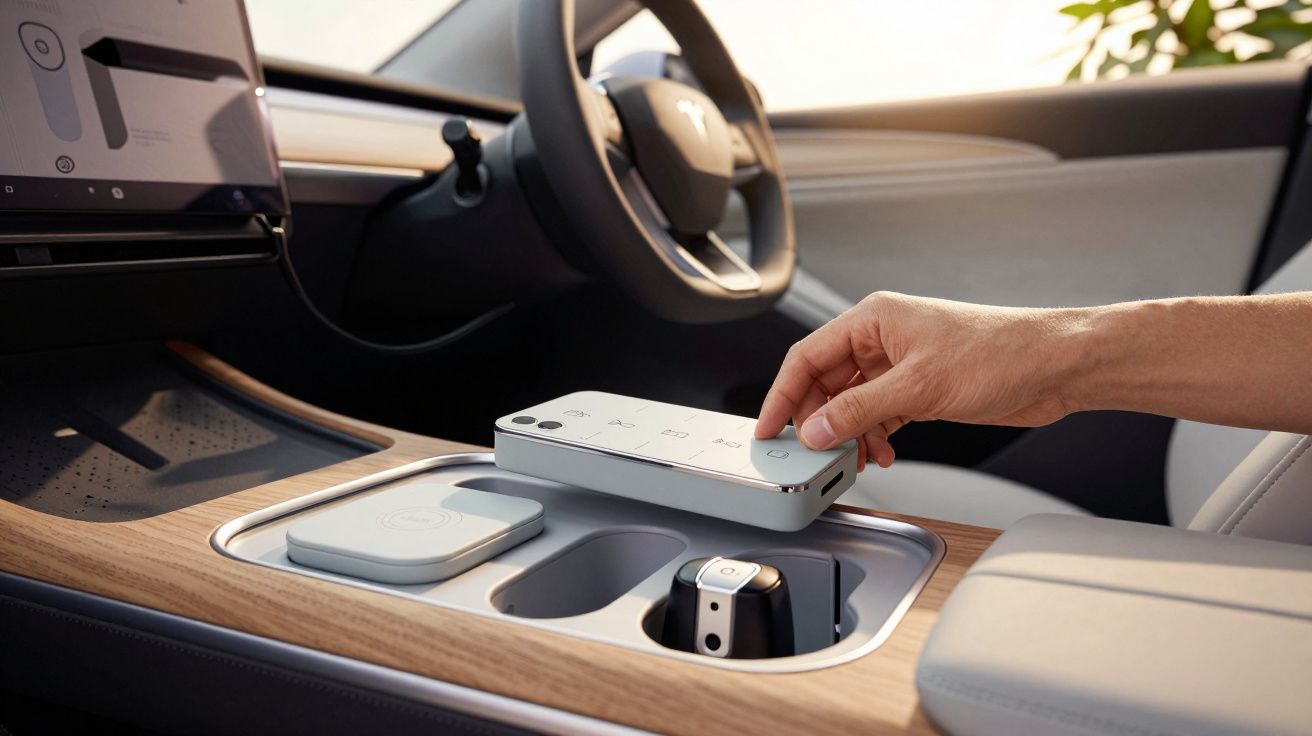
The interesting thing about buying a car in 2025 is that it increasingly feels like buying an app with wheels, complete with updates, subscriptions and a data trail. Peugeot sits right in the middle of that shift, and the absence of any obvious secondary entity in the story is the clue: this change isn’t being driven by one rival, one regulation, or one breakthrough. It’s a broad reset of how cars are built, sold and lived with, and it affects what you’ll pay, how you’ll charge, and what you’ll be allowed to do with your own vehicle.
For years, it was easy to tell a simple automotive story: make cars, sell cars, service cars. Now the industry is quietly reformatting itself around software, energy and “use” rather than ownership, and brands like Peugeot are adapting faster than many people expected.
The bigger trend: cars are becoming managed devices
The most important change isn’t the badge on the bonnet. It’s the idea that a car is no longer a finished product the day you collect it.
Electric drivetrains made this easier-fewer moving parts, more centralised control-and consumer tech taught buyers to expect improvements after purchase. That combination is pushing the industry towards the “software-defined vehicle”: a car whose behaviour can be adjusted, improved (or restricted) over time.
The modern car is drifting from “mechanical asset” to “managed device”, and that changes who holds power after the sale.
For Peugeot, this shows up in three practical ways that UK drivers will notice:
- More functions mediated by software, from driver assistance to battery pre-conditioning.
- More account-based ownership, where the car is tied to logins, apps and digital services.
- More frequent changes in pricing and packaging, as features move into trims, options, and subscriptions.
This doesn’t mean every feature will sit behind a paywall. It does mean the business model is being rebuilt so revenue doesn’t stop at the forecourt.
Why Peugeot’s timing matters
Peugeot isn’t trying to out-tech Silicon Valley. It’s doing something more pragmatic: making itself fit a world where margins on hardware are under pressure and policy is moving fast.
In the UK and Europe, electrification targets, city clean-air rules and volatile energy prices have all pushed car buyers into a new kind of calculation. The question isn’t only “how much is the car?” but:
- What will it cost to run if my tariff changes?
- How quickly will it depreciate as batteries improve?
- Can I charge where I live, and what happens if I can’t?
Peugeot’s recent product direction-more electrified models, more emphasis on efficiency, and more effort to control the end-to-end customer relationship-maps neatly onto those anxieties.
The “Lidl effect” in automotive: smaller, faster, more automated
Look at what’s happening in retail and you can see the shape of the car market. Customers are being trained to value speed, simplicity and low friction: less waiting, fewer steps, fewer humans in the loop unless something goes wrong.
Car buying is following the same pattern. It’s not that showrooms vanish overnight, but the journey is being redesigned around:
- Online configuration and finance
- Remote updates and diagnostics
- Simplified servicing schedules
- More self-serve interfaces, from charging to app-based support
For Peugeot, the strategic benefit is straightforward: if you can reduce the cost-to-serve and standardise platforms, you protect margins even when sticker prices get politically sensitive.
The risk is also obvious. The more “digital-by-default” the experience becomes, the more you have to answer awkward questions about access, data, and what happens when the system fails.
The charger myth, but for cars: the obvious culprits aren’t always the expensive ones
In home energy, people fixate on phone chargers because they’re visible-even though the real savings often sit elsewhere. EV running costs can develop the same mythology.
Drivers obsess over a single public charging session price (fair enough, some are eye-watering), but the bigger, slower cost drivers often hide in habits and defaults:
- Charging at the wrong times on time-of-use tariffs
- Leaving the car at very low or very high state-of-charge unnecessarily
- Tyre choice and pressures (efficiency losses compound over a year)
- Heat use in winter without pre-conditioning when plugged in
Peugeot’s role in this trend is less about inventing a magic battery and more about baking efficiency and guidance into the product-range planning, thermal management, and the UX that nudges drivers towards cheaper behaviour.
Not glamorous, but it’s where real-world satisfaction is won.
The modular-home trend, but for vehicles: flexibility beats “one perfect car”
The old ideal was a single do-it-all car: commute, holidays, tip runs, school drop-offs, everything. But households have become more mixed in how they travel, especially with hybrid work and rising urban costs.
Just as homes are shifting from dedicated guest rooms to multi-use spaces, cars are shifting towards “mobility capacity” rather than one fixed use case. People patch together:
- a smaller daily driver,
- occasional long-distance needs,
- delivery for bulky purchases,
- and sometimes a second car that hardly moves.
Peugeot fits neatly here because its mainstream sweet spot has long been practical, space-efficient cars rather than niche status symbols. In a world where people want adaptable transport with predictable costs, that positioning becomes an advantage.
What “flex” looks like in practice
It shows up less in marketing and more in behaviour:
- Drivers choosing compact EVs for daily miles and renting bigger vehicles for holidays.
- Households keeping one car but changing how they pay (PCP, salary sacrifice, subscriptions).
- More buyers prioritising charging convenience over 0–60 times.
Peugeot doesn’t need to “win” every category. It needs to stay credible across enough daily missions to remain the default choice.
Where Peugeot’s strategy aligns with the wider reset
Peugeot’s approach makes most sense when you view it as part of an industry-wide unbundling: platforms, software, energy, and lifecycle services becoming as important as the metal.
Here’s the shift in a compact way:
| Old car world | New car world | Where Peugeot fits |
|---|---|---|
| One-off sale | Ongoing relationship | Apps, updates, services and finance packages |
| Hardware-first | Software-and-energy-led | Efficiency, battery management, connected features |
| Fixed ownership | Mixed access | Leasing/salary sacrifice, fleet and flexible use |
None of this guarantees a better experience. But it explains why brands that once competed mainly on styling and engines now talk about ecosystems, charging and digital journeys.
The trade-offs: convenience, control, and who gets left behind
As cars become more “managed”, the benefits are real: faster improvements, better diagnostics, fewer surprises when something fails. Yet the downsides deserve equal attention.
- Data and privacy: connected services require collection; clarity and consent matter.
- Repair and ownership rights: software locks can complicate independent repair.
- Digital exclusion: if key functions assume an app, some drivers will be penalised.
- Resale complexity: accounts, subscriptions and feature activation can muddy second-hand value.
If Peugeot-and the industry-gets this wrong, the backlash won’t be abstract. It will be practical: angry owners, weaker residuals, and a growing preference for simpler vehicles.
The winning brands won’t just electrify. They’ll make the new complexity feel optional, not compulsory.
What this means if you’re buying (or keeping) a Peugeot now
For most people, the useful takeaway is not “go electric tomorrow” or “avoid subscriptions at all costs”. It’s to shop with a slightly different checklist.
- Ask what functions rely on the app, and whether there are fallbacks.
- Check how updates are delivered and whether they’re included for the life of the car.
- Look at efficiency and charging support features as “quality-of-life kit”, not gimmicks.
- Consider resale: the simpler the trim and feature structure, the easier the second-hand story tends to be.
Peugeot’s place in the bigger trend is essentially this: it’s a mainstream brand learning how to operate like a service business without losing the ordinary-driver clarity that made it mainstream in the first place. That balancing act-between frictionless convenience and real-world usability-is where the next decade of car ownership will be decided.
FAQ:
- Is this trend mainly about electric cars? EVs accelerate it, but the deeper change is software, connectivity and new payment models. Petrol and hybrid cars are also becoming more account-based and update-driven.
- Will cars genuinely move to subscription features? Some already have, in limited areas. The more important shift is packaging: features bundled into trims, optional packs, and service plans rather than simple “included vs not included”.
- What should I prioritise when comparing similar Peugeots? Focus on efficiency, charging convenience (if applicable), and which features work without an app. Those factors tend to matter more day-to-day than marginal performance differences.



Comments
No comments yet. Be the first to comment!
Leave a Comment