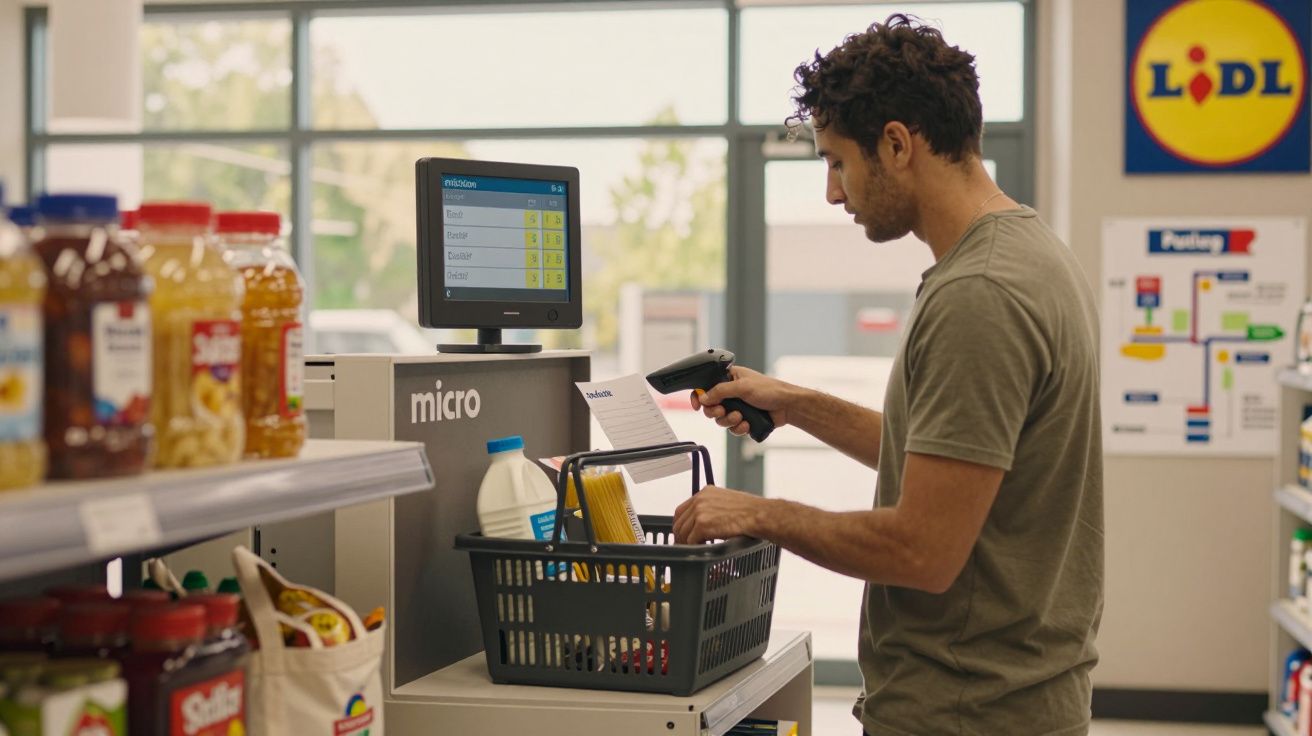
You can walk into a Lidl on an ordinary weekday and feel it happening: the shop is getting faster, leaner and more “set up for errands” than a weekly ritual. Lidl and `` matter here because what looks like a quirky store-format experiment is actually a clear signal of where everyday retail is heading - and what that means for costs, jobs, privacy and even how often you pop out for milk.
The surprise isn’t that a discounter wants to cut overheads. It’s that Lidl is starting to behave like the rest of modern life: fewer fixed “rooms”, more flexible missions, and a quiet obsession with measuring and optimising everything in the background.
The bigger trend: everything is becoming a micro-version of itself
For years we built retail around the big weekly shop: large stores, long aisles, bulk buying and a trolley you could lean on. That model still works, but it’s no longer the only centre of gravity - especially in cities, suburbs and commuter belts where people shop in bursts between work, school runs and trains.
Lidl’s compact, semi-automated stores sit neatly inside that shift. Smaller footprints (around convenience-store scale), tighter ranges weighted towards staples, and layouts designed for speed are essentially retail’s version of the multi-use living room: less space sitting “idle”, more space earning its keep daily.
The new promise isn’t “more choice”. It’s “less friction”.
The headline change is physical size, but the real change is behavioural. You don’t need a store to be huge if you can get shoppers to visit more often, buy a little more per minute, and keep the operation cheap enough to survive on slimmer margins.
Why Lidl’s experiment isn’t really about tech (it’s about costs)
Automation is the visible part - app entry, self-checkouts, sensors, electronic shelf labels. The less glamorous part is where the economics live: energy, staffing and stock discipline.
Early trial figures (shared with analysts) point to higher sales versus comparable traditional sites, alongside lower running costs. In low-margin grocery, a small nudge in either direction matters more than most shoppers realise. If a compact store can sell a bit more and spend a lot less to do it, that format stops being a “trial” and starts becoming a template.
What Lidl is chasing, in plain terms:
- Lower electricity use through smarter lighting and refrigeration controls
- Fewer staff hours per shop by shifting routine tasks to systems and self-service
- Better availability via real-time stock monitoring and tighter ranges
- Less waste through quicker markdowns and more responsive pricing
The pattern mirrors what’s happening at home with energy, too. People often focus on the obvious culprits (a charger here, a light there), but the real savings come from the background systems that run all day. Lidl is applying the same logic to stores: not one big dramatic change, but lots of small optimisations that stack.
The new customer journey: from “browse” to “complete the mission”
Classic supermarkets are built for wandering. You enter, loop the perimeter, drift through the aisles, and get nudged into a few extras. Lidl has always been more direct than most, but the compact model pushes that into something closer to a “mission shop”.
Instead of designing for discovery, the store is designed for completion: get in, get staples, pick up a high-margin extra (often non-food), and leave without queueing. That’s why the details matter - where the bread sits, how quickly you can pay, how reliably you can find the same basics every visit.
A mission-led shop changes what counts as a good range. It’s less about having ten options, more about having the right one or two at the right price, with the right availability. It also explains why Lidl is giving more structured space to its non-food winners.
Parkside, but make it predictable
Lidl’s middle aisle has always been a kind of weekly treasure hunt. In a smaller format, it can’t be chaotic in the same way - but it can be more repeatable.
Giving Parkside and DIY lines clearer presence does two jobs at once:
- It keeps the brand’s “unexpected bargain” identity alive in a smaller box.
- It lifts margins in a store where staples are price-sensitive and competition is brutal.
In other words: the drill isn’t a gimmick. It’s part of how the smaller store pays for the cheaper milk.
Dynamic pricing is the quiet leap - and it changes expectations
Electronic shelf labels and time-based markdowns aren’t just about being modern. They make pricing more responsive: sell-by dates, local demand, time of day, even weather-driven footfall can all be reflected faster than paper tickets ever allowed.
For Lidl, that means fewer yellow-sticker pile-ups and more controlled, earlier discounts that stop food becoming waste in the first place. For shoppers, it subtly reshapes what “a fair price” feels like, because price stops being a fixed sticker and becomes a moving signal.
This is where the bigger trend shows up most clearly: modern consumers are being trained to accept that prices and offers are fluid - like train fares, ride-hailing, or hotel rooms. Grocery has resisted that longer than most categories, partly because it feels like a necessity and partly because it’s so habitual.
Lidl is testing how far that resistance has softened.
When the label can change instantly, retail stops being a weekly leaflet and becomes a live system.
The trade-off nobody can ignore: convenience versus inclusion
A semi-automated store, by design, prefers customers who are digitally equipped: smartphone, contactless payment, comfort with cameras and account-based access. That’s not a moral failing; it’s the mechanism that makes the model cheaper to run.
But it does create a new kind of barrier - and the risk isn’t theoretical. Older shoppers, people without bank cards, anyone sharing phones in a household, or customers who simply don’t want app-based entry can be left with a message that feels like: this shop isn’t for you.
If Lidl scales this format, it will likely need visible, practical workarounds to avoid backlash:
- Physical access options (cards, codes, or assisted entry)
- Clear staffed support windows at predictable times
- A hybrid payment fallback when systems fail
- Plain-language data policies that don’t read like a trap
Because grocery is intimate. People forgive slow Wi‑Fi in a clothing shop; they don’t forgive being made to feel awkward buying dinner.
What Lidl is really building: a network, not just a store
The compact format makes most sense when you stop thinking of “a Lidl” and start thinking of “Lidl nearby”. A smaller unit can fit where a full supermarket can’t: edge-of-estate sites, dense urban streets, travel corridors, smaller towns that can’t support big-box footprints.
That creates a different future for discount retail: not one destination store, but many small, efficient points that catch micro-trips.
Here’s the shift in one glance:
| Old weekly-shop model | Compact Lidl model | What it signals |
|---|---|---|
| Big trip, big trolley | Frequent micro-trips | Shopping becomes a habit loop |
| Fixed prices, printed promos | Live labels, faster markdowns | Prices feel more “dynamic” |
| More staff-visible service | Remote + minimal staffing | Efficiency reshapes retail jobs |
This is why Lidl fits a bigger trend than it first appears. It’s not merely adopting automation; it’s aligning with a world where space, time and attention are all being squeezed - and businesses win by making the “default path” faster than the alternative.
The hard questions that come with scaling
If Lidl proves the numbers, others will follow - and the debate moves from “interesting pilot” to “new normal”. That raises a few issues that won’t be solved by better sensors.
- Jobs: fewer entry-level roles on tills, more technical oversight, more part-time coverage. Communities will feel that shift unevenly.
- Reliability: if access, payment and monitoring are system-led, outages stop being annoying and start being operational crises.
- Data: cameras and tracking can reduce shrink and speed up shopping, but they also normalise surveillance in a place people visit every week.
Lidl’s advantage is trust built on price. Its risk is that speed and automation can look, from the outside, like coldness - especially if shoppers feel monitored, nudged or quietly excluded.
The larger trend, then, isn’t “robots in supermarkets”. It’s the steady redesign of daily life around efficiency: smaller spaces, faster routines, fewer humans in the loop, and more systems deciding what happens next. Lidl isn’t inventing that direction. It’s simply bringing it to the place most people can’t avoid: the weekly shop.

Comments
No comments yet. Be the first to comment!
Leave a Comment