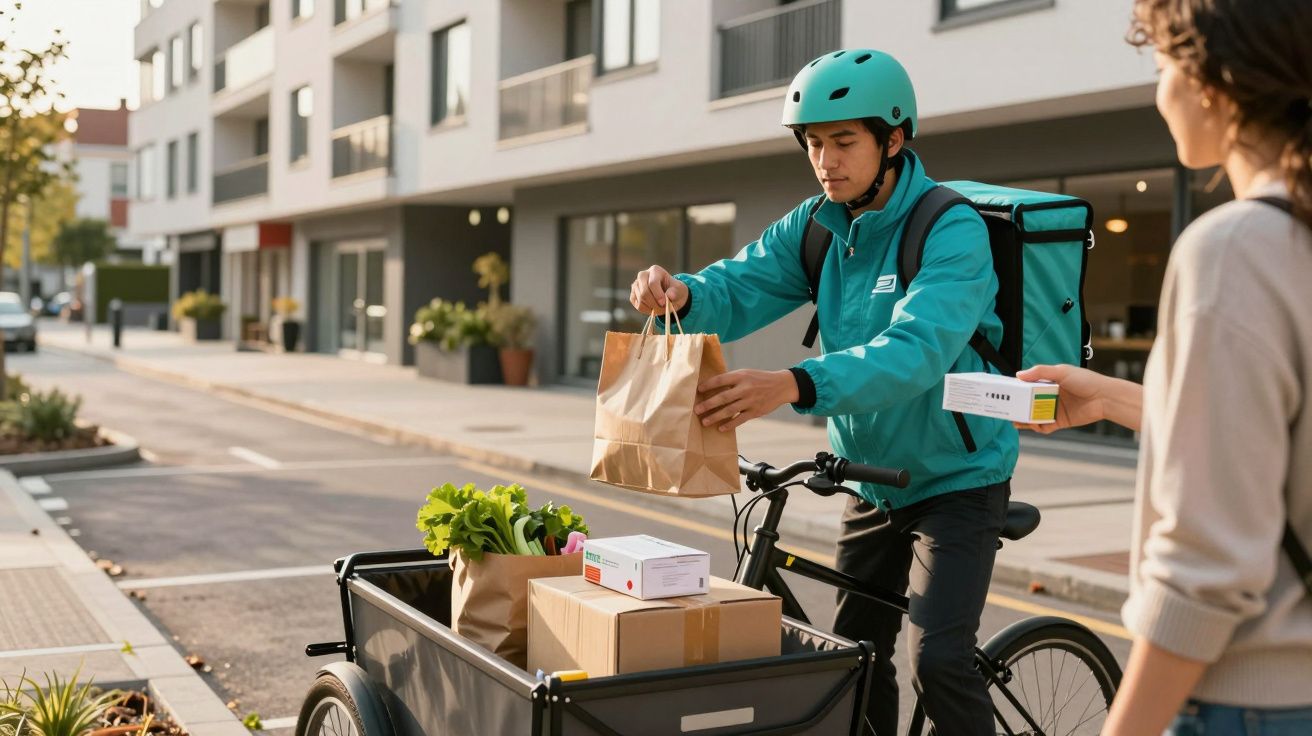
A few taps on your phone, and deliveroo turns a rainy Tuesday into hot noodles on the doorstep, or a last‑minute grocery top‑up before guests arrive. It matters because it’s quietly reshaping how people in the UK plan meals, how restaurants price their menus, and what “convenience” really costs in money, labour, and time. What looks like a simple takeaway service is, in practice, part of a much wider shift in how everyday life gets organised around delivery.
If you’ve ever wondered why your local café now has a “delivery menu”, why supermarkets keep adding rapid options, or why the same rider seems to be doing three different jobs in one hour, you’re already looking at the bigger trend.
Deliveroo is not just a takeaway app anymore
For most people, deliveroo begins as a craving solution: dinner, fast, without washing up. But the platform has been expanding its role from “restaurant courier” into a general purpose last‑mile channel, sitting between customers, kitchens, retailers, and riders.
That shift is easy to miss because the interface stays familiar. You still scroll, you still choose, you still pay. The underlying question has changed from “what do you want to eat?” to “what do you want delivered, and how soon?”
Deliveroo’s real product isn’t only food. It’s time compression: turning planning into a premium service you can buy back.
The bigger trend: everything becomes a delivery layer
The larger trend deliveroo fits into is the “delivery‑isation” of daily life: more categories migrating from scheduled, in‑person errands to on‑demand fulfilment. Food is simply the most emotional, repeatable use case, which is why it led the shift.
It’s also why the competition isn’t just other takeaway apps. It’s the supermarket that improves its own rapid service, the restaurant that pushes click‑and‑collect, and the consumer who decides that cooking counts as an economic choice rather than a default.
From “restaurant delivery” to a last‑mile operating system
Once a delivery network exists, it wants to stay busy. Riders, routing, customer support, refunds, basket building, identity checks, and timing promises all work better at scale.
That encourages platforms to add new types of inventory-groceries, alcohol, pharmacy essentials where permitted, flowers, even convenience items-because each order helps amortise the fixed costs of running the network. The meal becomes one category among many.
Why subscriptions and membership matter
You can see this shift in the way delivery is increasingly packaged. Subscriptions don’t just discount fees; they train behaviour.
A small delivery fee acts like a “speed bump” that makes you reconsider. Remove it, and the decision becomes purely about desire and habit-exactly what on‑demand businesses want.
Common subscription effects show up quickly:
- Higher order frequency, because the marginal cost feels lower
- Smaller baskets, because “I’ll just get it now” becomes normal
- Less comparison shopping, because you stick with the service you’ve already paid for
What changed on the supply side (restaurants and retailers)
Restaurants didn’t suddenly fall in love with delivery margins. Many joined because customers moved first, and not being on the platform started to feel like invisibility.
Delivery also changes what a restaurant is. The dining room becomes optional, the menu becomes modular, and the kitchen becomes a production unit that can serve multiple “brands” at once.
A few practical shifts have followed:
- Menus get engineered for travel, not just taste (crispness, steam, holding time).
- Packaging becomes part of the product, and a real cost centre.
- Peak times get algorithmic, with promos and placement affecting demand.
- Data becomes leverage, because platforms see the customer relationship end‑to‑end.
For retailers, the story is similar. Rapid grocery delivery isn’t only about convenience; it’s also about defending market share in the hours when people decide what they’ll eat next.
What changed on the customer side (and why it stuck)
The demand side is less about laziness than about modern scheduling. People aren’t just busy; they’re interrupted. A shop run requires a continuous block of time, while delivery can be slotted into gaps.
Deliveroo succeeds where it reduces “friction costs” that don’t feel like money:
- deciding what to cook
- commuting to buy ingredients
- carrying bags home
- cleaning up
- the risk of buying food you won’t use
That’s why delivery keeps growing even when people complain about fees. It’s not competing only with other restaurants; it’s competing with your future self doing admin.
The uncomfortable bits: labour, fees, and city space
This bigger trend comes with trade‑offs that are easy to outsource mentally-until they show up in your bill, your high street, or local policy.
There are three pressure points that keep resurfacing:
- Who carries the risk? Riders absorb weather, demand swings, and vehicle costs in ways customers rarely see.
- Who pays the platform tax? Restaurants may raise delivery prices, shrink portions, or treat delivery as marketing rather than profit.
- What happens to streets and storefronts? More pickup traffic, more waiting clusters, and more “delivery‑first” premises can reshape neighbourhoods.
None of this means delivery is “bad”. It means it’s infrastructure, and infrastructure always redistributes power and pressure.
The pattern in one glance
| What you notice | What it feels like | What’s really happening |
|---|---|---|
| More places deliver than before | Convenience is improving | Distribution is becoming a core product |
| Prices differ in‑store vs delivery | You’re paying extra | Fees get spread across customers and merchants |
| Same food, different “brands” | More choice | Kitchens are being unbundled into digital storefronts |
How to use the trend to your advantage (without spending more)
You don’t have to opt out completely to make delivery work for you. The trick is to treat it like a tool, not a default setting.
A few habits that tend to cut cost without cutting convenience:
- Use delivery for the “gap meal”, not every meal. Keep one reliable back‑up dinner at home for the nights you’re tired.
- Order for two meals on purpose, and reheat well (think curries, rice bowls, stews, roast chicken).
- Compare delivery vs collection when you’re already out; collection often restores value fast.
- Watch the small add‑ons (drinks, desserts, sides). They’re where baskets quietly inflate.
- Pick restaurants that travel well, so you’re paying for quality rather than disappointment.
If you do use subscriptions, set a simple rule: only keep it during months you genuinely use it. Otherwise it becomes a “sunk cost” that nudges you into orders you didn’t want.
What deliveroo signals about what’s next
Deliveroo isn’t an anomaly; it’s a preview of how more services will behave. Once customers get used to near‑instant fulfilment, the expectation spreads: to groceries, to household essentials, and eventually to categories that used to require planning.
The bigger trend isn’t that food arrives fast. It’s that planning is being replaced by platforms-and the real decision for consumers becomes when to pay with money, and when to pay with time.
FAQ:
- Is deliveroo mainly about restaurants or groceries now? For most people it’s still “food first”, but the bigger direction is broader: the same delivery network can carry meals, groceries, and convenience items, which makes the platform more resilient.
- Why are delivery prices often higher than eating in? Because the delivered meal includes extra costs: platform fees, payment processing, packaging, and the logistics of getting it to your door. Those costs are usually distributed across menu pricing and delivery charges.
- Does delivery replace cooking in the long run? Not fully. It tends to replace the most inconvenient cooking moments: the unplanned midweek meal, the forgotten ingredient, the “nothing in the fridge” evening. Many households end up mixing delivery with simpler home cooking rather than choosing one.

Comments
No comments yet. Be the first to comment!
Leave a Comment