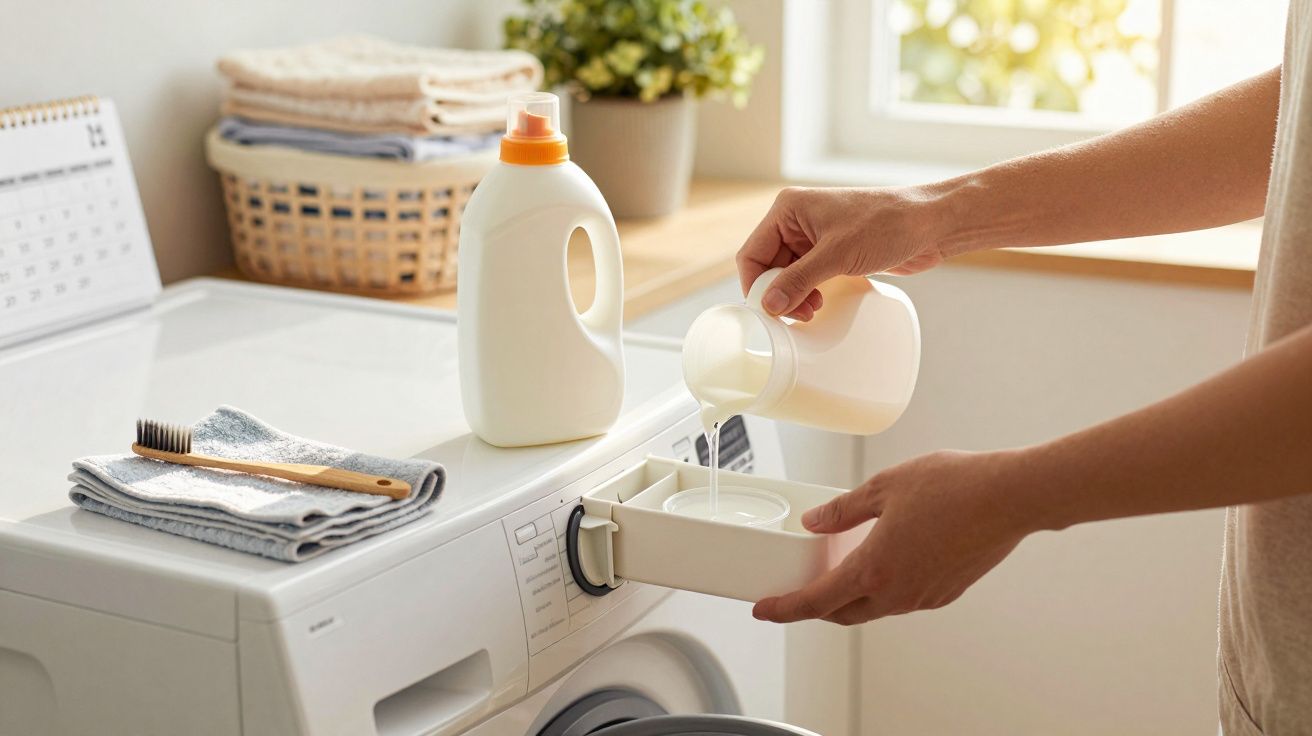
The washing machine is meant to be the quiet workhorse of the house, and liquid detergent is supposed to make the job easier. Yet one small, common laundry mistake-using “a bit extra” detergent for good measure-often does the opposite, creating smells, dull fabrics and a machine that seems to get worse with time. Fixing it is less about buying a new product and more about making one boring tweak you’ll barely notice.
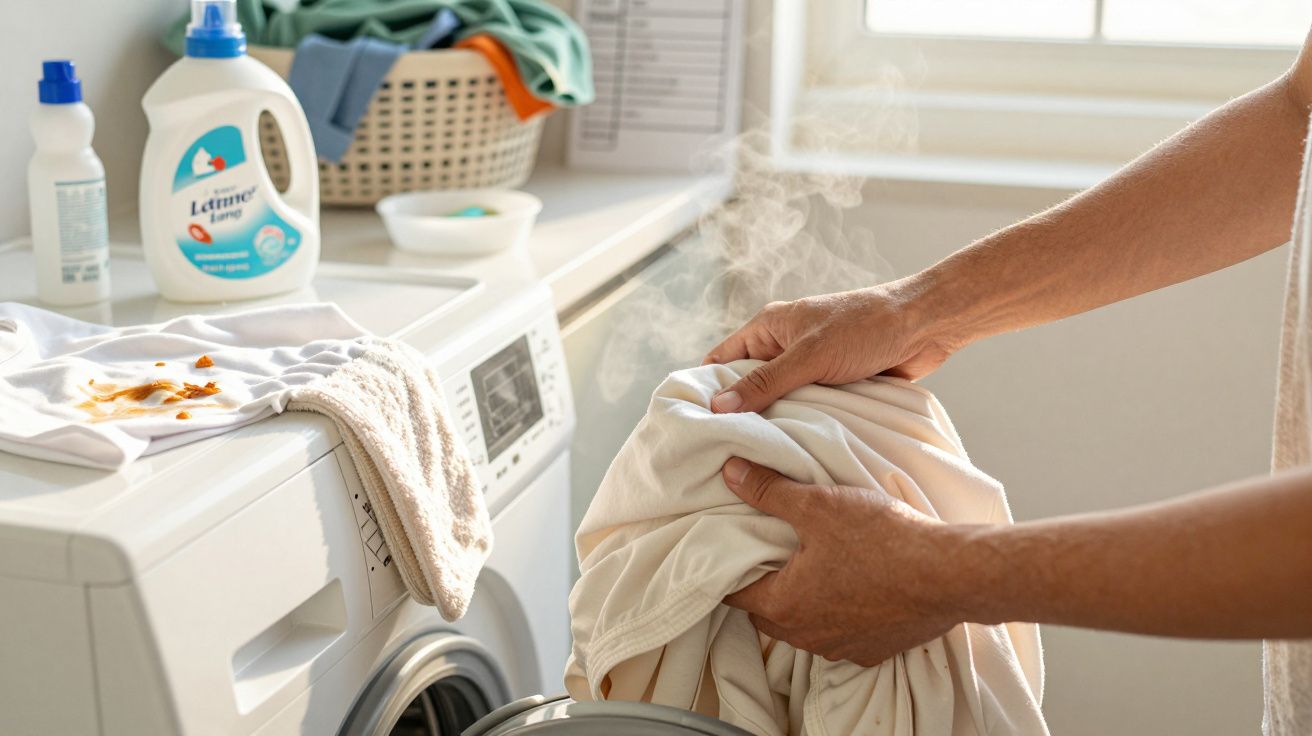
You usually spot the problem late: towels that feel waxy, black tees that look grey, and that faint damp odour that clings even after drying. By then, the residue has been building for weeks.
The small tweak that changes everything: measure, don’t guess
Most laundry issues that “mysteriously” show up later start with overdosing detergent. Not double, not a cupful-just a little more than needed, wash after wash, because the cap is vague and the habit is automatic.
The tweak is simple: use the minimum dose for your water hardness and load size, and treat “extra detergent” as the exception, not the default. If you want one rule that works in real life, start by using half the cap for everyday loads, then adjust only if clothes come out genuinely dirty.
Why too much detergent turns into bigger problems later
Detergent is designed to lift grime into the water, not stay in your clothes or your machine. When there’s more detergent than the wash can rinse away, the leftovers cling to fabric fibres and coat the inside of the drum and seals.
That residue becomes a magnet for lint and body oils. Over time, it creates the perfect environment for musty smells, stiff towels, and those tiny black specks people often mistake for mould “coming from nowhere”.
Here’s what it tends to look like in a normal household:
| What you notice | The hidden cause | The knock-on problem |
|---|---|---|
| Towels feel less absorbent | Detergent film on fibres | More detergent used next time, making it worse |
| Clothes smell “clean-damp” | Residue trapped in seams | Odour returns quickly, especially in activewear |
| Machine smells when empty | Build-up in drawer/seal | More frequent deep cleans, sometimes blocked drains |
A quick reset that doesn’t involve buying a new machine
If you’ve been overdosing for a while, measuring going forward helps, but you’ll get faster results if you clear the backlog first. This is the low-effort reset that usually makes the biggest difference.
1) Run one hot “maintenance” wash
Run an empty cycle at 60°C or hotter (check your machine’s guidance). Add either a machine cleaner tablet or a small amount of washing soda if you already have it, and let the cycle finish fully.
This isn’t about sterilising your life. It’s about dissolving the greasy film that cooler washes can leave behind.
2) Clean the bits people avoid
- Pull out the detergent drawer and rinse it under hot water, scrubbing the slimy corners.
- Wipe the rubber door seal, especially the bottom fold where water sits.
- Check and clean the filter (have an old towel ready; it’s rarely dignified).
Those three spots are where residue, lint and trapped water team up.
3) For the next 3–5 loads, keep it boring
Use a smaller detergent dose and skip softener for a few washes. Fabric conditioner can mask the feel of residue while adding its own coating, particularly on towels and sports kit.
If you want softness back, a small splash of white vinegar in the rinse can help some fabrics, but don’t treat it as mandatory. The main win is simply getting rinsing back on your side.
Other small laundry “almost mistakes” that quietly add up
Overdosing detergent is the big one, but it rarely travels alone. These are the easy-to-miss habits that tend to turn into bigger issues later.
- Overfilling the drum: if clothes can’t tumble, they can’t rinse. Aim for a loosely packed drum with space at the top.
- Leaving wet washing sitting: even an hour or two can sour a load, especially in winter. Set a timer if you keep forgetting.
- Doing every wash at 20–30°C: great for some loads, but mix in a hotter wash now and then for towels, bedding, and a cleaner machine.
- Shutting the door immediately: let the machine air out. A cracked-open door and drawer reduces that damp, stale smell dramatically.
None of this needs perfection. It just needs repetition.
The simplest “rules” that stop the cycle before it starts
If you want a tiny checklist you can keep in your head without turning laundry into a hobby, use this:
- Dose detergent to water hardness and load size (start smaller than you think).
- Don’t pack the drum tight.
- Dry the load promptly.
- Air the machine between washes.
- Run a hot maintenance wash monthly (or sooner if smells return).
Laundry problems are rarely sudden. They’re usually slow build-ups-so a small tweak, done consistently, prevents the bigger mess later.
FAQ:
- Is it ever OK to use more detergent? Yes-very muddy workwear or heavy bedding may need a higher dose, but it should be the exception. If “extra” is your normal, residue becomes likely.
- Why do my towels feel stiff even after using softener? Often it’s build-up. Too much detergent (and sometimes softener) coats fibres and reduces absorbency, which can make towels feel rough and oddly water-resistant.
- Do I need a special washing machine cleaner? Not always. A hot empty wash and cleaning the drawer, seal and filter solves many issues. A dedicated cleaner can help if smells and residue keep returning.
- Will this help with musty sportswear? Often, yes. Sports fabrics trap oils and detergent residue easily, so using less detergent and ensuring a proper rinse can reduce that “clean-damp” smell significantly.





Comments
No comments yet. Be the first to comment!
Leave a Comment