The hoover roared to life and, within seconds, the hallway smelt like an old cupboard.
Not “a bit dusty”, but that stale, warm odour that hits the back of your throat. She paused, thumb hovering over the off switch, wondering if the dog had dragged something unspeakable under the sofa. Windows open, candle lit, same story every time she vacuumed: clean carpets, musty air.
Her partner suggested a new machine. Her mum said, “Put a bit of perfume on a tissue and hoover that up.” The idea of pumping synthetic fragrance and warm dust through the house, though, made her nose itch just thinking about it.
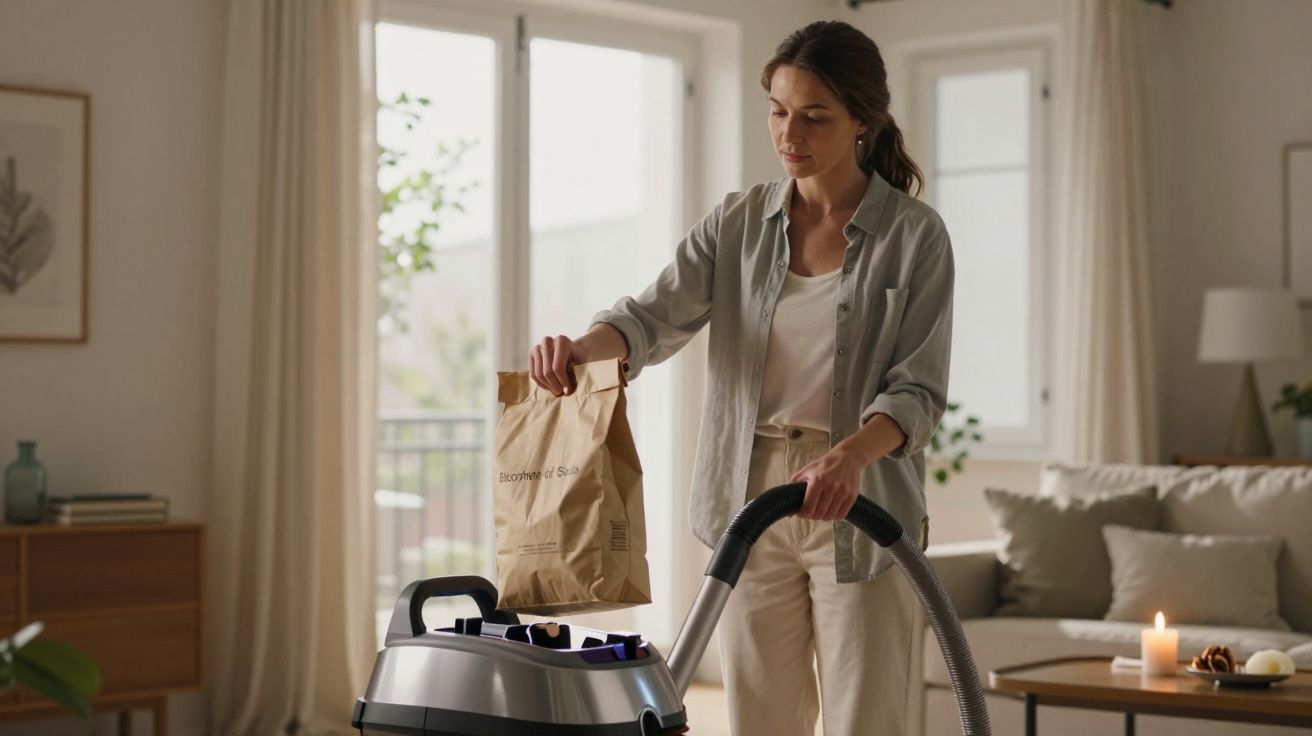
A week later, a professional cleaner came round to tackle the stairs and did something quietly odd. Before she started, she crumpled a plain brown paper bag, sprinkled a spoonful of white powder inside, folded it closed, and tucked it into the hoover’s dust compartment.
Forty minutes and three bedrooms later, the air smelt… of nothing much at all. No fake “fresh linen” scent, no mouldy note, just neutral. The cleaner shrugged when asked what she’d done.
“Old trick,” she said. “Paper and bicarb. It eats the smell instead of hiding it.”
Why hoovers start to smell musty in the first place
Most hoovers don’t smell bad because they’re “old”; they smell bad because they’re a bit damp and alive.
Inside the machine, you’ve got a perfect little ecosystem: warm motor, fine dust, pet hair, skin flakes, the odd bit of food. Add a touch of moisture from a just-mopped floor or a damp doormat, and bacteria and mould spores settle in. Every time you switch on, you’re reheating that mix and blowing the scent back out.
Bagged models trap most of the grime inside paper or synthetic bags. Leave a bag in too long, especially in a humid cupboard, and it will start to smell like any full bin. Bagless cylinders and stick vacs have another quirk: dust clings to plastic walls and filters even after you “empty” them, so stale odours linger.
We then make it worse in small, well-meant ways. Vacuuming up spilled milk powder, damp coffee grounds, or a soggy bit of dog food. Parking the hoover in a cold, slightly damp understairs cupboard. Forgetting to wash or change filters for… longer than we’d like to admit.
So when you press the button, what you’re smelling isn’t “the hoover”; it’s warmed-up, slightly mouldy dust. No amount of perfume will fix that for long. You either mask it, or you start absorbing it.
The paper bag trick: how it works and why pros like it
The “paper bag trick” a lot of cleaners use is almost suspiciously simple:
- a plain, unscented brown paper bag (or white lunch bag)
- a tablespoon or two of bicarbonate of soda (baking soda)
- a bit of airflow and patience
Bicarbonate of soda doesn’t cover smells, it reacts with many acidic and fatty odour molecules and neutralises them. The paper bag gives it a big, breathable surface and keeps the powder from clogging filters or flying straight into the motor.
As air rushes through the hoover, it passes over and through the paper bag. The bicarb quietly soaks up the musty notes, so what comes out of the exhaust smells much closer to “nothing” instead of “old airing cupboard”.
Two key differences from the usual “perfume on a tissue” hack:
- It targets the cause, not just your nose. You’re reducing the load of smelly compounds, not layering fragrance on top.
- It’s gentler on lungs and pets. No strong scent, fewer irritants for people with asthma, migraines or chemical sensitivities.
Soyons honnêtes : most people don’t want their lounge to smell like an air freshener aisle. They just don’t want it to smell like wet hoover.
Step-by-step: setting up the paper bag in your hoover
You don’t need special bags sold as “vacuum fresheners”. The basics from your kitchen cupboard will do.
Grab a small paper bag
A lunch bag or clean paper sandwich bag is ideal. Avoid glossy, coated or printed bags with heavy inks.Add bicarbonate of soda
Pop 1–2 tablespoons of bicarb into the bag. For a large cylinder hoover, you can go up to 3 tablespoons, but more isn’t always better; too much just gets heavy and can split the bag.Seal it loosely
Fold the top over once or twice. You want it closed enough that powder doesn’t spill, but not airtight. A small piece of tape or a staple at the fold is fine.Crumple for surface area
Gently scrunch the bag so it’s flatter and more textured. This gives more surface for air to pass around and through.Place it in the dust path
- For bagged hoovers: tuck the paper bag inside the main dust bag area, to one side, not blocking the intake.
- For bagless cylinders: lay it in the bottom of the dust canister, under where the dirt collects.
- For upright and stick vacs: find a spot in the dust cup where it won’t jam any moving parts.
Hoover as normal
Use the machine as you usually would. The bag will sit there quietly absorbing odours for a few weeks of regular use.Replace regularly
When you empty the hoover or change the main bag, bin the little paper bag and make a fresh one. If you notice the musty smell creeping back, that’s your nudge.
If you’re tempted to add essential oils to the bicarb, you can - but go carefully. A drop or two is plenty; too much oil can make dust clumpy and may irritate sensitive noses. The beauty of this trick is that it works without perfume at all.
Adapting the trick to different types of hoover
The principle stays the same, but the placement changes slightly.
Bagged cylinder or upright
Place the paper bag behind or beside the main dust bag, not in front of it. You want odorous air passing over the bicarb as it’s drawn towards the motor, without risking the paper bag being sucked into any moving mechanism.Bagless cylinder
Pop the paper bag flat in the bottom of the canister. If your model has a removable cyclone section, put the bag underneath that, so it doesn’t get tangled.Stick vacuum
Space is tight. Make a smaller paper packet (think teabag size) with 1 teaspoon of bicarb, and tuck it in a corner of the dust cup where you can still clip the cup in fully.Robot hoover
Only if there’s room. Some have tiny dust boxes where even a small packet will block airflow, so check your manual. If in doubt, skip the trick for robots and focus on regular emptying and filter care.
What the paper bag can’t fix (and what you should do alongside)
The paper bag helps with lingering odours, but it’s not magic. If your hoover smells like wet dog and drains, something else is going on.
Do a quick health check:
Filter status
Washable filters should be rinsed in cool water (no soap unless the manual allows it), then left to dry completely - we’re talking 24 hours on a rack, not “it feels dry enough after an hour”. Non-washable filters need replacing according to the manual, or sooner if they look grey and clogged.Blockages
Hair, string and fluff trapped in the brush bar or hose can stay slightly damp and go musty. Cut away tangles, and check the hose for hidden clumps by peering through or gently tapping it over the bath.What you vacuum
Avoid hoovering up wet food, ashes, or anything recently spilled and still moist. Let mud dry before vacuuming it; wipe up liquids with a cloth instead.Where it lives
A hoover stored in a cold, damp garage or musty understairs cupboard will absorb that smell. If you can, move it to a drier spot or at least leave the dust compartment slightly open between uses so it can air.
Think of the paper bag as a helpful sidekick. It makes a clean hoover smell neutral for longer, but it can’t redeem one that’s harbouring mould or rotting food scraps.
Quick reference: fresher hoover, neutral air
| Key move | What you do | Why it helps |
|---|---|---|
| Add the paper bag & bicarb | Tuck a crunchy little bag into the dust compartment | Absorbs musty odours instead of masking them |
| Clean filters properly | Wash or replace on the schedule, let them dry fully | Stops damp, bacteria-laden air circulating |
| Watch what you hoover | Avoid wet mess and strong-smelling spills | Prevents new smells from “baking in” |
Rethinking “fresh” when you clean
We’ve been sold the idea that a clean home must smell of something: citrus, pine, “Alpine breeze”. Yet for a lot of households - especially with pets, kids, or allergy sufferers - the nicest compliment is, “It doesn’t smell of anything at all in here.”
Tweaking a tiny habit you already have - emptying the hoover, changing the bag - is more sustainable than chasing ever-stronger scents. A minute to crumple a paper bag and spoon in some bicarb can mean half an hour of vacuuming without that twist in your stomach when the motor warms up.
The next time your hoover breathes out that faint charity-shop smell, don’t rush to spray or plug something in. Open it up, clear it out, add the little paper bag, and let chemistry do the quiet work.
FAQ:
- Will bicarbonate of soda damage my hoover?
Used inside a paper bag or small packet, no. The bicarb stays contained and doesn’t grind through the motor. Avoid tipping loose powder straight into the machine, as that can clog filters and fine parts.- How often should I replace the paper bag?
Roughly every time you empty the dust canister or change the main hoover bag. In a busy, pet-filled home, every 3–4 weeks of regular use keeps smells at bay.- Can I use other powders like carpet fresheners instead?
Many scented carpet powders are fine on carpets but not ideal inside the hoover, where they can be more irritating to lungs. Plain bicarbonate of soda is cheap, unscented and far gentler.- What if my hoover still smells after trying this?
Do a deeper clean: wash or swap all filters, check hoses and brush bars, and leave the machine open to air for 24 hours. If there’s a burning or electrical smell, stop using it and get it checked.- Does this work if I have pets?
Yes. It won’t erase “wet dog” if the dog is actually wet, but it significantly tones down the baked-in pet smell that some hoovers develop over time.

Comments
No comments yet. Be the first to comment!
Leave a Comment