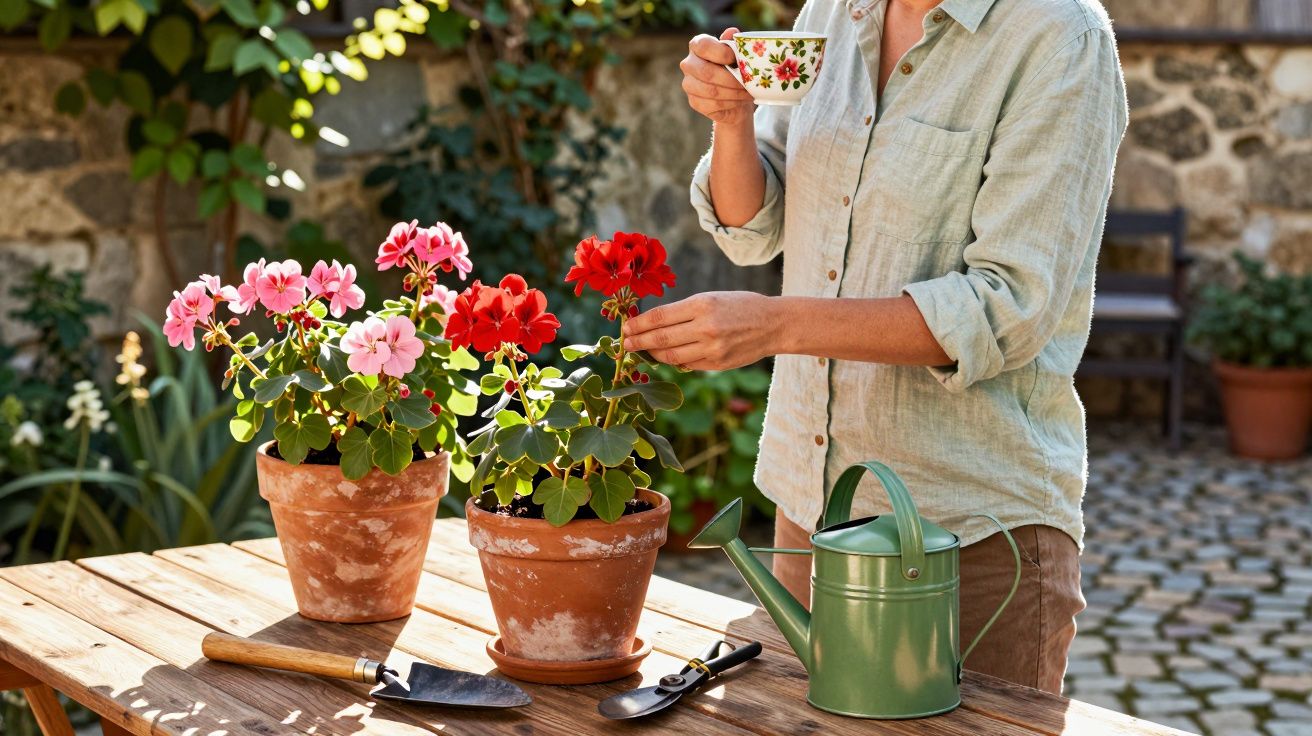
The pots look lush in June, all fat leaves and that first flush of colour. Then, by mid‑summer, the blooms thin out as if someone turned down a tap. You keep watering, you eye the compost, you wonder if you’ve missed a miracle feed - and the plant just sits there, green and smug.
I was in a neighbour’s back garden with a mug of tea, watching her pelargoniums (the bedding “geraniums” we all grow) spill over terracotta like they owned the place. She wasn’t fussing with bottles or powders. She was doing one small, slightly brutal thing with her fingertips, then walking away.
A stem, a pause, a pinch - and the plant, somehow, behaved. It’s not magic. It’s timing.
The “pinch at the third leaf” rule gardeners won’t drop
Geraniums are programmed to push upward, then flower at the tips. That’s brilliant for a quick show in spring, but it’s also why many plants slow down early: once a few leading shoots dominate, the plant puts its energy into length and seed rather than fresh branching.
The third‑leaf pinch is a gentle reset. You stop the main stem from becoming a single highway and force it to build side roads instead. More branches means more flower buds, spread out over a longer season.
The rule is simple:
- Find a fresh shoot with a growing tip.
- Count down from the tip to the third set of leaves.
- Pinch (or snip) just above that third leaf node.
Done regularly, it keeps the plant compact, branching, and productive - often right into September and October - without leaning on extra feed.
Why it works (and why it’s not about “more fertiliser”)
A geranium that stops flowering early often isn’t starving; it’s out of shape. It’s put on leafy growth, the stems have gone long, and the plant has slipped into a cycle of: grow → flower → set seed → pause.
Pinching breaks that cycle by changing hormone signals in the stem. The growing tip (the bit you remove) usually suppresses side shoots. Once it’s gone, the buds at those leaf nodes wake up and branch.
That branching is the whole game:
- More tips = more places to form flower trusses.
- A bushier plant shades its compost a little, reducing stress on hot days.
- Shorter stems hold flowers better and snap less in wind.
You can still feed if you want, but shape beats supplementation. A well‑pinched plant in decent compost often outblooms an overfed, leggy one.
How to do it in real life (without wrecking the display)
The fear is understandable: you see buds, you don’t want to remove them. The trick is to pinch early enough that the plant has time to respond, then keep “tidying” little and often rather than doing one big chop.
The quick routine: 60 seconds per pot
- Pick your moment. Morning is best; stems are crisp, and the plant isn’t wilting from midday heat.
- Target the longest, most eager shoots. You’re correcting dominance, not shaving the whole plant flat.
- Count to three leaf nodes from the tip. If you pinch too low, recovery is slower; too high, and you don’t trigger enough branching.
- Pinch cleanly. Use fingernails or small snips. A clean break heals faster than a torn stem.
- Finish with deadheading. Remove spent flower heads so energy doesn’t drift into seed production.
If you’re doing this from late spring onwards, keep it light: a few pinches per plant each week is plenty.
“You’re not cutting flowers off,” as one old‑school patio gardener told me. “You’re buying the next wave.”
The timing that keeps blooms going until October
Pinching works best as a habit, not a rescue mission. Here’s a practical rhythm that suits most UK summers.
- Late April to early June (best window): Pinch growing tips to build the framework. This is when it pays back most.
- June to July: Switch to “selective pinching” - take back the stems that race ahead, especially after a hot spell or a feed.
- August: Focus on deadheading and light shaping only. Heavy pinching now can delay blooms if nights cool.
- September to October (mild areas): Keep deadheading, remove tired stems, and let the plant flower rather than rebuild.
If you’ve already got leggy plants in July, don’t panic. You can still pinch, but do it in stages - one third of the long shoots, then another third a week later - so you don’t remove all colour at once.
The quiet add‑ons that matter more than another bottle of feed
“Without extra feed” doesn’t mean “without care”. It means you get more bloom mileage from what the plant already has, provided the basics aren’t letting it down.
Keep these three boring things steady:
- Light: Geraniums want sun. Six hours is a good target. In deep shade they stretch and flower less, no matter how much you pinch.
- Watering: Soak, then let the top couple of centimetres dry. Constantly wet compost encourages leaf growth and sulky roots.
- Drainage: Pots must drain freely. If water sits, flowering suffers first.
If you are feeding, keep it modest. Overfeeding (especially high nitrogen) can turn your plant into a leafy sofa with no interest in flowers.
Common hiccups (and what to do instead)
Even good pinching can be undone by a couple of easy mistakes. Here’s the short diagnostic.
| What you see | Likely cause | What fixes it |
|---|---|---|
| Long stems, few flowers | Too little light; no pinching early | Move sunnier; pinch back in stages |
| Lots of leaves, weak bloom | Too much nitrogen; compost always wet | Ease off feed; water less often but deeper |
| Flowers fade fast | Heat/drought swings | Water consistently; mulch top with grit/compost |
One more detail people miss: deadheading properly. Don’t just pull petals. Take the whole flower stem back to where it meets the main stem. If a seed pod forms, the plant reads it as “job done”.
Does it work on all “geraniums”?
Mostly, yes - but the response looks slightly different by type.
- Zonal pelargoniums (upright bedding types): Pinching is perfect. They branch readily and reward you quickly.
- Ivy pelargoniums (trailing balcony types): Pinch to encourage side shoots, but go lighter; you want length and flower.
- Regal/king pelargoniums (big ruffled blooms): Pinch after a flush, not constantly, or you can delay flowering.
If your plant is already stressed (cold nights, waterlogged compost, pests), pinching won’t fix the root problem. It’s a performance technique, not resuscitation.
A pocket checklist for the rest of summer
- Pinch at the third leaf on fast shoots to keep branching coming.
- Deadhead to the base so the plant doesn’t switch to seed mode.
- Sun and drainage first; feed is optional, not foundational.
- Correct in stages if the plant’s already leggy - don’t scalp it in one go.
FAQ:
- Will pinching reduce flowers in the short term? Slightly, if you remove tips that would have flowered soon. In return, you get more side shoots and a longer run of blooms later.
- What if I can’t see “three leaves” clearly? Look for leaf nodes (where leaves join the stem). Count three nodes down from the soft tip and pinch just above the third.
- Should I pinch flowering stems or only leafy ones? Mostly pinch leafy, fast‑growing shoots. If a flowering stem is making the plant lopsided or leggy, you can shorten it after the flowers fade.
- Do I still need to feed at all? Not necessarily if the compost is fresh and you’re watering well. If plants are in small pots all summer, a light, occasional high‑potash feed can help - but it won’t replace pinching.
- Can I use scissors instead of fingers? Yes. Clean snips give a neat cut, especially on thicker stems. Pinching with nails is fine on soft growth.





Comments
No comments yet. Be the first to comment!
Leave a Comment