Garlic sits in almost every British kitchen cupboard, slipping into pasta sauces, Sunday roasts and quick stir-fries because it feels like the easiest flavour win going. And it often is - with no secondary ingredient at all, just a clove and a knife, you can make a meal taste “finished”. The catch is that garlic isn’t a single, stable ingredient: how it’s cut, rested, stored and even where it comes from can change what you taste far more than most shoppers realise.
I learned this the boring way, not the foodie way. Two identical trays of veg, same oil, same salt, same oven. One tasted round and savoury; the other tasted oddly harsh, then strangely bland. The only difference was the garlic - and the way I treated it.
The catch: garlic is chemistry, not just a bulb
Most people think garlic strength is about “more cloves” versus “less cloves”. In practice, a lot of what you taste comes down to whether you ever create the compounds that smell and taste like garlic in the first place.
Inside an intact clove, the key flavour parts are stored separately. When you crush or chop, they mix and form the pungent compounds (including allicin) that give you that immediate, fresh “garlic hit”. Heat then pushes those compounds in different directions - sweet and nutty if you’re gentle, bitter and acrid if you’re not.
That’s why two dishes can use the same amount of garlic and still taste like different recipes.
Garlic doesn’t “come out” when you cook it. You have to activate it, then decide what kind of garlic flavour you want to keep.
The most common mistake: cooking it too fast, too soon
If you add finely chopped garlic to very hot oil and treat it like onion, you often burn the aromatics before the rest of the dish has even warmed up. Burnt garlic isn’t “strong”. It’s sharp, bitter and lingering - the taste that makes people think they’ve added too much, then add less next time, and end up with bland food.
A better rule is to match the cut to the heat:
- Thin slices tolerate heat better and brown more slowly.
- Rough chop gives you flavour without instant burning.
- Fine mince is powerful but fragile; it needs lower heat or shorter time.
- Whole cloves (especially unpeeled) go sweet and mellow over longer cooking.
If you want garlic as a background note, start it gently or add it later. If you want it to announce itself, you still need to stop it scorching.
The “10-minute rest” that changes everything
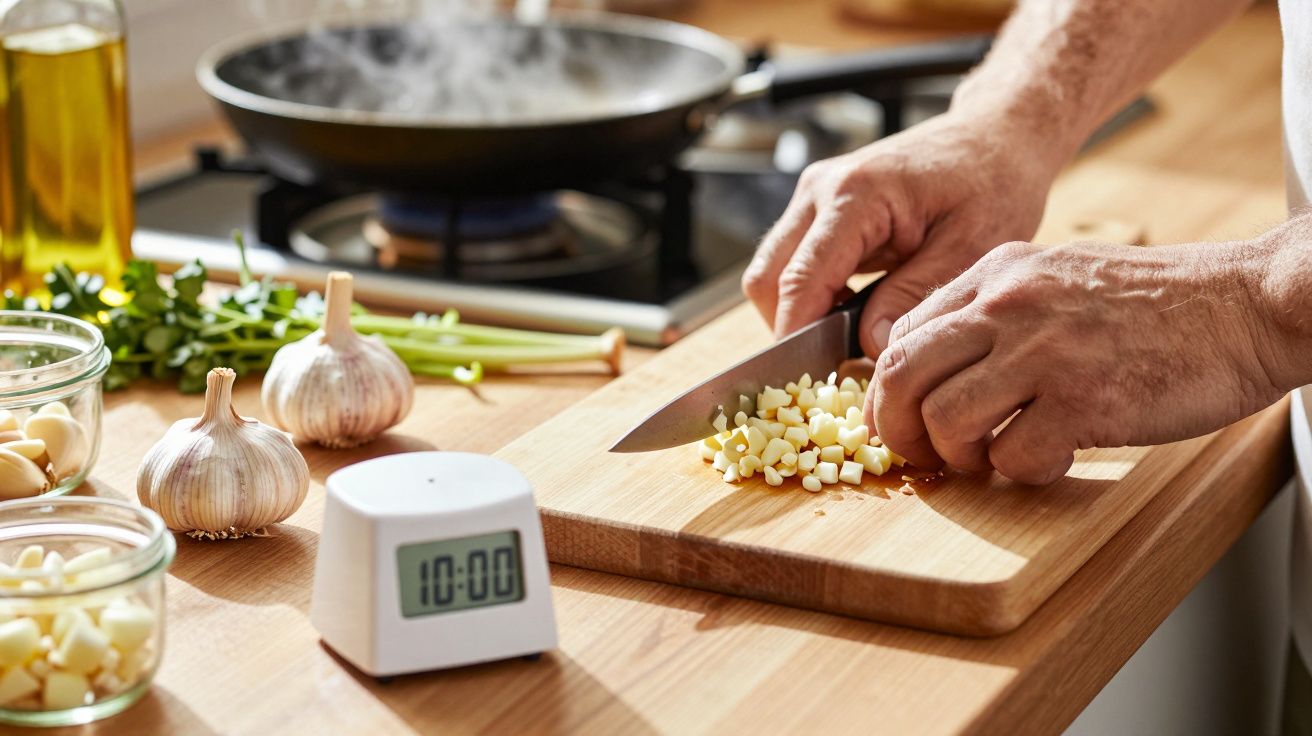
Here’s the small step most consumers miss because it sounds fussy: after you crush or chop garlic, leave it for 5–10 minutes before it hits heat or acid.
That short rest gives the flavour-forming reaction time to run. If you crush and immediately fry, you can blunt the result. If you crush and wait briefly, you tend to get a clearer, more garlicky aroma - even using the same clove.
A simple way to build it into real life is to chop garlic first, then prep everything else. By the time your pan is ready, your garlic is too.
A quick kitchen test (no scales, no lab coat)
Try this once, side by side:
- Chop one clove and add it straight to a warm pan with oil.
- Chop a second clove, wait 10 minutes, then add it at the same temperature.
You’ll often notice the rested garlic smells “fresher” and more distinctly garlicky, while the immediate one skews flatter or harsher. It’s not magic. It’s timing.
Why pre-chopped and jarred garlic so often tastes “wrong”
Convenience garlic has its place, but it carries trade-offs that don’t show on the label. Many jarred options are acidified or preserved to keep them shelf-stable, and the flavour you get is different: less bright, sometimes slightly sour, sometimes oddly metallic.
Pre-peeled cloves can also disappoint. They’re often older, handled more, and may be treated to prevent sprouting or extend shelf life. None of this is automatically “bad”, but it can mean you’re paying for convenience and getting a weaker end result - which then tempts you to use more, and the dish still doesn’t taste right.
If garlic is meant to be the star (garlic bread, aglio e olio, aioli, a punchy marinade), fresh bulbs usually win.
The quiet quality issue: age and origin matter more than you think
A bulb of garlic is a living thing that has been stored and transported for weeks or months. Older garlic tends to be:
- drier, with cloves that feel light and shrinky
- more likely to have sprouting (green shoots)
- less likely to deliver that clean, aromatic punch
Origin can play into this simply because of transit time and storage conditions, not because one country is “good” or “bad”. If you buy garlic that has travelled a long way and sat around, you may be cooking with an ingredient that has already faded.
In the shop, you’re looking for bulbs that feel heavy for their size, with tight skins and no soft spots. If the cloves rattle inside the paper, you’re usually in “old garlic” territory.
Storage myths that ruin bulbs at home
The fridge feels like the safe choice. For garlic, it often isn’t.
Cold storage can encourage sprouting and can add moisture - which is how you end up with mouldy cloves that look fine until you peel them. Garlic generally does best in a cool, dry, dark place with airflow (a mesh bag or open bowl, not a sealed plastic bag).
A quick guide:
- Do: store whole bulbs in a ventilated container in a cupboard away from the hob.
- Don’t: store bulbs in the fridge unless you’re trying to slow down already-peeled cloves for a short time.
- Do: separate cloves as you need them; a broken bulb ages faster.
- Don’t: keep peeled cloves loose and damp; they spoil quickly.
If you keep finding green shoots, it’s often a storage issue - or a sign you’re buying bulbs that are already nearing the end of their best.
The sprout question: should you remove the green bit?
The green germ in the centre of a clove can taste more bitter and “hot”, especially in raw or lightly cooked dishes. It won’t harm you, but it can change the flavour balance.
If you’re making something where garlic is raw or only gently warmed (salad dressings, dips, quick pan sauces), it’s worth splitting the clove and pulling the germ out when it’s prominent. If it’s going into a long braise, you’ll barely notice.
Choosing the right garlic for the job (so you stop fighting it)
Garlic isn’t one setting: it’s a range from sharp to sweet. Pick the format that matches what you want on the plate.
| Garlic form | Best for | Typical trade-off |
|---|---|---|
| Fresh bulb | Most cooking, best all-round flavour | Needs peeling and prep |
| Pre-peeled cloves | Batch cooking, speed | Often less aromatic |
| Jarred chopped/paste | Convenience in sauces | Flavour can be muted or acidic |
A small habit that helps: when garlic matters, buy little and often. A cheap bulb that’s fresh will beat a fancy tub that’s tired.
A practical “garlic workflow” that fixes most problems
If you only change one thing, make it this routine:
- Chop/crush garlic first.
- Leave it on the board while you prep everything else (5–10 minutes).
- Cook it at lower heat than you think, or add it later in the process.
- Salt and acid (lemon, vinegar) after you’ve tasted, not as a rescue for burnt garlic.
It’s the same ingredient, but it behaves like a different one.
FAQ:
- Does garlic really need to “rest” after chopping? It helps if you want a fresher, stronger garlic flavour. Leaving it 5–10 minutes after crushing/chopping allows flavour compounds to develop before heat changes them.
- Is jarred garlic “bad”? Not inherently. It’s simply different: often preserved and less aromatic. It can work well in long-cooked dishes where fresh garlic’s top notes would disappear anyway.
- Should I keep garlic in the fridge? Usually no. Whole bulbs store better in a cool, dry, ventilated spot. Fridges can encourage sprouting and moisture-related spoilage.
- What makes garlic turn bitter? Most often: burning it in hot oil, or using prominent green sprouts in raw/lightly cooked dishes. Gentler heat and (if needed) removing the germ usually fixes it.




Comments
No comments yet. Be the first to comment!
Leave a Comment