You’re tapping your card for a coffee, transferring money to a mate, paying for a hotel in euros - and a few days later a “small” charge appears that you don’t remember agreeing to. The Financial Conduct Authority (FCA) and the Consumer Duty both matter here because they’re meant to push banks to be clearer, yet the fees still slip through in ways that look like your fault. The uncomfortable truth experts keep returning to is that one common behaviour makes “hidden” fees feel invisible until they’ve stacked up.
Most people don’t lose money because they chose an obviously expensive account. They lose it because they assume the price is in the headline - not in the settings, the default choices, and the fine print you unknowingly accept in the moment.
The hidden mistake experts keep seeing
Ask complaints handlers and personal finance advisers what triggers the most “I didn’t know that was a fee” stories and you hear the same theme: people don’t treat their current account like a product with adjustable controls.
They treat it like a utility. Money goes in, money goes out, and anything else is “the bank’s system”.
That mindset is the hidden mistake. Fees often appear at the exact points where you’re forced to make a tiny decision quickly - at the ATM, at the card machine abroad, at midnight when a direct debit is due - and the default option is rarely the cheapest.
A lot of “hidden fees” aren’t hidden on paper. They’re hidden in behaviour: default choices, rushed taps, and not checking what your account is set to do when something goes wrong.
Where “hidden” fees actually come from (and why they feel so random)
Banks don’t usually label charges in a way that matches how customers remember the moment. You remember “withdrew cash” or “paid in dollars”. The statement might say “non-sterling transaction fee”, “cash handling fee”, “paid item fee”, or bundle it inside an exchange rate.
That translation gap is why it feels sneaky. It’s not that you never received the information - it’s that you never had a reason to learn the bank’s language until it cost you.
The most common fee traps, in plain English
- Overdraft defaults: you slip £3 over, a payment still goes through, and you’re charged daily interest or an arranged overdraft fee you forgot existed.
- Cash withdrawals: using the “wrong” ATM (especially abroad) triggers both the operator’s fee and your bank’s fee.
- Dynamic currency conversion (DCC): the card machine offers to charge you in pounds “for certainty”, and the exchange rate is quietly worse.
- Subscription creep: a free trial rolls into a paid plan and a direct debit hits when your balance is low, triggering overdraft charges on top.
- Packaged accounts: you pay monthly for insurance or perks you don’t use, because you never re-check eligibility or value.
The quick test: did you choose, or did you accept the default?
Experts often frame it as one question: did you actively choose the fee-bearing option, or did you accept the default because you were in a hurry?
In practice, “accepting the default” looks like:
- Tapping through an ATM warning screen without reading it.
- Pressing “Yes” to “Pay in GBP?” on a card terminal abroad.
- Letting an overdraft become your buffer instead of moving money in advance.
- Assuming your bank will “decline” a payment if you’re short (many don’t, or they do it inconsistently).
None of those choices feels like choosing a paid add-on. But that’s exactly how the pricing is designed to land.
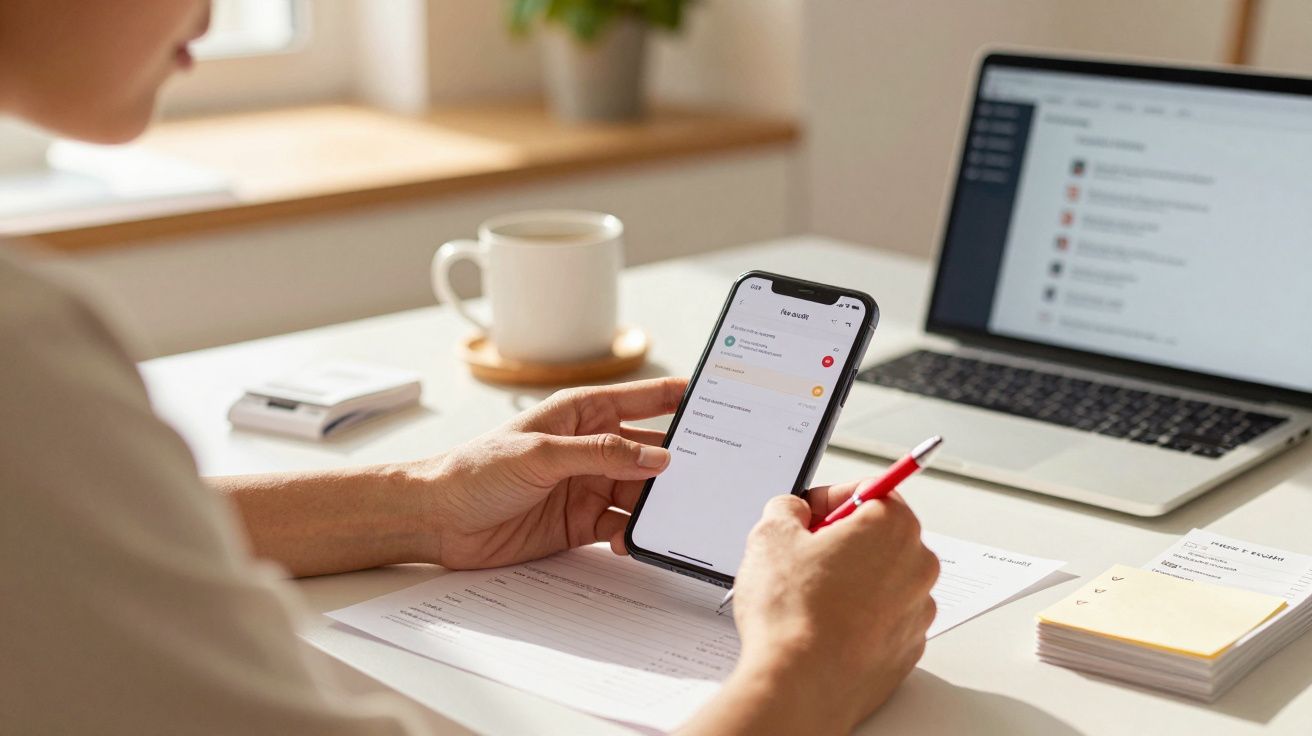
How to do a five-minute fee audit (the part people skip)
You don’t need a spreadsheet to spot what’s draining you. You just need to look in the right place, with the right filters, once.
Step 1: Find the charges in your app - then widen the net
Search your transactions for terms like fee, charge, interest, non-sterling, overdraft, and cash. Then scroll further than you think you need to, because many fees post days later.
If you use more than one bank, repeat it across all accounts. The “hidden” part is often that the fee is on the backup card you only use occasionally.
Step 2: Match each fee to a trigger you can control
For every charge you spot, write a one-line trigger in human language:
- “Withdrew cash in airport ATM”
- “Paid in GBP in Spain”
- “Direct debit went out before payday”
This is the moment the fog clears. You stop seeing “random bank charges” and start seeing repeatable patterns.
Step 3: Change one setting, not ten habits
Pick the single change that prevents a repeat:
- Set up a low-balance alert (and actually turn on notifications).
- Move key direct debits to just after payday if you can.
- Keep a small buffer in the bills account, even £50–£100, so timing doesn’t push you into overdraft.
- If you travel, consider a fee-free spending card for foreign currency rather than relying on your everyday debit card.
A short list of “cheap wins” experts recommend before you complain
Complaints can work, especially if a fee was applied unfairly or you were treated poorly - but most savings come from prevention.
- Always pay in the local currency abroad. If the terminal offers GBP, that’s usually DCC. Decline it.
- Avoid cash abroad unless you must. Cash withdrawal fees stack quickly, and exchange rates are often worse.
- Stop using overdraft as a safety net. Even when it’s “arranged”, it’s rarely a cheap form of credit.
- Reassess packaged accounts once a year. If you don’t use the insurance or you’re ineligible due to age/travel limits, it’s not value - it’s a subscription.
When a “hidden fee” might be worth challenging
Not every fee is legitimate just because it appears on a tariff.
If you think the bank’s communication was unclear, the fee was repeated due to an error, or you were in financial difficulty and not supported appropriately, it can be worth asking for a refund or making a formal complaint.
Keep it simple: quote the transaction, explain why you think it was unfair or unclear, and say what outcome you want (refund, fee waiver, or a better arrangement going forward). The more specific you are, the easier it is for the bank to respond.
The bigger point: fees thrive in rushed moments
Hidden bank fees aren’t magic, and they’re not always malice. They’re friction - priced.
Once you learn to recognise the handful of moments where the bank asks you to choose (often quickly, often on a screen you barely read), you stop paying for defaults you never really wanted.
FAQ:
- Are “hidden fees” actually illegal in the UK? Not usually. Banks can charge fees if they’re disclosed in the account terms and summaries, but disclosures still need to be clear and not misleading.
- What’s the single biggest mistake people make when paying abroad? Accepting Dynamic Currency Conversion by choosing to pay in GBP instead of the local currency.
- Can I get overdraft fees refunded? Sometimes. If you were in financial difficulty, fees were caused by an error, or you weren’t treated fairly, it’s worth asking and escalating through the bank’s complaints process if needed.
- How do I stop fees without switching banks? Turn on alerts, keep a small buffer for bills, avoid cash withdrawals (especially abroad), and learn which screens to slow down for (ATMs and currency prompts).






Comments
No comments yet. Be the first to comment!
Leave a Comment