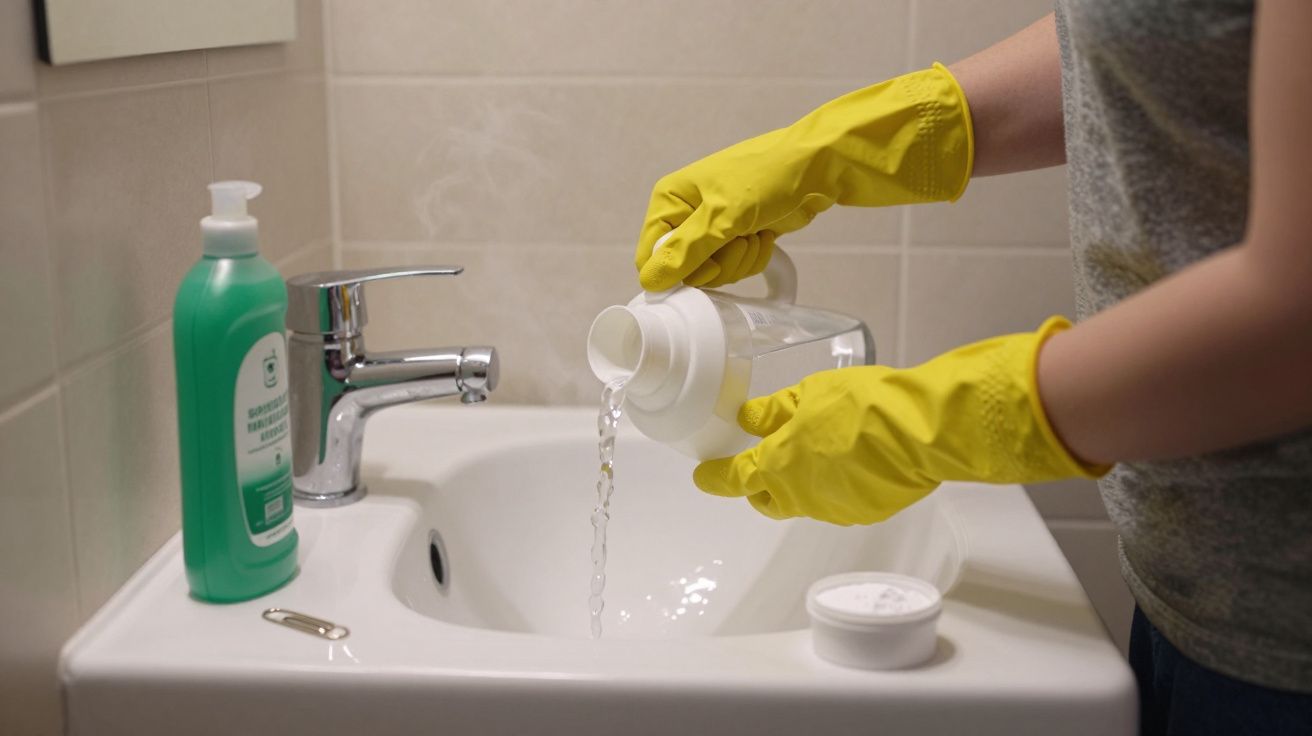
Steam curls up from the plughole, the smell of soap and old toothpaste lifts for a second, and you feel oddly triumphant. The sink was draining slowly, you poured in a full kettle of boiling water, and for a moment it looked like magic.
Then the gurgling starts again. Sometimes the blockage shifts only slightly. Sometimes the water just sits there, hotter than before, refusing to budge. And in the hidden bend under the basin, plastic pipes and rubber seals are quietly taking a beating you can’t see.
That’s the part plumbers keep seeing after the fact: softened fittings, warped traps, hair clogs baked into something close to glue. Which is why, when your bathroom sink slows to a sulk, their first advice is surprisingly simple: don’t reach for the boiling kettle. Reach for a few things you already have instead.
Why plumbers tell you to put the kettle down
From the surface, boiling water sounds harmless. We pour it into mugs all day; many kitchen clogs clear with nothing more dramatic than a hot flush. Bathroom sinks, however, are a different ecosystem.
Most modern homes have plastic (PVC or ABS) waste pipes and traps under basins. They are designed for hot tap water, not repeated shocks of water straight off the boil. At around 100°C, that blast can:
- Soften and deform plastic traps and push-fit joints
- Stress rubber washers and silicone sealant so they start to seep over time
- Crack the glaze on some older or hairline-damaged ceramic basins
There’s also a temperature swing to consider. A slow sink usually has cool, standing water and a plug of congealed hair, soap and product sitting in the bend. Pouring boiling water straight onto that mix creates a mini thermal shock. The hot layer can scour a narrow channel through the clog, while the rest hardens around it like a ring.
“Boiling water is fine in the mug, not in the bathroom trap,” as one London plumber puts it. “Use hot, not furious.”
Hot tap water or boiled water that’s been allowed to cool for a few minutes is usually as aggressive as you need for bathroom gunge – without cooking your plumbing.
A safer step‑by‑step way to clear a slow bathroom sink
Before you start, turn off the tap, give yourself some light, and put on a pair of rubber gloves. You’re not dealing with anything glamorous down there.
1. Remove what you can see
If your basin has a pop‑up or lift‑out plug, pull it out and have a look. Hair and floss often tangle right at the top.
- Wipe away visible gunk with tissue and bin it, not the loo.
- Use a straightened, hooked paperclip or a simple plastic drain snake (if you have one) to tease out hair from just below the plughole.
You’ll be amazed how much trouble a single tangled clump can cause.
2. Flush with hot (not boiling) water
Now give the pipework a gentler heat treatment.
- Run the hot tap for a couple of minutes, or
- Fill a jug with boiled water and let it sit 5–10 minutes before you pour.
Pour slowly in stages, allowing the heat to work its way along the pipe. This softens soap scum and loosens light build‑up without shocking the plastic.
3. Use washing‑up liquid to break up slime
Bathroom blockages are usually a cocktail of soap, toothpaste, skin oils and cosmetics, not just hair. A little detergent helps.
- Squirt a generous line of washing‑up liquid directly into the plughole.
- Leave for 5–10 minutes to creep along the pipework.
- Follow with another jug of hot (not boiling) water.
The detergent acts like it does on a greasy roasting tin: it helps the hot water lift residue from the pipe walls.
4. Try the bicarbonate and vinegar trick
You don’t need a special “foaming” gel if you’ve got a baking shelf.
- Remove any standing water from the basin with a jug or sponge.
- Tip 4–6 tablespoons of bicarbonate of soda down the plughole.
- Follow with about 150–200 ml of white vinegar.
- You’ll hear fizzing; pop the plug in or cover the hole with a damp cloth.
- Leave it to work for 20–30 minutes.
- Rinse through with plenty of hot tap water.
This combo won’t eat through a solid blockage, but it’s good at breaking down the film of soap and product that makes hair clumps stick like felt.
5. Plunge, but do it properly
If the water is still slow, a simple plunger can be far more effective than another chemical.
- Use a small cup plunger, sized for sinks, not a big toilet plunger.
- Block the overflow opening with a wet cloth or a bit of tape to stop air escaping.
- Cover the plughole with the plunger, add enough water to cover the rubber, and use short, firm strokes for 20–30 seconds.
You’re trying to move the clog back and forth until it breaks up, not ram it deeper. Check if the water level drops between sets.
6. Clean the trap if you can reach it
If the basin is still sulking and you’re comfortable with a bit of DIY, the most reliable fix is often to tackle the U‑bend (trap) directly.
- Place a bucket or washing‑up bowl under the trap.
- Unscrew the plastic compression nuts by hand if possible (use adjustable pliers gently if not).
- Lower the trap and empty the contents into the bucket. Expect hair, grey slime and maybe the odd lost earring.
- Rinse the trap in a separate bucket of water; use an old bottle brush if you have one.
- Check the rubber washers are seated properly; clean and refit them if needed.
- Reassemble the trap by hand. Don’t overtighten; snug is enough.
- Run the tap and check for drips.
For many plumbers, this is the first thing they do on a call‑out. You’re just cutting out the middleman.
What to avoid (even if it looks tempting on the shelf)
When a sink is stubborn, it’s easy to reach for the most aggressive‑sounding solution. Some of them create more problems than they solve.
Boiling water straight from the kettle
Repeated use can warp plastic, stress seals and crack delicate ceramic. Cool it a little first.Caustic chemical drain cleaners
These often contain powerful alkalis that can burn skin, damage certain plastics and, if misused, sit on top of a blockage doing very little. Mixing different products, or following them too quickly with vinegar or bleach, is genuinely dangerous.Wire “pokers” shoved deep into the pipe
A straightened coat hanger pushed hard into the trap can puncture thin plastic or push a blockage further into the wall.Home‑brew acid cocktails
Vinegar and bicarbonate are fine. Anything stronger, especially from the garage shelf, belongs nowhere near your drains or your lungs.
Let’s be honest: nobody reads the small print on the back of a bright drain‑cleaner bottle in a supermarket aisle. But the warnings about ventilation, gloves and not mixing products are there for a reason.
Quick reference: methods you can use with what you already have
| Method | What you’re likely to have | Best for |
|---|---|---|
| Hot water + washing‑up liquid | Kettle, tap, washing‑up liquid | Light slime and soap build‑up |
| Bicarb + vinegar | Baking shelf staples | Film of product on pipe walls |
| Manual hair removal + plunger | Paperclip / plastic snake, plunger | Hair clumps near the plughole |
Use them in that order, and you’ll fix most “slow but not totally blocked” basins without buying anything new.
When a slow sink is a bigger warning sign
Sometimes, a lazy drain is just that. Sometimes, it’s the first symptom of something happening further along your plumbing.
Call a professional rather than persisting at home if:
- Several fixtures are slow at once (basin, bath, shower, maybe the loo gurgling).
- You notice bad smells coming from multiple drains even after cleaning.
- Water in the basin rises when you flush the toilet or empty the bath.
- The same sink clogs again within days or weeks of clearing it.
That pattern suggests a deeper blockage in the branch or main waste pipe, tree roots in older clay drains, or a venting issue. No amount of vinegar at the basin will fix that, and repeated chemicals or boiling water only add damage on top.
How to keep your bathroom sink running clear
Most bathroom clogs are slow‑motion dramas. They build up over months of hair, product and hurry. A tiny routine makes a bigger difference than any one‑off “rescue”.
- Fit a simple hair catcher over the plughole and empty it into the bin regularly.
- Once a week, run the hot tap for a couple of minutes after showers and tooth‑brushing sessions.
- Wipe thick toothpaste, clay masks and heavy make‑up off with tissue before you rinse, instead of asking the pipe to deal with it.
- Once a month, give the sink a hot‑water‑plus‑washing‑up‑liquid flush, the way you would a greasy pan.
Behind the pipework, there’s a small shift in mindset: treating the bathroom sink like the working bit of the house it really is, not just the glossy surface you see in the mirror.
“Most of what blocks a basin is just life happening,” says one plumber from Manchester. “The trick is to stop life sticking to the inside of the pipe.”
In short
- Skip boiling water; use hot, not scalding, to protect your pipes.
- Start with manual hair removal, then detergent, then bicarb and vinegar.
- Use a plunger and, if you’re comfortable, clean the trap before buying harsh chemicals.
- Call a pro if multiple drains are affected or clogs keep coming back.
FAQ:
- Does this advice change if my pipes are metal, not plastic?
Older metal pipework can tolerate heat better, but many basins have a mix of metal in the wall and plastic traps under the sink. You rarely know exactly what’s hidden, so it’s still safer to stick to hot, not boiling, water.- Will bicarb and vinegar unblock a completely standing sink?
No. They help with light build‑up and odours, but a solid blockage usually needs mechanical clearing with a plunger, trap cleaning or a plumber’s snake.- Is it ever safe to use chemical drain cleaners?
Used strictly as directed, they can work on partial clogs, but they carry burn risks and can damage some pipework. Most plumbers prefer physical clearing first and keep chemicals as an occasional last resort.- How often should I clean the trap under the sink?
In a typical family bathroom, once a year is usually enough. If anyone has long hair or uses heavy products, twice a year can prevent slow‑drain issues.- Can I use these methods on the bath and shower as well?
Yes. The same principles apply: catch hair, use hot (not boiling) water, mild detergent, bicarb and vinegar, and a plunger if needed, with care around fragile seals.






Comments
No comments yet. Be the first to comment!
Leave a Comment