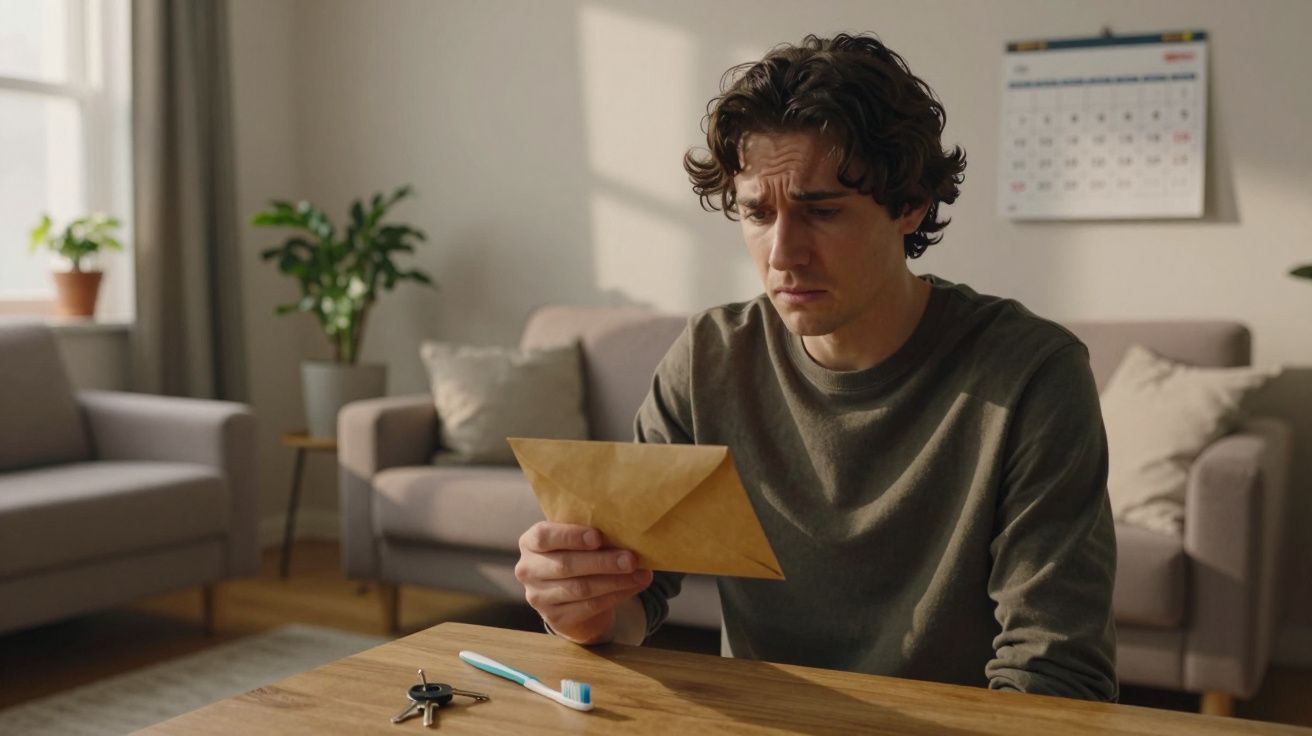
The letter tends to land when you’ve finally stopped thinking about bills.
Same brown envelope. Same logo. Then a line you don’t recognise: “Single person discount removed.” The total is higher than last time, and the dates on the back make your stomach dip. It’s not just the next instalment. It’s a backdated recalculation.
Citizens Advice says this is one of the most common council tax shocks they see: a perfectly ordinary change at home that cancels the 25% single-person discount far faster than people expect - sometimes as soon as another adult is treated as living with you.
The one change that can wipe out the single-person discount
The single-person discount is simple on paper: you get 25% off if only one adult (aged 18 or over) lives in the property. The moment your council counts a second adult as resident, the discount usually goes.
What catches people out is that “a second adult” doesn’t have to mean “a spouse permanently moved in with a van and a new sofa”. It can be an adult child who’s finished sixth form, a partner who’s staying most nights, or a friend who’s moved in “for a couple of months”.
“If your household changes, tell the council straight away,” is the core advice. Not because councils are looking to punish you, but because they can remove the discount and bill you for the period they believe it no longer applied.
The quiet household changes that trigger it most often
- A partner starts staying over and uses your address as their main base.
- A friend moves in “temporarily” and it stretches into months.
- You take in a lodger to help with costs.
- An adult child turns 18 or moves back after university.
- A relative comes to stay after a breakup, redundancy, or illness.
In real life these changes happen softly: one toothbrush becomes two, then there’s an extra key, then someone updates their bank or GP address. Councils often decide residency based on where someone’s sole or main home is - not on what you call the arrangement.
Why people get hit with backdated bills
Councils don’t just change the bill going forward. If they believe you stopped qualifying earlier, they can remove the discount from that earlier date and issue an updated bill for the difference.
That’s the part that makes it feel “overnight”: you can go from budgeting fine to suddenly owing a lump sum, especially if the change happened months ago and you didn’t realise you needed to report it.
A common pattern Citizens Advice sees is someone trying to do the decent thing - letting someone stay, keeping costs low, not making a fuss - and only finding out later that council tax doesn’t treat “informal” as “invisible”.
The important exception: not every extra adult counts
Here’s the nuance most people miss. Some adults are “disregarded” for council tax purposes, meaning they don’t count towards the number of adults living in the property. If the only other adult in the home is disregarded, you may be able to keep the single-person discount.
Typical disregarded groups can include:
- Full-time students (and some student nurses)
- Apprentices (in certain situations)
- People who are severely mentally impaired (with qualifying benefits)
- Live-in carers (meeting specific rules)
- Some people in hospital or care homes (depending on circumstances)
Rules vary, evidence is often required, and councils can be strict about dates. If you assume someone “doesn’t count” and you’re wrong, that’s when the backdated bill arrives.
Quick guide: what usually happens to the discount
| Household change | Likely impact | What to do next |
|---|---|---|
| Another adult moves in (not disregarded) | Discount usually ends | Tell the council; ask to spread arrears |
| Another adult moves in (student/carer etc) | Discount may continue | Apply for disregarded status; provide proof |
| Someone stays but their main home is elsewhere | Depends on facts | Check “main residence” criteria with council |
A short “don’t get caught out” checklist
If you think your single-person discount might be at risk, do these in order:
- Check who is classed as living with you. Are they 18+? Is this their main home?
- Look for disregards. Student status, caring role, or other categories can matter.
- Report changes promptly. Use your council’s online form if possible and keep a screenshot or reference number.
- If you’ve been billed for the past, don’t ignore it. Ask the council to explain the dates used and request an affordable payment plan.
- Separate issue: check Council Tax Reduction. This is means-tested support and can apply even if you lose the single-person discount.
That last point is easy to miss: losing a discount doesn’t automatically mean you’re out of options. It just means you need to look at the right type of help.
If you think the council has got it wrong
Mistakes happen, especially around moving dates, temporary stays, or whether someone is disregarded. If you believe the decision is wrong:
- Ask the council for the reasons and the effective date they used.
- Provide evidence (tenancy agreements, student certificates, care documents, proof of another main address).
- If you’re disputing liability or the calculation, follow the council’s complaints/review process and consider independent advice.
The key is to act quickly. Once an account falls into arrears, it can escalate fast - reminders, final notices, and then recovery action. Sorting it early keeps it in the “admin fix” category rather than the “debt problem” category.
What to do if someone is moving in soon
If you’re about to have someone move in - even for practical, kind, ordinary reasons - treat council tax like a switch you need to reset, not a bill that updates itself.
Have the awkward conversation early: will this be their main home, will they contribute, and do they fall into a disregarded category? It’s not unromantic or nosy. It’s how you avoid a surprise demand later that turns a helpful arrangement into a financial mess.
FAQ:
- Can I keep the single-person discount if my partner stays over a few nights a week? It depends on whether the council considers your property to be your partner’s sole or main residence. Regular stays, keeping belongings there, and using your address officially can all affect the decision.
- My child has turned 18 - do I automatically lose the discount? Often yes, because they’re now an adult for council tax purposes. If they’re a full-time student (or fall into another disregarded group), you may still qualify, but you usually need to tell the council and provide evidence.
- What if I’ve already been overpaid the discount? Will I be fined? Councils can backdate the bill and recover the discount. Some may add penalties if they believe you failed to report a change, but approaches vary. Contact the council quickly and ask to agree a payment plan.
- Is Council Tax Reduction the same as the single-person discount? No. The single-person discount is a 25% reduction based on adults in the household. Council Tax Reduction is means-tested support and may be available whether you live alone or not.
- If the extra adult is a student, do I still need to report it? Yes. Students are often disregarded, but councils usually require you to notify them and supply proof (such as a council tax student certificate) to apply the disregard correctly.


Comments
No comments yet. Be the first to comment!
Leave a Comment