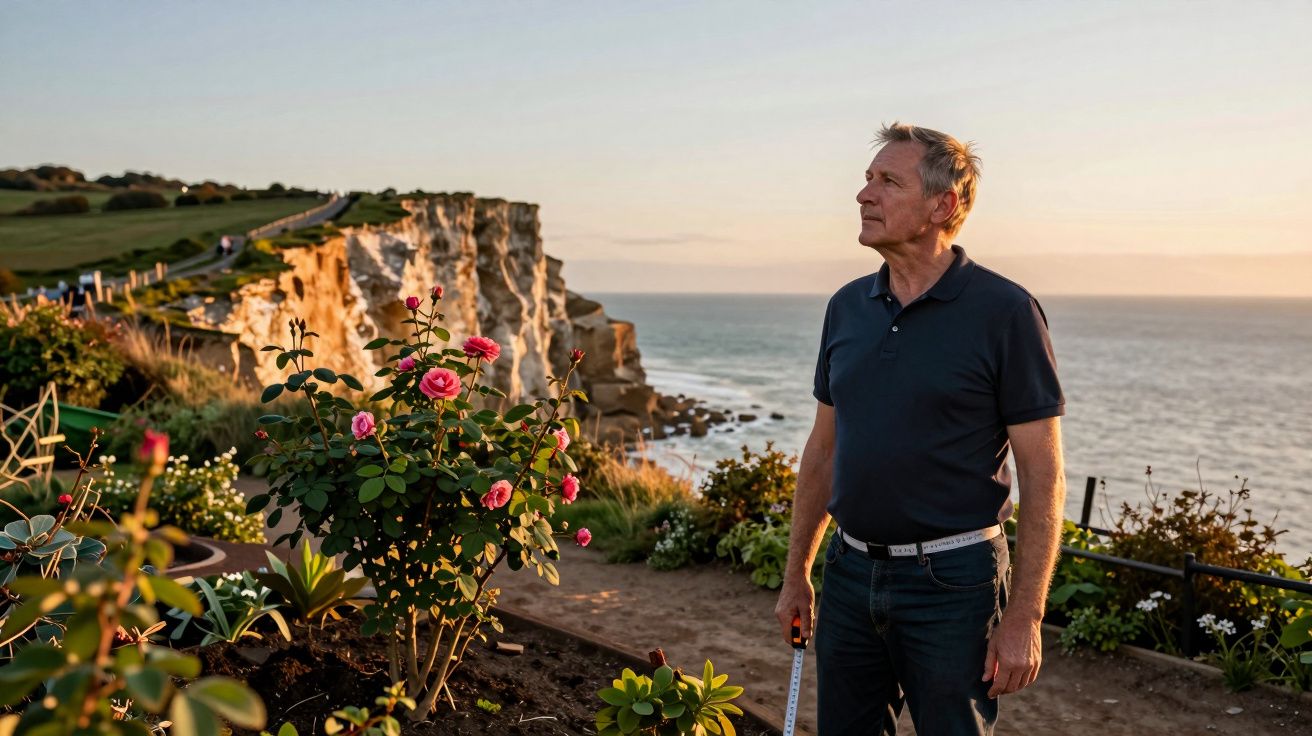
The tape measure stopped half a metre shy of the rosebush. Last summer, there had been another slab of lawn between the cliff edge and the fence; now the soil simply wasn’t there. On the other side of the garden wall, the North Sea pushed in with its usual slow insistence, chewing at the base of the crumbling clay.
Inside the village hall, under humming strip lights and the smell of instant coffee, that missing strip of earth had turned into a planning policy. A new council survey had mapped how far the coastline had retreated in five years, and the answer was: further than anyone wanted to admit. In response, officials proposed an immediate ban on new cliff‑top building. A line on a map, drawn in red, now ran through people’s retirement plans, extensions and inheritance. What felt small yesterday-a loft conversion, a conservatory, a new bungalow at the field’s edge-suddenly felt very big indeed.
When erosion reports redraw a village
The presentation started politely enough: a neat slideshow, a calm voice, aerial photos you could almost mistake for postcards until the dates in the corner didn’t match the shoreline. Using drone imagery, laser surveys and old Ordnance Survey maps, engineers showed that some stretches of the cliff had moved landward by up to eight metres since 2019. It was no longer just “a bit of slippage”; it was a measurable, accelerating retreat.
Then came the slide that made the room go still. A shaded buffer zone traced the cliff edge, marking where the land was likely to be lost within the next 20 to 50 years. Inside that shaded band, the council proposed a halt on new homes, major extensions and replacement buildings. Existing houses could be repaired, but not substantially expanded.
For some, the map was a long‑awaited reality check. For others, it looked like a quiet promise that their properties would become unsellable overnight. You could feel the room split as the red line cut diagonally across the village, through back gardens, a cul‑de‑sac and a row of prized sea‑view plots that had been earmarked-on paper at least-for future self‑builds.
“It’s my house, not a cliff‑top experiment,” one resident muttered, folding his arms as the planning officer explained the proposed ban.
A ban that feels like both lifeline and handbrake
Supporters of the ban talk about safety first. They point to the winter when a garden shed slipped over the edge, to the footpath that now ends in mid‑air, to videos of whole chunks of cliff slumping after a storm. For them, the idea of allowing more bricks and mortar that might have to be demolished in a couple of decades feels, at best, naive and, at worst, reckless.
Opponents see something else: a planning freeze that could lock younger families out of the area, erode the value of homes they’ve worked for, and turn once‑desirable plots into what estate agents politely call “complex”. If you bought a bungalow with the intention of adding an upstairs, a line that suddenly says “no more” lands like a financial trapdoor.
Local builders worry about jobs drying up. Holiday‑let owners fear a precedent that could spread to neighbouring coves. And somewhere between the fear and the frustration sits a quiet question: if you can’t safely build on the cliff, what future does the village really have?
What erosion actually looks like at ground level
From a distance, erosion can sound abstract-a word on a weather forecast. Close up, it is mundane and unnerving at the same time. It is fence posts left hanging, paving slabs tilting, and the quiet decision to stop mowing quite so near the edge.
The cliffs here are mostly soft: layers of clay, sand and gravel sitting on a slippery base. Storm waves undercut the bottom, rainwater seeps down from the top, and sooner or later gravity wins. A big collapse makes the news, but much of the loss happens through dozens of tiny falls, grain by grain, week by week.
Climate data adds another layer. Warmer seas, rising levels and more frequent winter storms mean the old rule of thumb-“a metre every few decades”-no longer holds. The new survey essentially put numbers to what dog walkers and farmers had been noticing for years: paths getting shorter, fields shrinking, old fence lines stranded in mid‑air like punctuation marks at the edge of a page.
What homeowners can actually do now
For residents caught inside the new “no‑build” strip, the ban feels blunt. But there are still decisions to make, and some of them can tilt the balance from panic towards planning.
- Get the paperwork, not just the rumours. Ask the council for the full erosion report, the draft policy wording and the specific map that covers your property. Online headlines rarely match the fine print.
- Check your time horizon. Not every house in the zone is about to fall into the sea. Many are projected to be at risk in 30–50 years. That matters if you’re thinking about staying for five, ten or twenty.
- Talk to your insurer and mortgage lender. Erosion isn’t usually covered like a burst pipe would be, but both need to know if the risk assessment has changed. Better they hear it from you than from a news clip.
- Look into adaptation grants and schemes. Some coastal areas offer limited support for relocation, demolition or resilience measures. It’s patchy and bureaucratic, but missing a scheme by six months is an avoidable regret.
- Document the edge. Photos, measurements, even a simple annual note of where the cliff sits relative to a fixed point can help you understand the pace of change in your exact patch.
“Once we started treating the cliff as something to monitor, not just fear, we made calmer choices,” said one homeowner who agreed to remove an old garage in exchange for planning flexibility elsewhere on the plot.
Beyond one bay: the politics of a moving coastline
This village is not an exception; it is a preview. Across England and Wales, shoreline management plans quietly classify stretches of coast into zones like “hold the line”, “managed realignment” and “no active intervention”. In the last category, communities are effectively told that hard defences-sea walls, rock armour, groynes-will not be built or renewed once they fail.
That policy sits awkwardly next to the emotional reality of place. People do not experience their home as a category; they experience it as a street, a view, a route to school. A ban on new cliff‑top building is, in planning terms, a form of honesty: acknowledging that the land itself is temporary. But honesty without support can feel a lot like abandonment.
There are also questions of fairness. Should taxpayers in landlocked cities fund expensive defences for a handful of houses at the ocean’s edge? Should coastal villages be left to absorb loss on their own because “that’s what you get for living near the sea”? The answer, increasingly, is being argued not just in council chambers but in village halls, pub gardens and property forums.
| Focus | What it means | Why it matters |
|---|---|---|
| Safety | Limiting new builds where ground may be lost | Fewer homes at risk of collapse and emergency demolitions |
| Value | Planning constraints on cliff‑top plots | Impacts mortgages, sales and local investment |
| Future | Adapting, relocating, or “holding the line” | Decides whether a village shrinks, shifts, or hardens its edge |
How villagers are trying to shape the rules, not just endure them
One thread running through the debate is control. Residents who feel things are being done to them tend to dig in. Those who see a chance to influence the details are more willing to compromise. Some have started pushing for a more nuanced approach: allowing small‑scale, reversible structures like sheds or decks while banning new permanent foundations; linking the ban to real‑time erosion data rather than a static line; or building in review points every five years.
Parish councillors are asking for clearer language about what counts as “major development” and whether replacement dwellings-knocking down and rebuilding on the same footprint-will be judged differently from entirely new houses. Young adults, many of whom travel out of the village for work because they cannot afford to live there, want any freed‑up land away from the cliff ring‑fenced for affordable homes, not only second homes with safer postcodes.
The sharpest conversations are not about whether the sea is coming-most people accept that-it’s about who gets to stay, on what terms, and who helps pay for the slow retreat.
FAQ:
- Will the council buy my home if it falls into the erosion zone? In most cases, no automatic buy‑out exists. Some pilot schemes offer limited compensation or relocation help where homes must be demolished, but these are tightly targeted and depend on local funding.
- Does standard home insurance cover cliff erosion? Generally not. Erosion is treated as a gradual, foreseeable process rather than a sudden insured “event”. It’s worth checking your policy wording and asking directly about coastal risk.
- Why not just build a bigger sea wall and keep building? Hard defences are extremely expensive and can shift erosion further down the coast. National policy tends to focus them on towns, ports and critical infrastructure rather than small, scattered settlements.
- Can the council really refuse planning because of future erosion, not just current risk? Yes. Planning law allows councils to consider long‑term safety and sustainability, including projected coastal change, when deciding applications.
- Is it still worth maintaining or improving a cliff‑top home? That depends on your time frame and budget. Sensible maintenance can preserve value for years, but major investments need to be weighed against the realistic lifespan of the land beneath. A clear view of the erosion data-and your own plans-matters more than any blanket rule.






Comments
No comments yet. Be the first to comment!
Leave a Comment