In winter, clementines end up everywhere: in coat pockets for the commute, on kitchen counters, and rolling around the bottom of kids’ school bags. I’ve also seen them used alongside `` as a kind of moral permission slip - I ate fruit, so the rest of the day doesn’t count. That’s why they matter: they’re cheap, convenient and genuinely nutritious, but they’re also easy to misuse in ways that waste money, wreck routines and disappoint your taste buds.
The fruit isn’t the villain. The pattern is.
The clementine trap: “healthy” can still be thoughtless
Clementines are one of the rare foods that feel frictionless. No knife, no plate, no preparation beyond a thumbnail in the peel. That ease is exactly what makes them vulnerable to bad habits.
The most common misuse isn’t overeating in a dramatic way. It’s small, repeatable decisions that stack up: grabbing two clementines instead of eating a proper snack with protein, letting a net sit too warm so half go dry, or treating them as a sweet fix that keeps you hovering around the kitchen.
If you’ve ever peeled one, taken two segments, then left the rest on a saucer to “finish later”, you’ve met the problem up close.
Clementines rarely cause issues by themselves. They cause issues when we use them to avoid planning.
What clementines actually do well (and what they don’t)
Let’s give them their due. Clementines are brilliant at a few specific jobs.
They are: - Portionable (one fruit is one unit; you don’t need scales) - Hydrating and snackable (useful when you’d otherwise reach for biscuits) - Good for “five-a-day” variety when winter produce gets repetitive
They are not: - A filling snack on their own for most adults - A great “desk food” if you’re trying to avoid grazing (peeling invites nibbling) - Indestructible (they age fast in warm rooms)
The disappointment many people feel with clementines (“why am I still hungry?” or “why did these go manky?”) is usually a sign you asked them to do a job they’re not built for.
The real problem: how we deploy them through the day
1) The infinite-snack loop
A clementine is small enough to feel negligible. That’s the charm - and the trap. One turns into three across an afternoon, not because you’re ravenous, but because peeling is a tiny task that gives you a mini break.
If you’re using them to bridge long gaps between meals, you’ll often end up with the worst of both worlds: you’re still under-fuelled, but you’ve trained yourself into constant snacking. The fix isn’t “ban the fruit”. It’s to pair it properly.
Try: - One clementine plus a handful of nuts - One clementine plus Greek yoghurt - One clementine after a sandwich, not instead of it
2) The fruit-bowl illusion
Leaving clementines on the counter feels wholesome. It’s also how they quietly degrade.
Warmth and dry air pull moisture out. The peel looks fine until it suddenly isn’t, and then you’re left with a net of “I should use those” guilt. Refrigeration isn’t mandatory, but it helps - especially in centrally heated homes.
A simple rule: if you buy a net, decide within five minutes where they will live and how they will be eaten. If the answer is “somehow”, you’ve already set yourself up to waste them.
3) The sweet-tooth workaround
Clementines often become a stand-in for pudding. That can be a great swap - if you actually want fruit.
But if what you truly want is something rich (chocolate, cake, ice cream), a clementine can become a frustrating detour. You eat it, feel briefly virtuous, then eat the sweet thing anyway. Now you’re not “being healthy”; you’re just adding extra food.
A better approach is honesty with structure: - If you want a dessert, have a small dessert and enjoy it. - If you want something fresh after a meal, have a clementine and stop there.
Make clementines work like a system, not a vibe
I started treating clementines the way I treat batteries and spare chargers: useful, but only if they’re organised. The results weren’t dramatic - they were calmer. Fewer “mystery fruits” drying out, fewer afternoons spent circling the kitchen.
Here’s what worked.
The 3-use plan for every net you buy
Before the fruit even hits the bowl, assign it roles:
- Grab-and-go (the ones you’ll actually eat plain)
- Kitchen use (zest and juice for cooking)
- Rescue use (what you’ll do if they start to soften)
That last category is where most waste gets prevented. Clementines don’t need to be perfect to be useful; they just need to be redirected quickly.
Rescue ideas that take minutes: - Segment into a container for lunchboxes - Juice them into ice cube trays for later (tea, dressings, marinades) - Blend into a quick smoothie with yoghurt and oats
The secret isn’t buying “better” fruit. It’s having a second plan for when life doesn’t follow the first.
The best ways to use clementines (that people oddly skip)
Use the zest like it’s free flavour - because it is
Most of the aroma lives in the peel. If you’re only eating segments, you’re missing the best part.
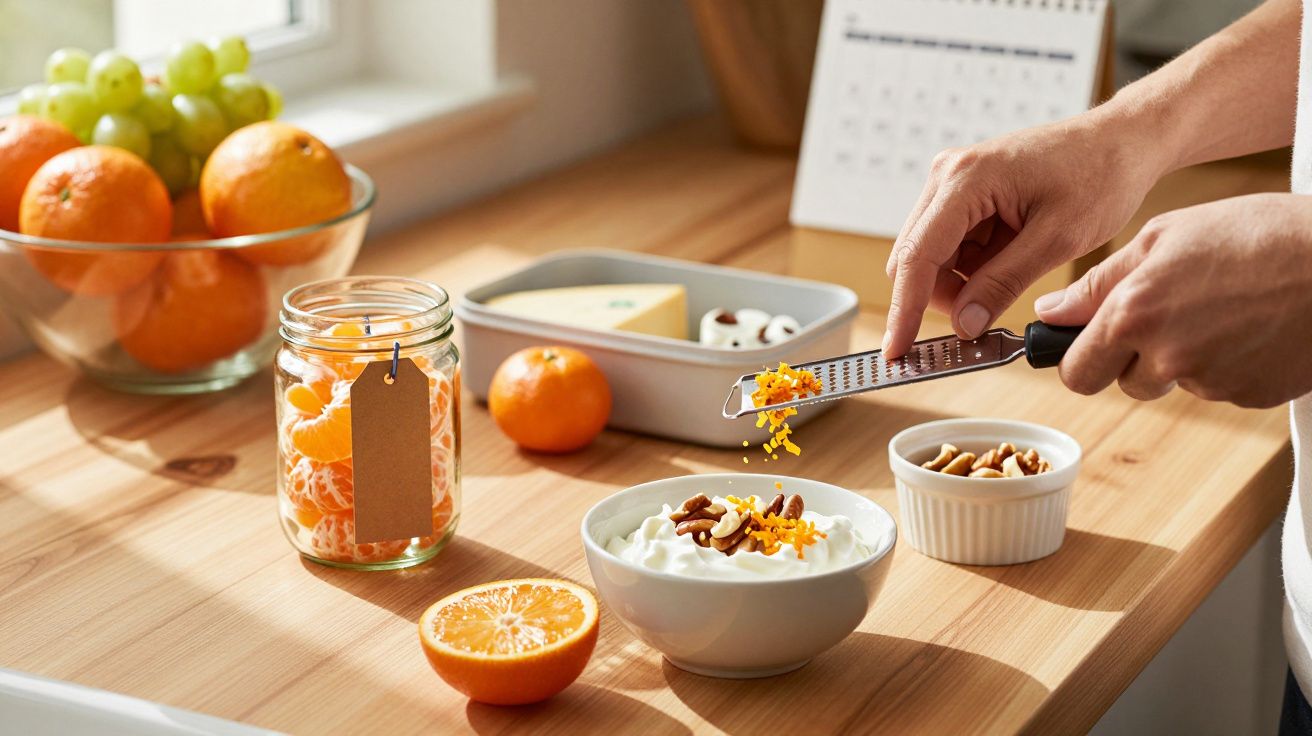
A microplane and 10 seconds turns clementines into: - Citrus sugar for porridge or baking (zest + caster sugar) - A lift for roast carrots, squash or sweet potatoes - A better salad dressing (zest + juice + olive oil + salt)
Wash first, zest lightly (avoid the bitter white pith), then juice. It makes the fruit feel “worth it” even when the segments are average.
Treat them as an ingredient, not a virtue
Clementines are at their best when they’re doing contrast work: brightening something fatty or salty.
They’re excellent with: - Fennel, rocket, olives - Mackerel, smoked fish, chicken thighs - Dark chocolate, dates, toasted almonds
This is where they stop being “that fruit I should eat” and start being something you’d choose on purpose.
Storage: the small habit that changes everything
Clementines can live at room temperature for a short while, but most UK kitchens are warmer than we think in winter. If you want them to stay juicy, the fridge is your friend.
A low-effort setup: - Keep a small bowl out (2–4 days’ worth) - Keep the rest refrigerated in a breathable bag or the veg drawer - Move a few out every couple of days
This also solves the “all at once” problem, where you buy a net and then feel pressured to eat them quickly.
Quick guide: common problem → better move
| If this keeps happening… | Do this instead | Why it works |
|---|---|---|
| They go dry in the bowl | Fridge most, small bowl out | Slows dehydration |
| You snack endlessly | Pair with protein/fat | Improves fullness |
| You forget you bought them | Assign a “rescue use” | Cuts waste fast |
A note on teeth, timing and kids’ lunchboxes
Clementines are acidic. That doesn’t make them “bad”, but it does mean frequency matters, especially if you’re grazing.
If you (or your kids) have them constantly between meals, consider: - Having them with meals rather than as all-day nibbles - Rinsing with water afterwards - Waiting a bit before brushing if your mouth feels “sharp” (acid softens enamel temporarily)
For lunchboxes, peeled segments in a container are often better than a whole fruit. It reduces half-eaten clementines coming back home, sticky and ignored.
The takeaway
Clementines aren’t the problem - they’re one of the easiest wins in winter eating. The trouble starts when we use them as a substitute for planning, a stand-in for meals, or a decorative optimism project in a fruit bowl.
Buy them, enjoy them, and give them a job. If you do that, they stop feeling like something you’re “supposed” to eat and start behaving like what they are: a genuinely useful bit of food.
FAQ:
- Are clementines “too sugary” to snack on? For most people, no - but they’re easy to overuse because they feel light. If you’re hungry soon after, pair one with yoghurt, nuts, or cheese to make it more satisfying.
- Should I keep clementines in the fridge? If you want them to last and stay juicy, yes. Keep a few at room temperature for easy grabbing, and refrigerate the rest.
- What’s the quickest way to stop a net going to waste? Pick a rescue plan early: segment some for containers, freeze juice in ice cube trays, or use zest and juice in dressings and baking.





Comments
No comments yet. Be the first to comment!
Leave a Comment