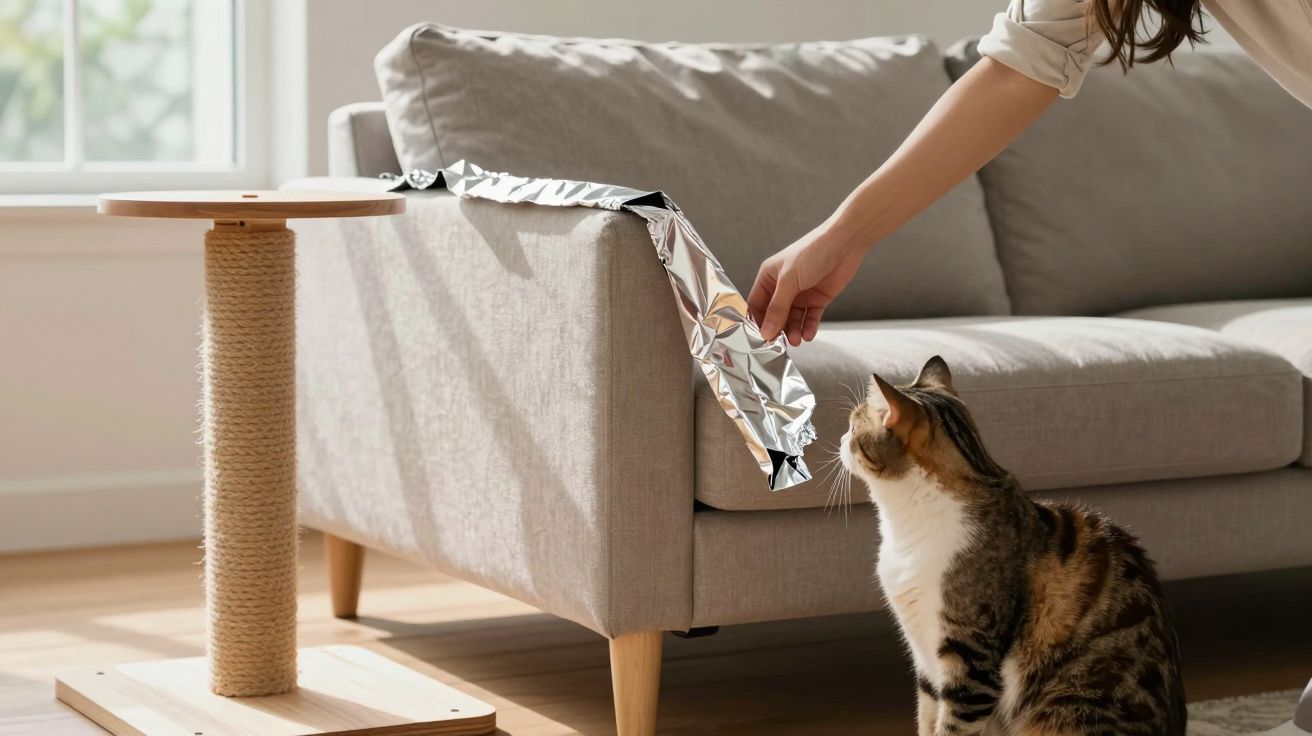
The first time you tape it on, it feels a bit ridiculous. You smooth a strip along the sofa arm where your cat usually makes confetti out of fabric. The metal wrinkles, the light catches, and somewhere behind you the familiar thud‑thud‑thud of claws on upholstery starts up… then stops. There’s a confused pause, a cautious sniff, a rustle of foil, and padded footsteps leaving the scene.
Clips of this “miracle” have been bouncing around social media for months: cats marching towards their favourite scratching spot, only to recoil from a silvery barrier. For exhausted owners, it’s a tiny, gleeful victory. The sofa survives, the curtains keep hanging, and nobody had to spend a weekend assembling elaborate cat furniture.
Vets are watching the same videos with more mixed feelings. The foil trick does work for many cats, and it’s usually safe when used well. But it’s not magic, and it doesn’t remove the need to scratch. It simply makes one place less appealing and pushes that instinct somewhere else – for better or for worse.
Used as a short‑term training tool, paired with somewhere better to claw, foil can quietly reset the rules of the living room. Used alone, it can create a stressed cat and a relocated problem. The difference comes down to a few details.
The kitchen staple that turns sofas into “nope zones”
The mystery item is plain aluminium foil – the same roll you reach for when you cover leftovers. Not cling film, not sticky tape, not anything scented. Just the thin, crinkly metal sheet that makes a sound like crushed leaves in a tunnel when a paw hits it.
To a cat, that surface is all wrong. Their ideal scratching spot gives grip, resistance and satisfying feedback through their paws. Fabric, sisal, cardboard and wood all respond in a predictable way. Foil does the opposite. It shifts, crumples, crackles loudly and sometimes feels cold or slightly static. There’s no purchase for claws, and the noise startles.
Behaviour vets describe it as a “mild aversive”: something unpleasant enough to make a choice less attractive, but not painful or harmful when used correctly.
One feline vet summed it up this way:
“Scratching is a need, not a naughty habit. Foil works because it makes the location unappealing – but you must offer a better, legal place to scratch at the same time.”
In other words, the foil isn’t really stopping scratching. It’s redirecting it. When you understand that, you can use the hack without picking a quiet fight with your cat.
Exactly how to use foil on furniture without freaking your cat out
Think of foil as a temporary training aid, not a permanent outfit for your sofa. The goal is to protect high‑risk areas while you teach your cat that other surfaces are more rewarding.
Step 1: Make a “yes” place to scratch irresistible
Before you even touch the foil, set up at least one great scratching option:
- A sturdy post or board taller than your cat when they stretch.
- Covered in a texture they like (many prefer vertical sisal; some love cardboard).
- Placed right by the area they already scratch, not hidden in a distant corner.
- Lightly rubbed with catnip or silver vine if they respond to it.
Each time your cat uses the new post, quietly drop a treat or offer gentle praise. You’re paying them for choosing the right spot.
Step 2: Apply foil only where damage is happening
Cut strips of aluminium foil big enough to cover the specific zones your cat targets – sofa arms, the front of a chair, the side of a bed. Smooth the foil over the fabric and secure the top edge with low‑tack tape on the foil, not directly on delicate upholstery if you’re worried about residue.
A few guidelines vets and behaviourists point to:
- Cover the full scratch zone, not just a thin line.
- Avoid creating loose, flapping edges that could tempt chewing or play.
- Keep it taut enough not to tear instantly under a curious paw.
Step 3: Guide, don’t just hope
For the first few days:
- Gently lead your cat towards the new post with a toy.
- Run your fingers down the post so they see how to use it.
- Reward even a single tentative scratch with something they value.
If they approach the foiled area, let the surface “speak for itself”. There’s no need to shout or shoo. The strange feel and sound usually do the job, and your reaction should stay neutral.
Step 4: Fade the foil gradually
After one to three weeks of consistent use of the scratching post:
- Remove foil from the least‑used protected areas first.
- Leave foil a little longer on their former favourite spot.
- If they relapse, put a smaller piece back for a few more days rather than giving up entirely.
The aim is to end up with an unwrapped sofa and a well‑established scratching habit in a better place.
Common pitfalls that make things worse
Several missteps turn a simple hack into a bigger problem:
- Foiling every surface at once. This can leave anxious cats feeling they have nowhere safe to mark and stretch.
- Using foil as punishment. Waving or rattling it at a cat, or shouting when they touch it, can damage trust.
- Forgetting older or visually impaired cats. Sudden, shiny barriers can be disorientating; go slower and observe their reaction closely.
- Leaving foil on for months. Long‑term use risks your cat finding a brand‑new target just out of sight – often a door frame or carpet edge.
If your cat seems unusually jumpy, hides more, or switches to peeing or pooing in odd places after you add foil, remove it and speak to your vet or a behaviourist. That’s a sign you’ve tipped from “helpful nudge” into “chronic stress”.
What vets want you to remember about scratching
Scratching isn’t your cat plotting against your soft furnishings. It’s:
- A way to stretch and work their muscles.
- Essential maintenance for claws, especially in indoor cats.
- Scent marking, using glands between the toes.
- Visual communication – those vertical marks say “cat lives here”.
Block every acceptable outlet, and you don’t get a neat, well‑behaved cat; you get an uncomfortable, frustrated one. That’s why most vets see foil, sticky tape and citrus sprays as management tools, not stand‑alone solutions.
A healthier long‑term plan usually includes:
- Multiple scratching options in different rooms and at different angles (vertical posts and horizontal pads).
- Regular claw checks and trims if your cat tolerates them, especially for elderly or indoor‑only cats whose nails can overgrow.
- Environmental enrichment – play, climbing shelves, hiding spots – so scratching is part of a rich daily routine, not their only outlet.
As one behaviourist puts it, “Your cat isn’t scratching your sofa to ruin it. They’re using your best piece of furniture because you have put the perfect scratching post in the centre of their world.”
Quick reference: foil, scratching posts and your sofa
| Tip | What it does | Why it matters |
|---|---|---|
| Use foil only on current scratch zones | Makes those specific spots briefly unappealing | Redirects the habit instead of creating confusion |
| Pair foil with a great scratching post | Offers a clear, rewarding alternative | Meets your cat’s physical and emotional needs |
| Fade the foil after a few weeks | Tests whether the new habit is stable | Helps you avoid permanent “space blanket” décor |
FAQ:
- Is it cruel to put foil on my sofa to stop my cat scratching? When used short‑term, on limited areas, and always paired with good scratching alternatives, most vets consider foil a mild, acceptable deterrent. If your cat looks fearful, stops playing normally or avoids the room, remove it and seek advice.
- How long should I leave the foil on? Many owners see a change in habit within two to four weeks. After that, start removing it gradually. If you still need foil months later, it’s a sign you may need more or better scratching posts, or a behaviour consult.
- My cat just jumps over the foil and scratches higher up. What now? Extend the protected area slightly, but more importantly, upgrade the alternative post: make it taller, move it closer to the sofa, and reward them every time they use it. Some cats simply prefer a particular height or angle.
- Are there cats that don’t mind foil at all? Yes. A few seem unfazed and will happily tromp over it. In those cases, foil isn’t the right tool, and you’re better off focusing on strategic furniture covers, more attractive posts and possibly double‑sided tape designed for pets on specific edges.
- Should I use other deterrents like water sprays as well? Behaviour experts generally advise against spraying or shouting, as these punish you into the picture and can harm your relationship. Aim to change the environment – with foil, covers and great posts – so the “right” choice feels easy, and you can stay out of the conflict.





Comments
No comments yet. Be the first to comment!
Leave a Comment