Somewhere between the Sunday roast and the midweek stir-fry, cabbage quietly solves problems most of us don’t realise we’re carrying. It’s cabbage, and nothing else, that can make a plate feel fuller, fresher and cheaper without adding extra cooking time. The small detail is how you treat it in the first five minutes, because that’s what changes the flavour and texture you’ll live with for months.
It’s easy to dismiss as “boiled veg from childhood”, but cabbage is one of those background foods that compounds. Eat it often enough-in soups, salads, trays, sandwiches-and it nudges your fibre intake up, stretches meals further, and makes healthier cooking feel less like a project.
Why cabbage keeps showing up in sensible kitchens
Cabbage is reliable in a way trendy ingredients rarely are. It’s cheap, stores well, and works across cuisines: British braises, Polish-style sautéing, Korean-inspired quick pickles, Indian spicing, Chinese stir-fries.
It’s also forgiving. If you overcook it a bit, it’s still edible; if you underdress it, it still has crunch. And because it’s a crucifer (like broccoli), it brings plant compounds that are repeatedly linked with long-term health patterns-without asking you to drink a green juice.
Think of cabbage as a “base layer” ingredient: not exciting on its own, but it makes everything around it better.
The small detail that changes everything: cut it, salt it, wait
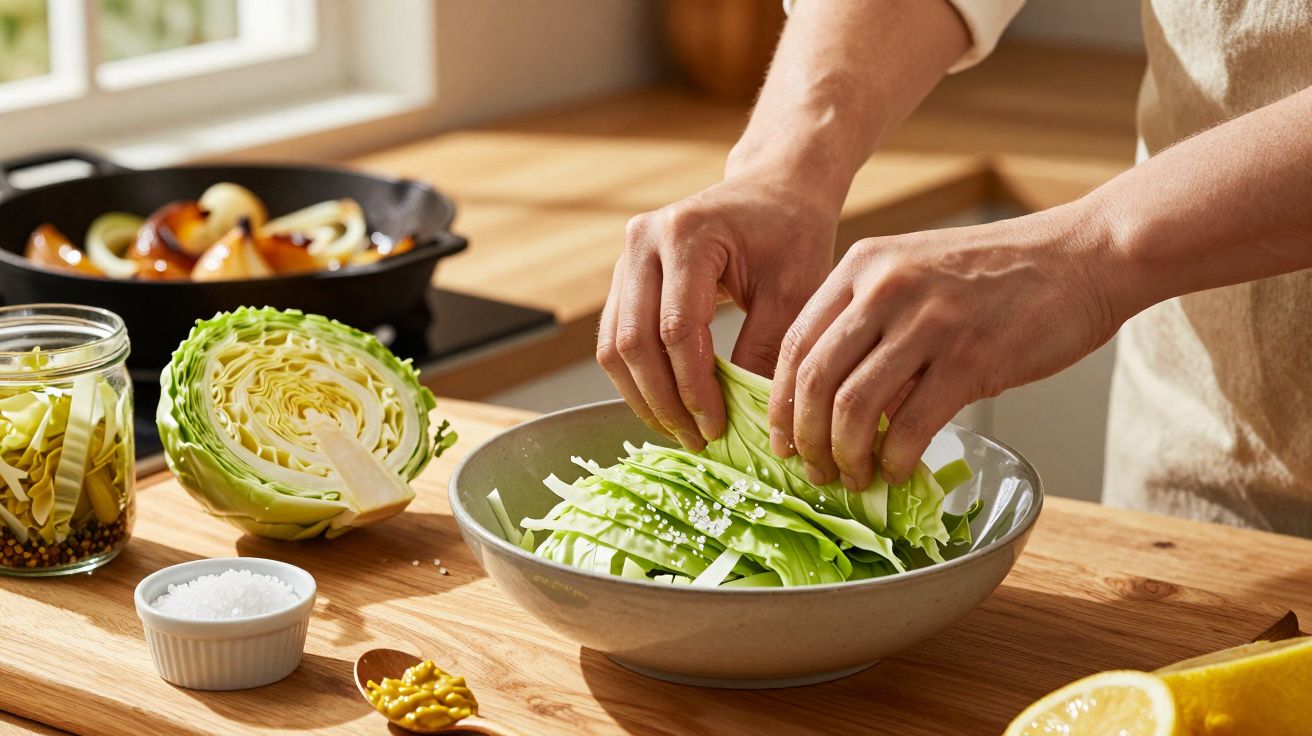
Most cabbage disappointment comes down to one habit: cooking or dressing it immediately after slicing. Give it a short pause, and it behaves like a different vegetable.
Here’s the simple rhythm:
- Slice it thinly. Thin shreds cook faster and taste sweeter; thick chunks stay louder and more sulphurous.
- Salt it lightly. A pinch for salad, a bit more for slaws and stir-fries.
- Wait 10 minutes. This draws out a little water, softens the fibres, and takes the aggressive edge off.
- Then decide: keep it raw, quick-cook it, or braise it slowly.
That ten-minute wait is small, but it changes your “default cabbage experience” from squeaky and sharp to flexible and almost silky.
For raw cabbage that doesn’t taste harsh
If you want cabbage in a salad or slaw, don’t just toss it and hope for the best. Salt first, then add acid and fat.
- Salt + wait: 10 minutes in a bowl
- Add acid: lemon juice, cider vinegar, rice vinegar
- Add fat: olive oil, yoghurt, tahini, mayo
- Finish: pepper, mustard, caraway, dill, or a little honey
You’re not trying to pickle it fully. You’re just taking the stiff, green “edge” off so it feels like food, not a chore.
For cooked cabbage that stays sweet, not soggy
Cabbage turns sad when it sits in water too long. Better options:
- High heat, short time: stir-fry shreds in a hot pan for 3–5 minutes.
- Steam briefly: 4–6 minutes, then dress with butter and mustard.
- Braise properly: give it time with onions, stock, and a lid so it turns mellow.
A useful rule: if you want crunch, go faster and hotter; if you want comfort, go slower with a lid.
The “one cabbage a week” habit that pays off
Buying one cabbage each week is boring in the best way. It reduces decision fatigue, gives you an instant vegetable side, and makes throw-together meals feel complete.
A single cabbage can usually cover:
- 1 big salad base (thinly sliced, salted, then dressed)
- 1 quick cooked side (stir-fried with garlic and oil)
- 1 bulked-out meal (soup, fried rice, noodle bowl, tray bake)
And it lasts. Kept whole in the fridge, cabbage holds up far better than most leafy greens, which means less waste and fewer “we have nothing in” dinners.
Which cabbage to buy (and what it’s best at)
Not all cabbage behaves the same. If you pick the right one for the job, you’ll need less sauce, less cooking, and less convincing.
| Type | Best use | Why it works |
|---|---|---|
| White/green | Slaw, stir-fry, soup | Crunchy, versatile, mild when salted |
| Red | Salads, quick pickles, roasting | Peppery bite, keeps colour, stays firm |
| Savoy | Braising, pan-frying, soups | Tender leaves, takes flavour quickly |
If you’re only buying one, go for white/green. If you want the biggest “wow, that’s nicer than I expected” moment, go for savoy and braise it with onions.
Three low-effort ways to make cabbage taste like you meant it
1) The 2-minute lemon-mustard cabbage
Slice, salt, wait. Then add olive oil, lemon, Dijon mustard, black pepper. Eat it with roast chicken, fish fingers, or beans on toast.
It tastes bright and intentional, and it cuts through rich food without needing a whole salad situation.
2) The weeknight pan of cabbage and onions
Cook sliced onions in oil or butter until soft. Add shredded cabbage, salt, pepper, and cook 5–8 minutes until glossy. Finish with a splash of vinegar.
This is the kind of side dish you start making “just to use things up” and then miss when it’s not there.
3) The quick pickle that fixes boring lunches
Pack shredded cabbage into a jar with salt, vinegar, and a pinch of sugar. Add chilli flakes or caraway if you like. Leave it for 30 minutes (or overnight).
Suddenly your cheese sandwich, leftover rice, or tinned fish becomes a real lunch, not just fuel.
A couple of small cautions worth knowing
Cabbage is generally safe and beneficial for most people, but two practical notes help:
- If you’re increasing fibre quickly, go slowly. More cabbage can mean more bloating at first; build up over a week or two and drink enough water.
- If you take thyroid medication, keep timing consistent. Normal food amounts of cooked cabbage are fine for most, but if you’re making major dietary changes, it’s sensible to check with your clinician, especially if you’re managing thyroid conditions.
Why this tiny habit matters over time
Cabbage isn’t a dramatic “before and after” ingredient. It’s a quiet one. But quiet foods are the ones you actually eat often enough to matter.
Once you get the small detail right-slice, salt, wait-you stop fighting cabbage and start using it the way good home cooking works: repeatable, adaptable, and easy to keep doing when life gets busy.
FAQ:
- Is cabbage better raw or cooked? Both count. Raw keeps crunch and is great for quick salads; cooked can be gentler on digestion and turns sweeter. Use whichever makes you more likely to eat it regularly.
- How do I stop cabbage smelling strong when cooking? Cook it quickly on high heat, or braise it with aromatics (onion, garlic) and finish with a little vinegar or lemon. Long boiling tends to create the strongest smell.
- How long does a whole cabbage keep in the fridge? Often 1–2 weeks (sometimes longer) if kept whole and dry. Once cut, wrap tightly and aim to use within 3–5 days for best texture.
- Can I freeze cabbage? Yes. Freeze it cooked (stir-fried or blanched) for best results; raw cabbage can go watery after thawing, though it’s still fine for soups and braises.






Comments
No comments yet. Be the first to comment!
Leave a Comment