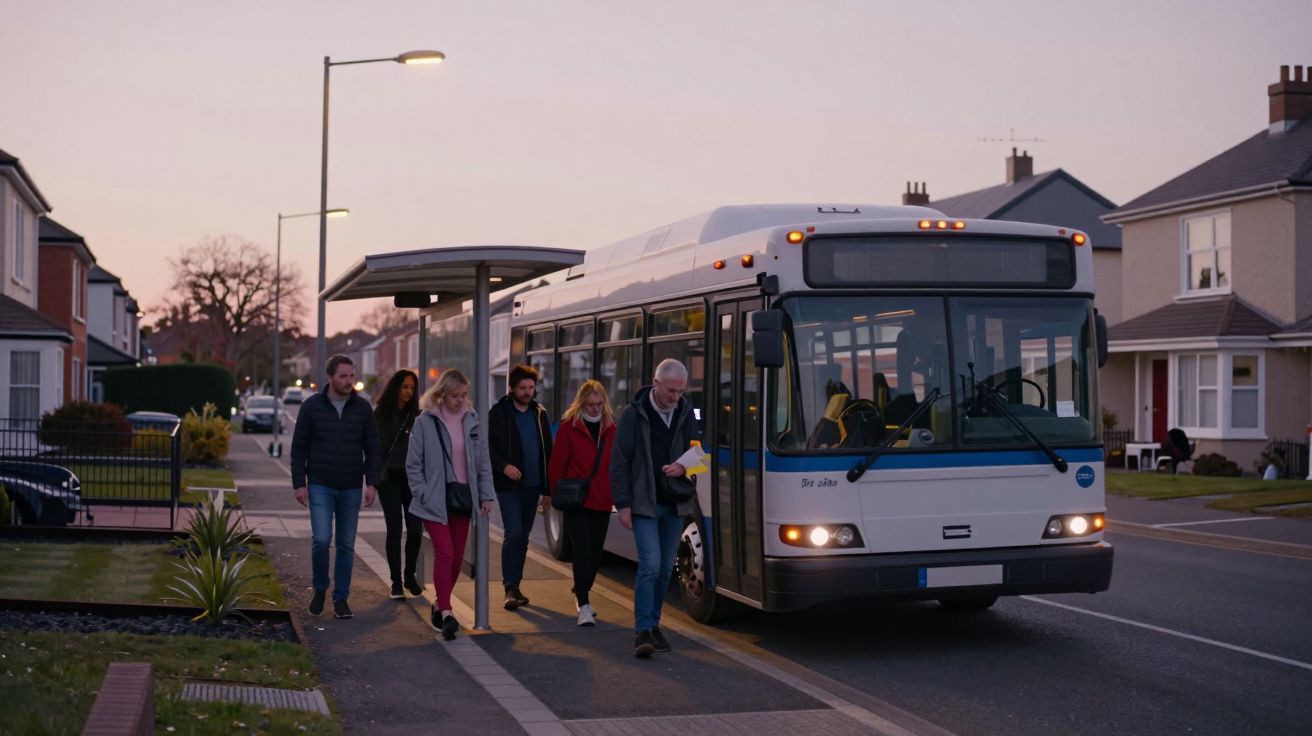
At 05:12 on a Tuesday, a double‑decker rolls into a terraced street on the edge of town. The usual growl of the engine is softer, the brake squeal barely there. Inside, the “bing‑bong” and route announcement never come. A handful of half‑awake commuters step off, doors close, and the bus glides away like an electric taxi.
Nothing on the bus stop pole explains why it suddenly sounds different. On depot noticeboards and in internal memos, though, operators call it a “whisper stop” – a place where drivers are asked to creep in, keep idling to a minimum and cut non‑essential noise, particularly at night and in the early morning.
Residents who live above these stops talk about finally sleeping through the first service of the day. Some passengers, especially those who rely on audio alerts, feel the opposite: less noise can mean less certainty, more missed buses and a sense that safety has been dialled down in the name of peace and quiet.
In a handful of UK cities, this experiment is already underway. Quietly.
Why bus operators are chasing quieter stops
Complaints about bus noise are familiar to any local authority. Residents file them in clusters: a lay‑by beneath bedroom windows, an early‑morning school service, or a night route where drivers whooshing in every 15 minutes turn sleep into a patchwork.
The main offenders are not mysterious. Diesel engines idling at high revs, sharp brake squeal, rattling bodywork and on‑board announcements that blare at the same volume at 23:00 as at 15:00. Electric and hybrid fleets are helping, but the noisiest moments still happen at the stop itself.
Operators and councils have limited tools. Moving stops is politically fraught, cutting night routes hits key workers and hospitality staff, and retrofitting entire fleets is slow. “Whisper stops” offer an in‑between: tweak how buses behave at the most sensitive points, and hope to cool tempers without cutting services.
A whisper stop is less a new kind of bus stop than a new rulebook for how buses approach, wait and leave in front of someone’s bedroom window.
What a “whisper stop” actually changes
The details vary by city and operator, but trials broadly follow the same recipe. A list of stops on residential streets is geofenced in the ticketing or telematics system. When a bus enters that digital bubble during set hours – often 22:00 to 07:00 – the vehicle and driver are nudged into a quieter routine.
Common elements include:
- Lower approach speed and gentler braking to cut squeal and vibration.
- Instructions to avoid revving while stationary and to switch off unnecessary fans.
- Reduced or muted external announcements, chimes and adverts.
- Shorter dwell times where safe, to avoid long idling under bedroom windows.
Some newer buses add automatic tweaks. Electric cooling fans switch to a “night mode”. The external speaker that usually shouts the route number drops to a softer level. On certain models, the kneeling function – lowering the bus to meet the kerb – is slowed slightly to reduce the thump.
None of this requires a new shelter or fancy glass. Most whisper stops look exactly like any other. The difference lives in software, habits and a handful of stickers in the cab.
How passengers experience the hush
For residents, the shift can feel dramatic. A row of houses that once jolted awake to each first service now hears more of a low whoosh than a mechanical cough. Parents of light‑sleeping toddlers, shift workers grabbing daytime rest, and people on narrow Victorian streets are often the first to notice.
Passengers on board describe a different experience. Night‑time journeys feel calmer without constant chimes and booming automated voices. Conversations can be quieter; headphones need not battle with a soundtrack of beeps and “next stop” alerts.
But the hush also has side‑effects. If internal announcements are turned down too far, people can miss their stop in the dark. When external speakers fall silent, those waiting – especially visually impaired travellers – may struggle to confirm the route as a near‑silent bus glides in.
A few early adopters reported a particular kind of confusion: buses arriving almost silently, doors opening without a chime, and the vehicle pulling away quickly if no‑one moved. Regulars adjusted fast; occasional users felt they needed to stay on high alert.
The trade‑offs: safety, access and sleep
Operators insist that safety rules do not change at whisper stops. Doors still will not close if sensors detect something in the way. Drivers are briefed to wait for people running, and CCTV covers the usual angles. The core promise: quieter, not riskier.
Accessibility is more complex. Many disabled passengers depend on sound, not sight, to travel confidently. They navigate by internal and external announcements, door chimes and the distinctive hum of an approaching engine.
A too‑quiet stop can feel safer to the people in bed upstairs and less safe to the person with a white cane waiting on the pavement.
Some trials respond with fine‑tuning rather than blanket muting. For example:
- Keeping internal stop announcements at normal volume but softening only the chime.
- Retaining external route call‑outs, but limiting them to a single, lower‑volume play as the bus pulls in.
- Ensuring drivers always use the ramp and kneeling function for anyone who signals they need it, even if those movements add noise.
Passengers who live in the neighbourhood can also feel torn. The same bar worker who relishes quieter nights may worry about missing the last bus if it sails in like a whisper.
How whisper stops differ from a standard bus stop
A quick comparison helps clarify what is changing and what is not.
| Feature | Standard stop (night) | Whisper stop (trial) |
|---|---|---|
| Engine / idling | Normal revs; engine often left running | Lower revs; idling minimised where possible |
| Audio alerts | Full‑volume chimes and announcements | Volume reduced or fewer sounds during set hours |
| Approach / braking | Usual speed; sharper braking at times | Slower approach, smoother braking pattern |
For operators, this is also a data experiment. Noise monitors in nearby homes, feedback from residents’ groups, incident reports and passenger surveys all feed into the question: does the benefit justify the complexity?
What to watch for if your route is trialling whisper stops
Trials rarely arrive with fanfare. You are more likely to spot a small line in a timetable update or a quiet note on a consultation page than a billboard campaign. Still, there are signs you can look for.
- Subtle changes in sound: the bus coasts in more softly, announcements feel calmer, and idling is shorter.
- App or website notes: look for phrases such as “noise‑sensitive stop”, “quiet operation area” or “reduced audio alerts at night”.
- On‑board notices: some operators place a card near the cab explaining that the bus runs in a low‑noise mode past certain stops.
If you rely on audio to travel, you can:
- Tell the driver your stop as you board and ask for a verbal reminder.
- Sit closer to the front, where you are more likely to hear any remaining chimes.
- Use journey apps with vibration alerts so your phone, not the bus, provides the cue.
Residents who welcome the change can still help ensure it sticks by giving formal feedback rather than just silent relief. When a route review comes up, logged comments about better sleep carry more weight than an absence of complaints.
Why this quiet tweak matters beyond one street
On their own, whisper stops will not turn a diesel bus into a floating carpet. They also do not replace the bigger job of cleaning up fleets, redesigning routes and making streets friendlier to walking and cycling.
Their significance lies elsewhere. For bus companies under pressure to be good neighbours, they show that noise is not just an engineering problem – it is a behavioural one. How a bus is driven, how long it waits, and how loudly it speaks can change without ripping up tarmac.
They also highlight who often gets left out of transport debates. Late‑night and early‑morning users, disabled passengers and those living in cheaper, bus‑rich corridors all feel the effects first. Any long‑term roll‑out will have to square a circle: protect sleep without undermining access.
Done well, whisper stops could become one more small, almost invisible adjustment that makes dense urban life tolerable. Done badly, they risk becoming another quiet experiment that solved one problem while creating two new ones.
FAQ:
- Are whisper stops only for electric buses? No. Trials are running on diesel, hybrid and electric fleets. Electric buses start off quieter, but their braking systems and announcements can still be tuned for low‑noise operation at specific stops.
- Can drivers ignore whisper stop rules if it’s busy? They must always prioritise safety. In heavy rain, crowds, or if someone clearly needs more time or assistance, drivers are expected to take the time required, even if that means more noise.
- Will all announcements be turned off at night? In most trials, no. Internal announcements usually remain, sometimes at a reduced volume. The bigger changes tend to be to external speakers, chimes and idling behaviour.
- What if I miss my stop because it’s too quiet? Speak to the driver at your next opportunity and report it to the operator. Feedback from missed‑stop incidents is one of the key measures that decides whether whisper stop settings are adjusted or rolled back.
- How can residents influence whether whisper stops stay? Respond to local consultations, log noise complaints or compliments through council channels, and mention specific times and routes. Operators and councils rely on that detail when deciding whether a trial becomes permanent.






Comments
No comments yet. Be the first to comment!
Leave a Comment