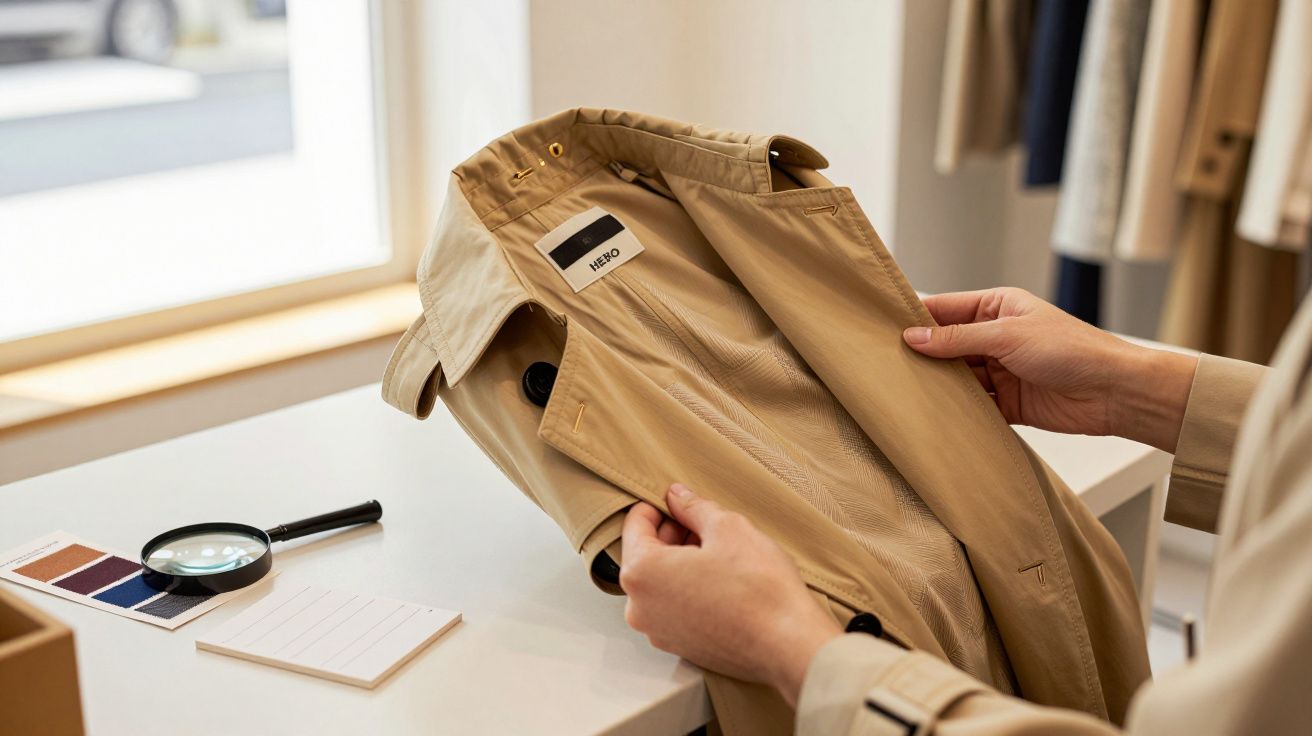
You spot a Burberry trench in a shop window, or a Burberry scarf on a resale app, and it looks almost boringly straightforward: beige, check, done. There’s no secondary entity to point at when the purchase feels “off” later - the confusion usually comes from how Burberry itself is sold, labelled, and circulated. For anyone spending serious money (or trying to buy smart second-hand), that simplicity is exactly why it matters.
The brand’s best pieces are designed to feel quiet and obvious. The catch is that a quiet design makes it easier for very different products - and very different levels of quality - to look the same at a glance.
The simplicity that makes Burberry so easy to buy
Burberry trades on recognisable basics: a trench that sits cleanly on the shoulder, a scarf that frames the face, a check that reads from across the street. Unlike hype brands, it doesn’t need loud graphics to feel “designer”. That’s why people buy it as a first luxury item, a work staple, or a long-term coat rather than a seasonal statement.
But that same restraint creates a problem for shoppers. When the design language barely changes, small details (fabric, cut, lining, labelling, provenance) do all the heavy lifting - and most people don’t look for them.
Burberry is one of those labels where the difference between “great buy” and “why does this feel cheap?” is often hiding on the inside tag, not the outside check.
The catch most consumers miss: Burberry isn’t one single product tier
People talk about Burberry as if it’s one consistent thing: one price level, one factory standard, one “real” trench. In reality, what you see in the wild can come from very different channels and eras, and they don’t all deliver the same value.
A few common examples that trip people up:
- Mainline vs outlet: outlet stock can include made-for-outlet product, not just past-season pieces, and fabrics/finishes may differ.
- Vintage labelling: “Burberrys” (with an “s”) is often older, and can be authentic - but condition and sizing norms vary wildly.
- Licensed lines in specific markets: older Japan-licensed labels (often discussed as Blue Label/Black Label) are a separate ecosystem that gets misrepresented online.
- Quiet material changes: cotton gabardine, cotton blends, wool/cashmere mixes and synthetics can all look similar in photos, especially on scarves and lighter coats.
None of this means “don’t buy”. It means you’re not just buying a pattern - you’re buying a specific version of the brand, and the listing photo rarely tells you which one.
Why the check pattern creates false confidence
The Burberry check works like a shortcut in the brain. You see it and assume you’ve already verified the important part: authenticity, quality, resale value.
That’s exactly how people end up overpaying for pieces that are legitimate but underwhelming, or for pieces that are simply not what they were told. The check can appear on everything from premium runway accessories to lower-margin items designed to move volume, and in blurry resale photos those differences flatten.
If you only remember one thing, make it this: a recognisable Burberry look is not the same thing as a good Burberry buy.
Where the confusion shows up most (and how to handle it fast)
| Where you’re buying | What tends to go wrong | What to do |
|---|---|---|
| Resale apps/marketplaces | Vague era, missing tags, “gift” stories | Ask for inside labels, composition, and clear stitching photos |
| Outlet/discount retailers | Assumption it’s past-season mainline | Check style codes, fabric composition, and compare to current mainline specs |
| Vintage shops | Condition issues masked by “vintage charm” | Inspect wear points: cuffs, collar, underarms, lining, buttons |
This is why two people can both “buy Burberry” and have totally different experiences. One gets a hard-wearing coat that lasts a decade. The other gets a piece that looks right on a hanger but never feels right on the body.
A quick checklist before you pay
You don’t need to become a fashion archivist. You just need a few boring checks that stop expensive mistakes.
1) Ask what it’s made of (not what it looks like)
For trenches and coats, composition matters because it predicts drape, breathability, and how the fabric ages. For scarves, it’s the difference between soft warmth and a scratchy, shiny feel that pills quickly.
- Look for 100% cotton gabardine on classic trenches, or understand the blend if it’s not.
- For scarves, confirm whether it’s cashmere, wool, silk, or a blend (and what percentage).
2) Look at the inside, not the check
Request photos of:
- Brand and care labels (sharp, readable)
- Buttons, buckles and hardware close-up
- Seam finishing and lining condition
- Any style code/product code tags if present
A seller who can’t provide clear tag photos might still be honest - but you’re gambling.
3) Treat “Made in …” as information, not a guarantee
Made in England can be a lovely detail, but it isn’t a magic stamp that overrides fabric choice, condition, or whether the piece suits you. Likewise, made elsewhere doesn’t automatically mean bad - but it should push you back to materials and construction.
4) Price against reality, not retail fantasy
A common trap is paying near-new prices for items that are old, worn, altered, or from a lower tier. If the deal is framed as “retail was £X”, ask: which product, which year, and which line?
What a “good” Burberry purchase usually feels like
When you’ve got the right piece, the simplicity stops being flat and starts being functional. The coat sits cleanly without fighting your posture. The scarf feels substantial in the hand, not just decorative. Hardware feels firm, stitching looks calm, and the inside is as considered as the outside.
That’s the real point of Burberry: it’s supposed to be easy to wear for years. The catch is that you only get that ease when you buy the specific version that was built for it.
FAQ:
- Can an item labelled “Burberrys” be authentic? Yes. “Burberrys” is commonly seen on older/vintage pieces, but authenticity and value still depend on condition, construction and accurate seller info.
- Does the Burberry check automatically mean it’s a premium piece? No. The check appears across different product types and tiers, and photos can hide big differences in fabric and finish.
- Are outlet Burberry items always past-season mainline stock? Not always. Some outlet stock can be produced specifically for outlets, so verify materials, details and any product codes you can.
- What should I ask a resale seller for before buying? Clear photos of inside labels, composition, care tags, lining, hardware, and close-ups of wear areas like cuffs and collar.






Comments
No comments yet. Be the first to comment!
Leave a Comment