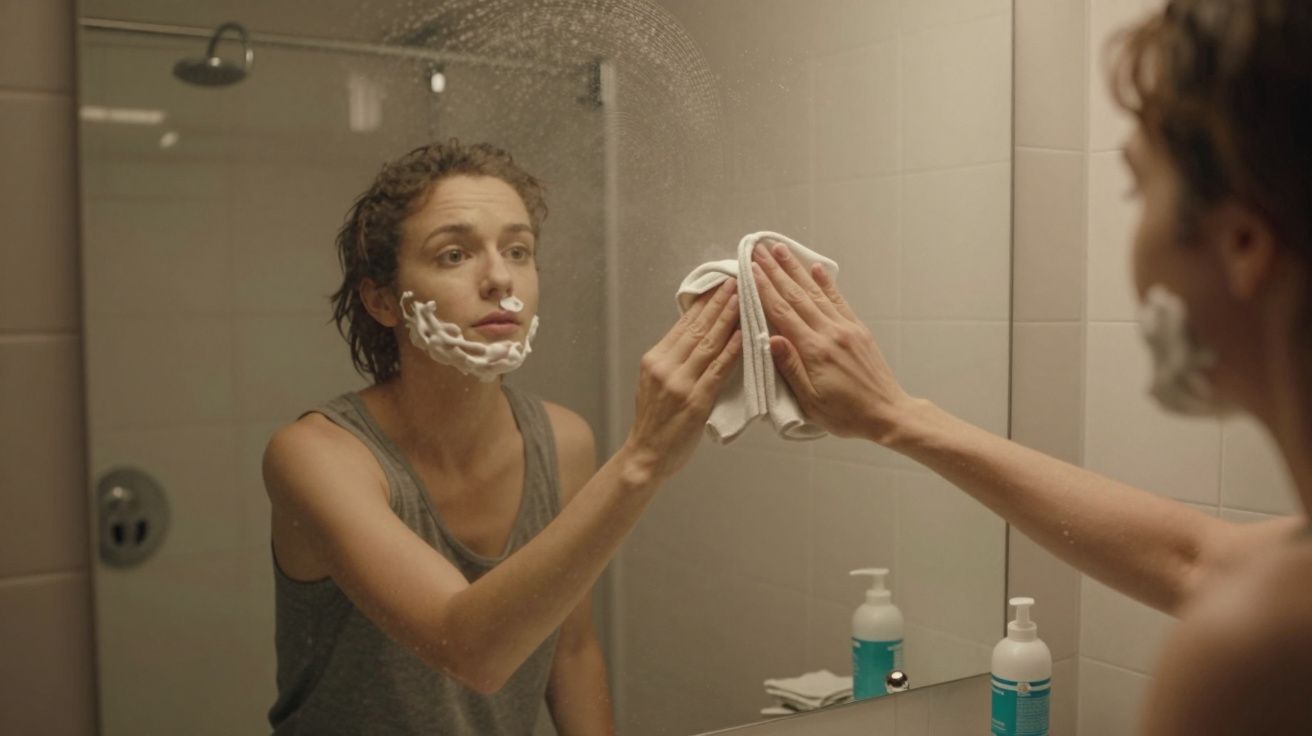
The steamy mirror problem always feels bigger than it is. You take a normal shower, open the door, and the glass turns into a grey blur that refuses to clear even after you’ve dried your hair.
Most people assume the fix has to be high-tech: a heated demister pad, a new extractor fan, or one more “anti-fog” spray that works for a day and then vanishes. Glaziers tend to be less romantic about it. Their version is cheap, quick, and oddly satisfying.
A pea-sized dab of shaving foam, buffed properly, can leave a film that keeps a mirror clearer for days - sometimes up to a week.
Why bathroom mirrors fog for so long
A mirror fogs when warm, moisture-heavy air hits a cooler surface. The water vapour condenses into tiny droplets, and those droplets scatter light. That’s why you can’t see your face, even though the mirror is technically “clean”.
The reason it can last for hours is usually a mix of three things: long hot showers, a cold wall behind the mirror, and slow air changes. If your extractor fan is weak (or you don’t run it long enough), the humidity hangs around and the mirror keeps re-fogging.
The shaving foam trick, in plain English
Shaving foam contains surfactants - ingredients designed to spread evenly and reduce surface tension. When you buff a thin layer onto glass, it leaves behind an invisible film. Instead of condensing into distinct droplets, moisture is more likely to form a flatter, more uniform layer that doesn’t scatter light as aggressively.
It’s not magic, and it won’t turn a bathroom into a hotel suite. But it often stops that “white-out” effect, which is what most people actually hate.
The key is not the amount you use. It’s how thinly you spread it, and how clean the mirror was before you started.
The 2-minute method glaziers recommend
What you’ll need
- A clean, dry microfibre cloth (or two)
- Any basic shaving foam (not gel is ideal, but gel can work)
- A normal glass cleaner or a splash of washing-up liquid in warm water
Step-by-step
- Clean the mirror first. Remove toothpaste specks, hairspray residue, and fingerprints. If you trap grime under the film, it will smear and look hazy.
- Dry it completely. Don’t rush this. The foam needs a dry surface to buff properly.
- Use a pea-sized dab. Seriously small - about the size of a garden pea for a typical mirror section.
- Spread it thinly. Rub it across the glass like you’re polishing, not “applying product”. Aim for a faint, even coat.
- Buff until clear. Keep going until the mirror looks normal again, with no streaks or cloudy patches. If you can still see foam, you’ve used too much.
- Spot-check under bathroom light. Turn the lights on and look from an angle. If you see a film, buff again with a clean, dry part of the cloth.
If you’ve done it right, the mirror should look completely unchanged - just less eager to fog up.
How long it lasts (and what shortens it)
Many people get several days from one application, and a week isn’t unrealistic in a low-touch bathroom. The film gradually wears off from splashes, wiping, and cleaning sprays.
These things shorten the effect:
- Aggressive cleaners (especially anything designed to cut grease hard)
- Frequent wiping with a wet cloth after every shower
- High-splash zones (mirrors close to the shower edge or basin)
- Very hot, long showers in a small, poorly ventilated room
A good rule is simple: if fogging starts to creep back in, reapply. You don’t need to strip the mirror every time, but a quick clean helps it buff evenly.
Common mistakes that make it “not work”
Most failures come down to application, not the idea itself.
- Using too much foam. This is the big one. Thick layers smear and catch light, so the mirror looks dull.
- Skipping the pre-clean. Residue (especially hairspray) makes buffing harder and patchier.
- Using a rough towel. It can leave lint and uneven streaks, which people mistake for “film”.
- Expecting it to fix poor ventilation. It helps visibility, but it doesn’t remove moisture from the room.
If your mirror is still dripping wet and fogging heavily after a shower, you may also need to run the extractor for longer, crack a window, or keep the door ajar for ten minutes.
A quick comparison of popular anti-fog fixes
| Method | Typical duration | Notes |
|---|---|---|
| Shaving foam (buffed) | 3–7 days | Cheapest, works best when applied thinly |
| Washing-up liquid film | 1–3 days | Similar idea, can streak if overused |
| Heated demister pad | Always on (when powered) | Best result, but costs to install/run |
Small precautions worth following
Shaving foam is generally gentle, but bathrooms are full of finishes that don’t like experimentation.
- Avoid getting foam on timber frames or unsealed edges; wipe any overspill quickly.
- Don’t use abrasive pads to “polish it off”. If it streaks, use a clean microfibre and buff.
- If your mirror has a special coating (some anti-fog or tinted mirrors do), test a small corner first.
- Keep it away from natural stone vanity tops if you’re messy with application, as some products can leave marks if left sitting.
If you share a bathroom, it’s also worth telling people what you’ve done. The first person to “give it a quick clean” with a strong spray can remove the film in seconds.
The boring fix that still matters: air and heat
Glaziers will tell you the shaving foam trick is a hack, not a building upgrade. If the room is constantly humid, the mirror is only one symptom.
If you want the fog to stop across the whole bathroom (tiles, ceiling corners, windows), focus on:
- Running the extractor fan for 20 minutes after a shower
- Cleaning the fan cover so it can actually pull air
- Opening a window briefly, even in winter, to dump humidity
- Keeping the room a touch warmer so surfaces aren’t ice-cold
The foam trick pairs well with these basics. It makes the mirror usable while the room catches up.
FAQ:
- Is shaving gel the same as shaving foam? Not quite. Foam tends to buff more cleanly because it’s lighter. Gel can work, but it’s easier to apply too thickly, which causes streaks.
- Will this damage the mirror? On standard glass mirrors, it’s usually harmless when buffed off properly. If you have a coated or specialist mirror, test a small corner first and avoid abrasive wiping.
- Why does my mirror look cloudy afterwards? You’ve almost certainly used too much, or the mirror wasn’t fully clean and dry. Re-clean the glass, dry it, then reapply using a smaller amount and a clean microfibre.
- Does it work on shower screens too? It can reduce fogging, but shower screens face constant water impact, so it wears off faster and may streak if not buffed evenly.
- How often should I reapply? When fogging starts returning - typically every few days to a week, depending on cleaning habits and shower heat.



Comments
No comments yet. Be the first to comment!
Leave a Comment