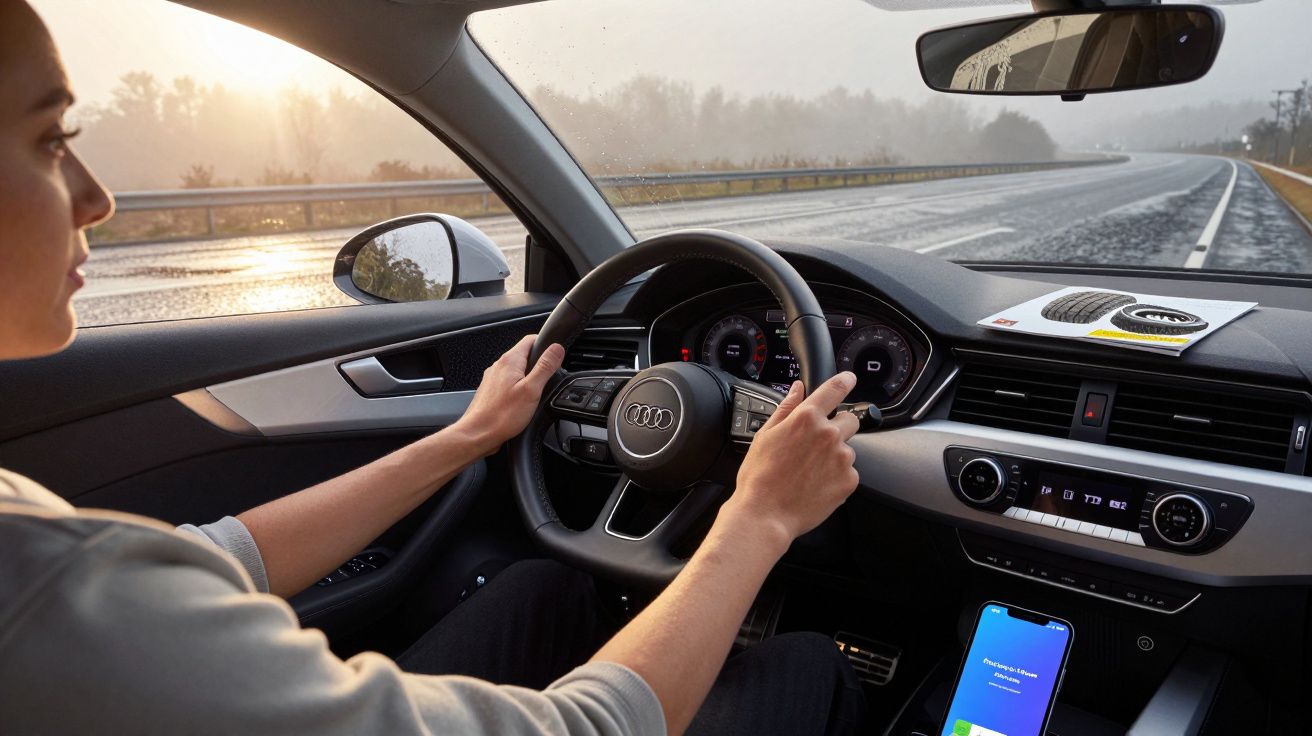
Audi works brilliantly when life is predictable: the same commute, the same roads, the same routines. In that context, audi feels like the perfect “set-and-forget” car, and (no secondary entity is specified here) the point still matters because most ownership pain comes from what happens outside that steady state. The moment conditions change - weather, tyres, software, driving patterns, even ownership length - the strengths can start to look like assumptions.
I’ve heard it from drivers who adore their Audi on a dry motorway and then wonder why it feels oddly nervous on cold tyres, why a driver-assist feature becomes fussy in heavy spray, or why an update turns a familiar interface into a weekly irritation. None of this makes Audi “bad”. It makes it sensitive.
The Audi promise: competence you don’t have to think about
Audi’s appeal is rarely loud. It’s the quiet competence: solid cabin materials, controlled refinement at speed, and a sense that the car was designed by people who dislike drama.
On a normal day, the formula works. You get predictable steering, strong stability, excellent lights, and a chassis that flatters the average driver without demanding much back. Many models feel as if they’ve been tuned for the UK’s default use-case: A-roads, motorways, wet roundabouts, and long stretches of “get on with it”.
That’s why Audi wins loyalty. When everything around you is variable - traffic, work, weather - the car itself feels like the one dependable thing.
The trap is that “dependable” often means “dependable within a narrow set of assumptions”.
The moment conditions change, the car starts having opinions
“Conditions” doesn’t just mean snow and ice. It means any shift that pushes the car outside its well-optimised middle ground.
A few common examples:
- A warm, grippy factory tyre swapped for a cheaper all-season that behaves differently in cold rain
- A regular commute replaced by short urban trips that never warm the drivetrain properly
- A camera or radar system asked to cope with low sun glare, road grime, or heavy spray
- A software update that tweaks menus, alerts, or phone connectivity
- A new owner inheriting maintenance choices they didn’t make (tyres, pads, battery health)
The car that felt calm and “sorted” can suddenly feel picky. Not broken - just less forgiving.
Tyres, temperature and the quattro illusion
Quattro is one of Audi’s most powerful ideas, and it’s easy to overestimate what it can do. All-wheel drive helps you move. It does not magically help you stop, and it doesn’t override physics on a wet, cold roundabout.
The biggest condition-change in the UK is temperature. A tyre that’s fine at 15°C can feel wooden at 3°C, and a premium car on the wrong rubber can lose the very trait you bought it for: confidence.
If the car “works well until conditions change”, tyres are often the reason. Not brand snobbery - just compound, tread design, and age.
Watch for these pattern-matches:
- Cold wet mornings: the front feels vague, traction control chatters earlier than expected
- Standing water: the steering goes light, stability systems intervene abruptly
- Mixed tyre brands front-to-rear: the car feels inconsistent across the week, not across the road
Quattro can mask tyre issues in dry conditions, then expose them the first time you meet greasy tarmac and a steep hill. It’s not that AWD failed. It’s that it made the baseline feel so secure you didn’t notice the tyres were the limiting factor.
Driver assistance is confident - until visibility isn’t
Audi’s driver assistance can be excellent when lane markings are clear and the sensors have a clean view. In steady conditions, adaptive cruise and lane guidance reduce fatigue and make long drives feel effortless.
Then the UK does what it does: low sun, spray, salt film, and roadworks.
Cameras hate glare. Radar hates certain kinds of reflection. Lane markings disappear under wet shine, patch repairs, or temporary paint. When that happens, systems don’t always fail gracefully; they can become noisy - warning beeps, greyed-out icons, sudden “take over” prompts.
A good mental model is this: assistance features are conditional. They are not a constant upgrade; they are a set of tools that work brilliantly within their visibility and mapping limits.
- Keep sensors and camera areas clean in winter (it’s boring, and it matters).
- Treat alerts as information, not a personal criticism from the car.
- If a feature makes you tense in bad conditions, switch it off without guilt.
The software-defined Audi: brilliant on Tuesday, annoying on Friday
Audi interiors are often why people buy them, and increasingly they’re also why people get frustrated. The shift to screens, touch panels, haptic sliders, and cloud-linked services creates a new “conditions change” problem: the car can change without you.
It might be a small thing - phone pairing that becomes flaky after an update, a menu moved one layer deeper, a privacy prompt that reappears, a driver profile that forgets a setting. The car still drives well, but the daily experience becomes less settled.
This is where the old Audi promise (solid, timeless, engineered) collides with the modern reality (interfaces, subscriptions, rolling updates).
Typical pain points owners mention:
- Phone integration that depends on cable quality, port cleanliness, and software versions on both car and handset
- Touch-sensitive climate controls that are fine on a dry fingertip and irritating with gloves or cold hands
- “Helpful” driver alerts that reset after service work or updates
- Navigation and connected features that degrade when signal is weak or services expire
None of these are catastrophic. They are exactly the kind of slow irritation that makes a car feel less premium over time.
Mechanical wear is predictable. Interface wear is psychological - and it can be worse.
The hidden costs show up when your ownership pattern changes
Audi tends to be satisfying when it’s maintained to a standard, not merely “kept running”. That’s fine if your circumstances stay stable. When they don’t - new job, fewer miles, tighter budget, longer ownership - the car’s tolerance for “good enough” can feel lower than you expected.
A simple way to think about it is that an Audi is often optimised for:
- Regular, longer drives (oil temperature, battery health, DPF management on diesels)
- Correct tyres and alignment
- Strong 12V battery condition (especially on tech-heavy models)
- Consistent servicing with the right fluids and parts
Change the pattern and the car can respond with symptoms that feel disproportionate: stop-start issues, warning messages, sensor faults, rougher ride, more noticeable drivetrain behaviour.
Here’s a compact guide to common “condition changes” and what they tend to trigger:
| Condition change | What you notice | What usually fixes it |
|---|---|---|
| More short trips | Stop-start/12V warnings, grumpy electronics | Battery test, longer runs, correct battery spec |
| Winter + cheap tyres | Less grip, more intervention, nervous steering | Better tyres, correct pressures, alignment check |
| Dirty sensors/low sun | Assist features drop out or nag | Clean sensor areas, adjust settings, accept limits |
How to make an Audi feel “good” in more conditions
The goal isn’t to baby the car. It’s to widen the range of conditions where it feels like the Audi you bought.
A practical checklist that actually helps:
- Buy tyres as if they’re part of the suspension. Match brands and patterns across an axle, avoid bargain compromises, and replace aged rubber even if tread looks fine.
- Treat the 12V battery like a core component. If the car becomes electronically “moody”, test the battery early rather than chasing random faults.
- Keep sensors clean in winter. A two-minute wipe can save a week of warnings and false failures.
- Learn which driver aids you genuinely like. Set them once, and don’t hesitate to disable features that add stress in poor conditions.
- Plan for software change. If an update is optional, wait a couple of weeks and see what other owners report; if it’s mandatory, back up settings and expect a re-learning period.
Audi works well when the environment stays within a familiar envelope. The ownership win is making that envelope bigger - not through perfectionism, but by focusing on the few boring basics that decide whether the car feels premium on a wet Wednesday as well as a dry Sunday.
FAQ:
- Why does my Audi feel great in dry weather but twitchy in the cold wet? Tyres and temperature are the usual cause. Cold rubber changes grip dramatically, and AWD can mask tyre shortcomings until conditions get slippery.
- Do quattro models stop better in bad weather? Not automatically. Quattro helps traction when accelerating, but braking performance is still dominated by tyres, road surface, and brake condition.
- Why do driver-assist features keep switching off in rain or glare? Cameras and radar have operating limits. Spray, grime, low sun, and poor lane markings can reduce sensor confidence and trigger dropouts.
- Is it normal for infotainment to change after servicing or updates? Yes. Updates can move settings or reset preferences. It’s worth saving profiles and checking key toggles after any software or battery work.






Comments
No comments yet. Be the first to comment!
Leave a Comment