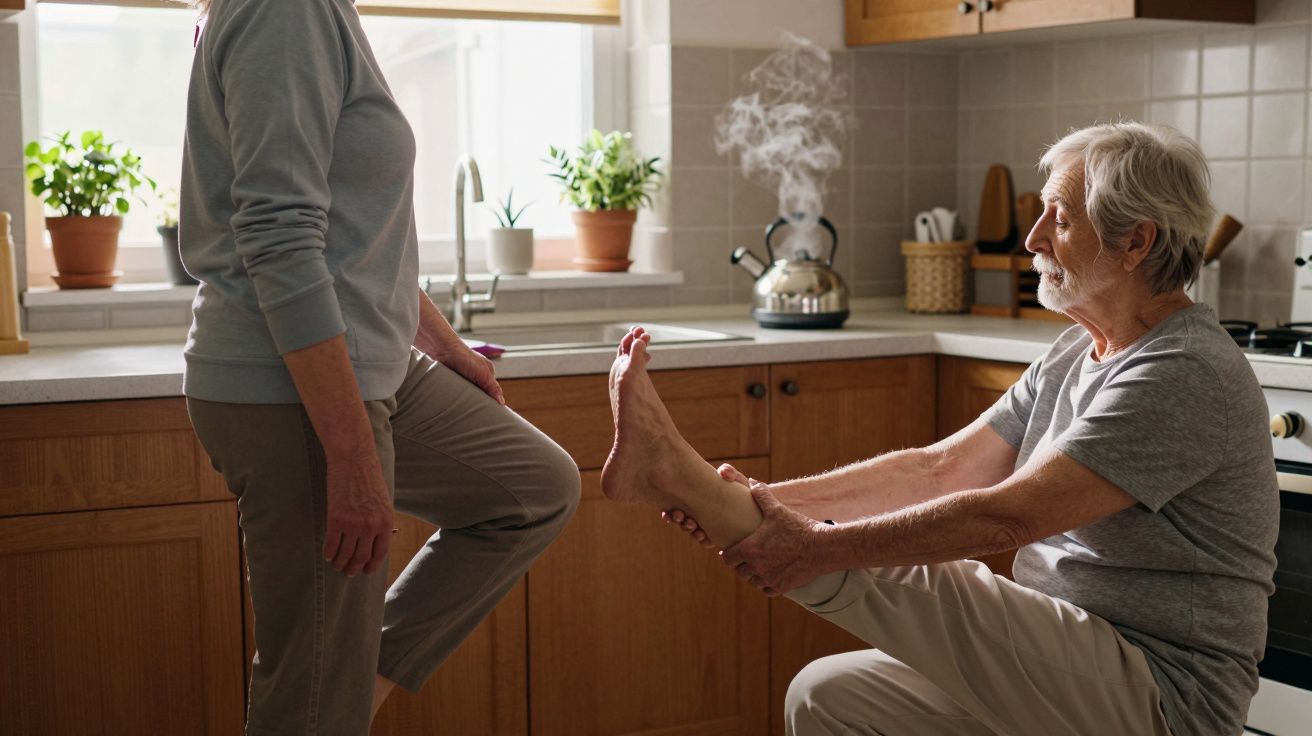
Your friends swap stories about “dodgy knees” and “a bit of vertigo”. Someone mentions stronger painkillers. Someone else has a new stretch from YouTube that takes 20 minutes and a yoga mat. Meanwhile, the simple thing that could quietly steady everyone’s walk rarely gets a mention: the ankle.
You do not need an athlete’s routine or an hour at the gym. You need about five minutes, something solid to hold on to, and a short series of moves that wake up the small muscles and sensors that keep you upright.
After 60, ankle training is less about touching your toes, more about teaching your feet and brain to talk to each other again.
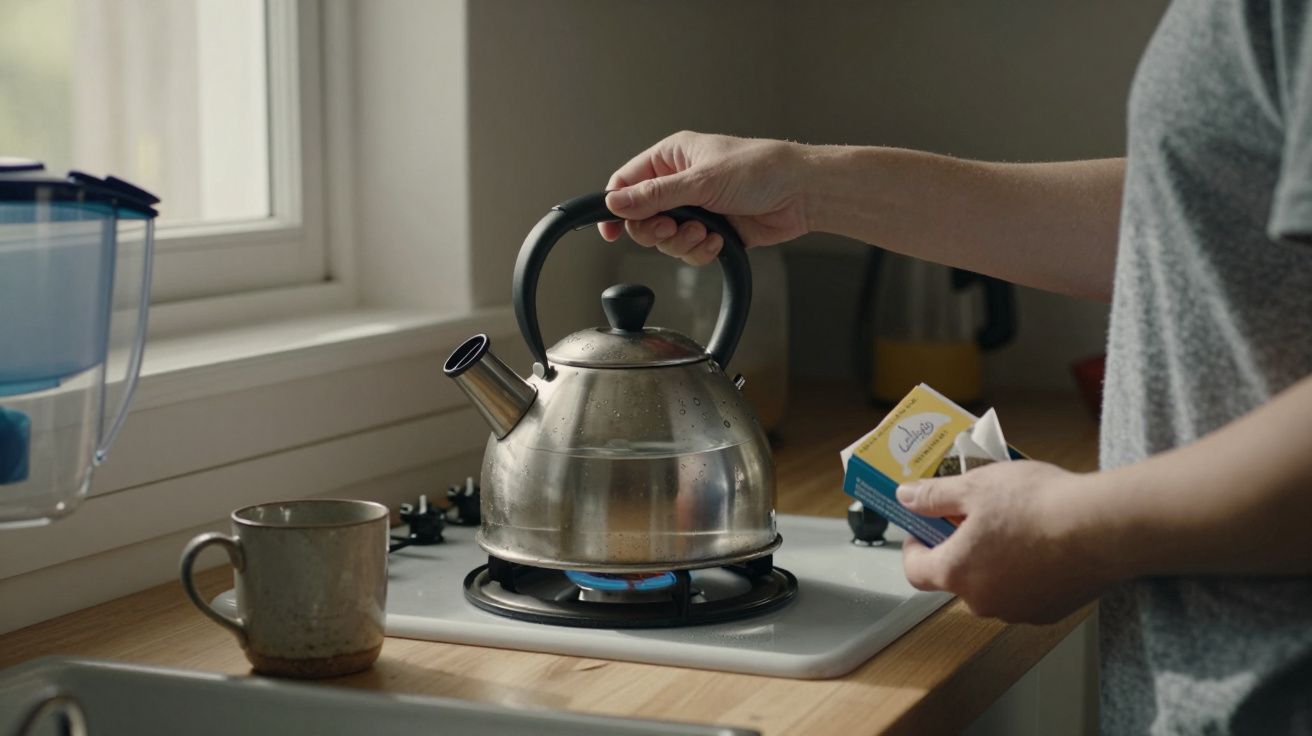
Below, a clear look at why ankles lose their edge, what a “steady” ankle actually does, and the 5‑minute drill that fits between the kettle boiling and your first cup of tea.
Why ankles quietly run the show
Every step is a small balancing act. Your ankle has to bend, react to uneven ground, and send constant messages to the brain about where your body is in space. That feedback loop is what stops a stubbed toe turning into a full-blown fall.
As we age, several things chip away at this system. We move less, so ankles stiffen. Calf muscles shrink, so they cannot push off or brake as well. The tiny nerves that tell the brain “I’m tipping” fire a little slower. Shoes with thick soles or slippers with no support muffle those messages further.
Weak, stiff ankles do not just feel “old” – they make every wobble bigger and every trip riskier.
The good news: ankles respond fast to the right kind of work. Five focused minutes most days does more for your stability than occasional heroic stretches or an extra tablet.
What most people get wrong after 60
Faced with unsteady walking, many people are nudged towards three routes: longer stretches, stronger painkillers, or “just be careful”. All three miss the target.
- Endless stretching pulls on muscles that are already lengthened but weak.
- Painkillers may mask discomfort but do not retrain balance or strength.
- “Being careful” quietly shrinks your world and often leads to even less movement.
Your ankles do not need to be looser at all costs. They need three things:
- Gentle mobility – to move through their natural range.
- Strength and control – especially in the calves and the muscles along the shin.
- Balance practice – in positions that look like real life, not circus tricks.
That is what the 5‑minute drill stacks together.
The 5‑minute ankle drill: one daily “sequence”, no floor work
You can do this barefoot or in firm, flat shoes, standing near a kitchen counter or sturdy chair. If any move causes sharp pain, stop that part and note it for your GP or physio.
5 minutes, not 50. Every day, not once a month.
Step 1 – Wake-up mobility (about 1 minute)
1. Ankle circles, seated or standing (30 seconds each side)
Sit on a chair, lift one foot slightly off the floor and draw slow circles with your big toe, like you are stirring a thick soup. 10 circles one way, 10 the other, then swap feet. Keep the movement in the ankle, not the whole leg.
2. Ankle “alphabet” (30 seconds total)
Still seated, trace the letters A, B, C in the air with your toes on one side, then on the other. It does not have to be perfect handwriting; the goal is to explore different angles.
This section oils the joint and reminds the brain the ankle can move in more than one straight line.
Step 2 – Strength and control (about 3 minutes)
Stand facing the counter or chair, fingertips resting lightly for balance.
3. Heel raises (calf strength) – 2 sets of 10
- Feet hip-width apart.
- Slowly rise onto your toes, lifting your heels.
- Pause for a second at the top, then lower with control, as if you are putting eggs down on the floor.
If two legs feel easy, you can shift a little more weight onto one side while still keeping both feet down.
4. Toe raises (front-of-shin strength) – 2 sets of 10
- Keep heels on the ground.
- Lift your toes and the front of your feet towards your shins.
- Lower slowly, without letting them slap down.
These two moves act like a pump and a brake: calves push you forward, the muscles along your shins help you stop and control the foot as you place it.
5. Mini “rocking” lunges (ankle bend) – 1 minute
- Stand with one foot slightly in front of the other, both feet pointing forwards.
- Keeping the back heel on the floor, gently bend your front knee and let it move over your toes until you feel a mild stretch above the back heel.
- Rock forwards and backwards in a slow, small motion 10 times, then swap legs.
You are not trying to force a deep stretch. You are teaching the ankle to bend safely in the direction it needs to for walking and stairs.
Step 3 – Balance integration (about 1 minute)
6. Supported single-leg stand – 30 seconds each side
- Stand tall, one hand on the counter.
- Lift one foot a few centimetres off the floor.
- Hold for up to 30 seconds, staring at a fixed point ahead.
- If you feel steady, use just one or two fingers on the counter, or hover your hand above it.
This looks simple, but it wakes up the balance sensors in your ankle and foot. Wobbling is not failure; wobbling is exactly the system you are training.
Here is the whole drill at a glance:
| Step | What you do | What it helps |
|---|---|---|
| Wake-up mobility | Circles + alphabet | Loosens stiffness, improves joint awareness |
| Strength + control | Heel raises, toe raises, rocking lunges | Builds push-off, braking and safe ankle bend |
| Balance | Supported one-leg stand | Trains the “anti-wobble” system in real positions |
How to slot it into your day (so you actually do it)
Habits win over willpower. The people who keep their footing into their 70s and 80s usually do small things often, not huge things rarely.
Some easy anchors:
- While the kettle boils, do Step 1 and one set of Step 2.
- After brushing your teeth, do the second set of Step 2.
- Before you turn off the kitchen light at night, do Step 3.
You can also “pair” the drill with an existing pill routine: ankles first, then tablets. That way the drill becomes as automatic as reaching for your medication box.
Consistency beats intensity: five minutes most days is better than half an hour once a fortnight.
If you use a diary or smartphone, a simple daily tick-box for “ankles” helps you see progress. Many people report that within two to four weeks they feel more sure-footed on stairs and less nervous on uneven pavements.
When to take extra care – and when to see someone
Mild muscle tiredness or a gentle ache in the calves the next day is normal when you start. Sharp or worsening pain is not. Some situations deserve professional eyes.
Contact a GP, physiotherapist or other health professional before or during this routine if:
- You have sudden, severe ankle or calf pain, especially with swelling or warmth.
- You notice unexplained colour changes in the feet or toes.
- Your balance has changed quickly over days or weeks.
- You have numbness or burning in your feet that is new or spreading.
- You have had a recent fall and feel fearful about standing exercises.
If you use a walking aid, you can still do much of the drill seated (circles, alphabet, toe raises) and supported (holding the frame or a rail). A physio can help you adapt the balance part to your situation.
Small upgrades that make the drill work harder
The drill is the main course. A few simple tweaks around it make it even more effective.
- Shoes that talk to the ground: firm, well-fitting shoes with a back (not loose slippers) let your foot feel the surface better and support the work you are doing.
- Short walks, often: a 5–10 minute walk, especially on slightly varied surfaces (pavement, grass, small slopes), gives your ankles live practice.
- Light hydration and protein: ankles are joints and muscles. Enough fluid and a steady intake of protein across the day support both.
Above all, notice when you feel steadier – getting up from a chair, stepping off a kerb, reaching a high cupboard. Those tiny wins are the body’s way of saying the drill is working.
FAQ:
- Do I need to feel a strong stretch for this to help? No. The aim is gentle movement and controlled effort, not chasing a big stretch. Strong stretching alone rarely improves balance or walking after 60.
- Should I do the drill once or twice a day? Once daily is a solid start. If it feels easy and your body tolerates it well, you can repeat it later in the day, especially the balance section.
- What if I already have arthritis in my ankles? Many people with mild to moderate arthritis benefit from this kind of low-impact mobility and strength work, but you should clear it with your GP or physio and stop any move that causes sharp joint pain.
- Can this replace my other exercises? Think of it as a foundation, not a full programme. Walking, general strength work and any activity you enjoy still matter for heart health, mood and overall mobility.
- How long before I notice a difference? Some people feel more “awake” in their ankles within a week. Meaningful changes in strength and balance usually appear after 3–6 weeks of regular practice.




Comments
No comments yet. Be the first to comment!
Leave a Comment